A good life

Nathdwara, in Rajasthan, is a religious place. You can easily spot Krishna bhakts around the place. Almost two years ago, I took my husband to Nathdwara. I was damn tensed, as I thought he might get put off to see the crowd. Much to my surprise, he absolutely loved the place. The warmth of the people won his heart.

From Delhi, we took the Mewat Express and reached Nathdwara early in the morning. I could see how local Gujarati snacks like poha and khaman were being sold at small stalls, on our way to the hotel. And, I was hungry!

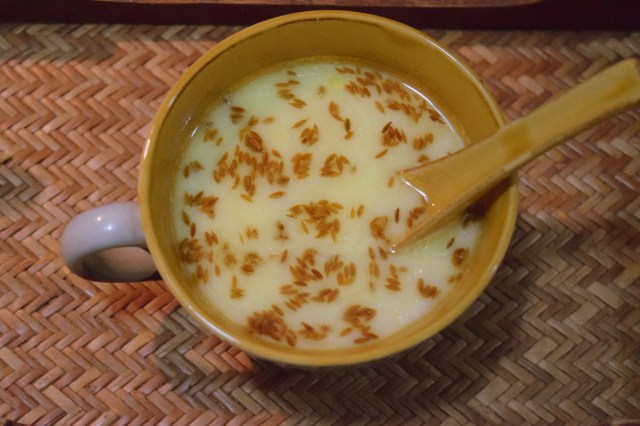
A close aunt of mine recommended us to stay at Hotel Vrinda. And boy! The food and the service of the tiny hotel charmed us so much so that we call it our best stay so far. It was a cold December, and the ukala or the warm milk with dry fruits was something that he had four times a day. The Rajasthani and Gujarati cuisine available at the hotel is to die for!

As usual, I loved strolling in the town’s busy streets. The artwork (Pichwai painting) done by local artists and the rustic charm of Nathdwara allured me. Apart from lots of cows, I noticed a lot snack items sold at every nook and corner. In the evening, I also noticed a lot of prasad being taken inside the streets. Prasad is nothing but the holy food offered in the temple. And after that, the prasad gets distributed.

I recommend a visit to this town to those who love warm people, good food and overall, good vibrations. Here are a few snapshots from my trip.

A healthy punch

DSC_0853

Our time in Mumbai was pure bliss. What do I miss the most? Every. Single. Thing. And when it comes to my personal home space, I miss my maid and cook the most. A hardworking woman, Darshana was as thin as me, and still, she gave birth to two kids, earned well, put her kids in a reputed English-medium school and was simple by nature. I used to think, if she can do so much, why can’t I? Even today, when I work in my kitchen here in Gurgaon, I keep thinking of Darshana and how things would be different in my kitchen and how easily I would have managed it. But, that’s life, isn’t it? I part my way from Mumbai, and it is exactly why I miss it so much. We learn about things, when we lose them.

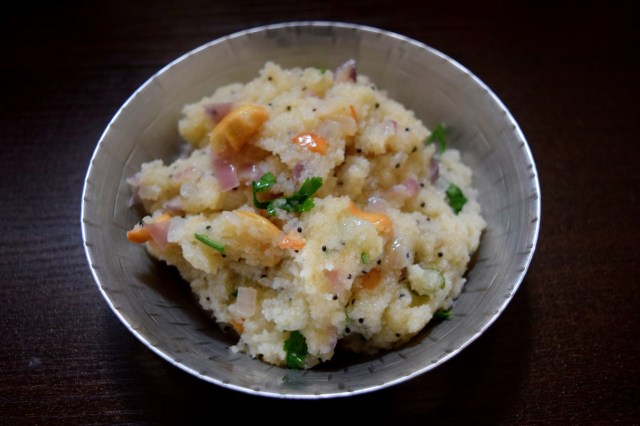
Darshana was an amazing cook. To be true, that’s an underrated word for her. She was freaking good! She would cook and clean up my kitchen in like, 20 mins. From Italian to regional cuisine, she made even technical and time-consuming recipes look simple. Today, I’m sharing one of her recipes: Upma, which is made with semolina. Have a small plate of hot upma as breakfast or evening snack  and thank the Maharashtrian lady later!

Also, for me, upma is better than packaged cereals. I can never eat them, anyway. Simply cook your upma without any seeds or nuts, with extra ghee, and you can feed it your two-year-old baby as well. Just make sure the veggies are boiled enough.

Recipe: Upma

  1. In a wok or kadhai (on medium flame), add two tablespoons of ghee. Once hot, add a few curry leaves, a pinch of asafoetida, 1/2 teaspoon of mustard seeds, 2 slit green chillies, and 1 small, chopped onion.
  2. Fry it for a minute and now add 3/4 cup of rawa (semolina) and roast it.
  3. After the semolina is roasted and slightly changes its colour, add 2 cups of hot water and put a lid on top. Remove the lid after four to five minutes and check if the semolina has fluffed up or not.
  4. Right before switching off the flame, add another tablespoon of ghee, juice of half a lemon and mix it slightly. Garnish with roasted cashew nuts and chopped coriander leaves.

My mother puts 2 cups of sour buttermilk (room temperature) instead of the hot water. This gives the upma a glowing, white colour and it won’t require lemon juice as well.

Notes: You can also add veggies like carrots, tomatoes, beans, peas, etc. to make the upma more colourful and give it a healthy twist.

Mulberry skies

2016-03-17 18.01.39

I have been teaching a bunch of local kids ever since I have moved to Gurgaon from Mumbai. Actually, my neighbour aunty used to teach around 15 kids and I happily asked her to send half of them at my place. The class switched on and off because of a job I joined and left in between, but now it’s a daily routine. In the last two years, 3 to 5 PM in the noon has become a special time for me, which I share with these little birds that flock in my living room from different corners. We share a close bond now so much so that they know what to do when my mood fluctuates and I know when one of them is hiding a secret. Yesterday, they got me some fresh mulberries picked from a nearby tree. Ironically, I have never tasted them before. They were so happy to do it for me and I felt blessed!

Background score right now: Ala Barfi! 

Of romance and desserts

CSC_0885

When I come to think of my growing bond with my husband, I can’t help noticing how we enjoy desserts over some amusing conversations. Ironically, our very first meet was at an ice-cream parlour in Surat. That time, we didn’t quite know that we’d become best friends. I won’t call us soul-mates; really don’t know what that means. But this guy can crack me up like crazy. I literally end up begging him to stop his humorous talks with tears in my eyes. It’s a real blessing to find that he can make me laugh–even when it is only for a few seconds, for I’m a pessimist and he always looks at the bright side of life. We’re complete opposite, that way. So, yes, desserts easily fetch big smiles on our faces. Meals are generally tedious, for when hunger strikes, all you do is listen to your tummy. It’s only when the sweet part materialises on the table, do we fill our hearts with pleasure. Next month, we’ll be completing five years of marriage.

I’d like to share some of our favourite ‘dessert’ moments. I remember how he used to visit me during his time at a post-graduate school and surprise me with some chocolates from Wenger’s Bakery, Delhi; it was his sweet act of compensating for our distance affair. I can’t help smiling with pride, thinking of those ‘after marriage’ moments in our tiny Mumbai home, when we treated each other with some Alphonso mangoes (bought from Matunga Mango House) dipped in Naturals’ malai ice-cream.

Thinking of our honeymoon. I tipped the chef at Apple Orchard resort in Lachen, North Sikkim, for the cherry dish he served us after our meal. I wonder how some really talented people love treating their guests with the best.

And, thinking of home. We love to keep going back to the classic American dry-fruit ice-cream or the cold coco drink in Surat, to relive the early days of our friendship. In the last two years, he showed me how to enjoy piping hot desi sweets in the bone-chilling cold weather of January, at the famous Gohana’s Jalebi shop and at Bikanervala, in Gurgaon. Luckily, he knows when I desperately need my plate of Paris-Brest at L’Opera, my favourite patisserie shop in Gurgaon. The crunchy texture and the smoothest hazel-nut cream of the Paris-Brest can quickly fix those minutes of agonies.
DSC_1616

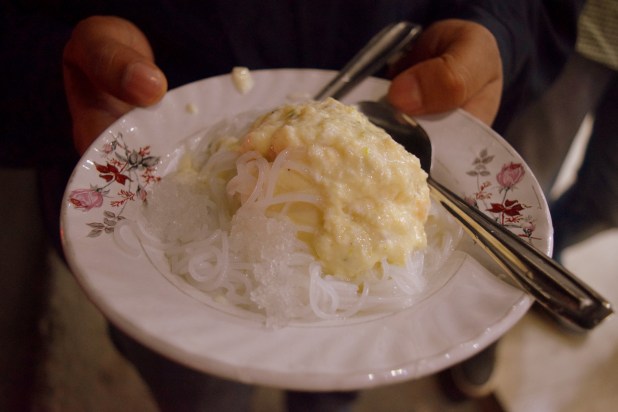
Not to forget, during our travels, A-One Kulfa in Amritsar, was the most memorable one. A mix of falooda and kulfi, discovering the kulfa was truly a winning act. It’s amazing to have some hearty talks, make a few sweet confessions and share some hope for the future–all over desserts!

Of late, I have noticed that my husband enjoys homemade desserts the most. It does take efforts to please him, but the whole process is definitely worthwhile when we both are together in the kitchen, cooking or baking a heart swaying sweet dish. It is in winters when I make some gajar ka halwa or carrot halwa, to get him charm me with the award of being the world’s best cook (at least for him).

Although there are various recipes of Gajar ka halwa found on the internet, I like this one the best. It’s how my mum makes it. Ghee is the star here and so is the celebration of love!

Recipe: Gajar ka Halwa

  1. Grate three to four medium-sized carrots. Keep aside.
  2. Take a kadhai or a wok. Add lots of ghee. Once it’s hot, add the grated carrots. Make sure the entire batch of carrots is dipped coated with ghee. Till I don’t see my carrots shining, I keep adding more ghee.
  3. Roast the carrots for a few minutes in the ghee. Don’t let the colour or texture of the carrots change to its extreme.
  4. After about four to six minutes of roasting the carrots, you can add about 300 ml milk. I make sure that the carrots are totally dipped in milk. Keep low flame and keep stirring it to make sure there are no sticky substances under and around the kadhai.
  5. You will notice that the milk has been absorbed by the carrots. Once the carrots start releasing the ghee, add 3/4 cup of sugar. You can add less initially, if you want.
  6. Add 3/4 teaspoon of cardamom powder, some cashew-nuts (broken in halves) and raisins. Once you notice that the sugar has melted, remove it from the flame. Serve hot.

Magic of aromas

CSC_0884 - Copy

At my parents’ place, we sit on the floor and eat our meals (served in a thali). Nobody is allowed to walk inside the house with shoes on; so the floors are spotless and just perfect to sit and relax.

Funny as it may sound, as a child, one of my many fascinations was to eat at dining tables. My dad likes to eat sitting on the floor, so we never got one up until now. Which is why, whenever I went to my neighbour aunty’s place–who owned a fine dining table–I made sure that we had a chitchat at her table. If I got lucky, I got to enjoy a meal or snack too. But there was a bigger reason for me to wish to eat at her place: the earthy, aromatic food that she cooked for her family.

Kalpana aunty is an amazing cook, who can create magic with basic vegetables found in an Indian kitchen. Originally from Tinsukia, Assam, she has a talent to keep her recipes simple, without losing the essence of the grains and the veggies. This lady has been our neighbour for more than two decades now. And I could tell you what she’s cooked, just from the aromas that come from her kitchen to our common corridor. And, as you know, when you like someone’s style of cooking, it’s hard not to imitate them.

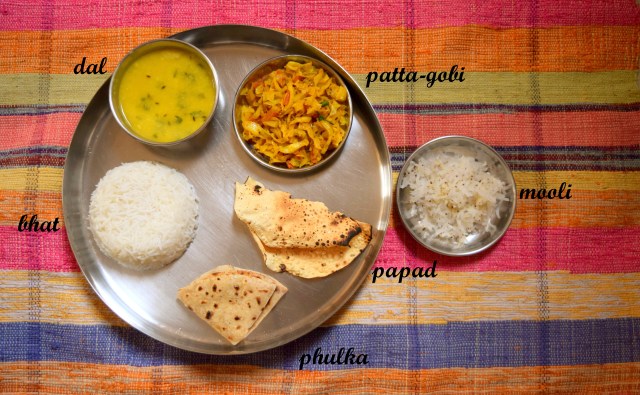
The picture shows one of her classic thali menu, Dal Bhat  that comprises dal (lentils), bhat (rice), patta-gobi ki sabzi (cabbage) and roasted papad. Roti, pickle and salad can be added according to your preference. The rice acts like a binding agent here. The dal’s aroma, the crunchiness of the sabzi and the papad, will force you to rethink before you call this typical Indian lunch menu boring.

To me, this thali evokes beautiful memories of the chatty afternoons I spent at her place as a kid. It reaches to my soul in no time, and I feel content right away. Not many things in life will really lend you such a feeling, people. I’d say, try it to believe it.

Recipe: Dal

  1. Soak a cup of yellow moong dal in water for about 15 minutes.
  2. Put the soaked dal in a cooker, add a teaspoon of ghee and a pinch of turmeric powder. Add water which shouldn’t be much; just an inch above the dal. We don’t want to overcook it. We can always add more water later. Close the lid and give it two whistles. Sometimes, I just give a single whistle and boil it later, if required.
  3. Whisk the cooked dal lightly and keep aside.
  4. For the tadka or chaunk: Take a small pan made only for seasoning. Add a teaspoon of ghee. Once it’s hot, add 1/2 teaspoon of cumin seeds, a few curry leaves, one finely-chopped green chilli and 1/2 teaspoon of turmeric powder. These will splutter within seconds; make sure you switch-off the flame on time.
  5. Put the tadka in the dal with some salt. Mix well. Boil the dal for a minute or two before serving it (if required). Serve it with hot, boiled rice.

Recipe: Patta-Gobi

  1. Wash and chop some cabbage. I take half of a medium-sized cabbage for the two of us.
  2. Add some water in a pan. Once it starts to boil, add the chopped cabbage. After another boil, remove and strain the cabbage. This step will simply give you a batch of super-clean cabbage leaves.
  3. In a wok or kadai, add a teaspoon of ghee. Once hot, add 1/2 teaspoon of mustard seeds, 1/2 teaspoon of turmeric powder and a chopped green chilli.
  4. Once you notice that the seeds have spluttered, add the cabbage and sauté it for a few minutes.
  5. Now add a small tomato, chopped. Mix it well. Mash it a bit, so that it mixes with the cabbage properly.
  6. Add 1/4 teaspoon of red chilli powder, salt to taste, 1/2 teaspoon of coriander powder and a pinch of mango powder (amchur; optional).
  7. Remove from the heat and garnish with chopped coriander leaves.

Recipe: Mooli Salad

For this salad, all you need to do is to grate a radish. Add a teaspoon of roughly powdered mustard seeds, rock salt and a few drops of lemon juice.

Include this wholesome thali to your weekly menu. Your family will thank you later.

Mortar, pestle and bliss!

DSC_1828

In India, women get to learn a lot of cooking techniques and recipes from the time they spend with their mothers and mother-in-laws in the kitchen. And if both of them–that is, your mother and mother-in-law–belong to different corners of the country, you have some amazing kitchen stories to be discovered. That’s certainly my case.

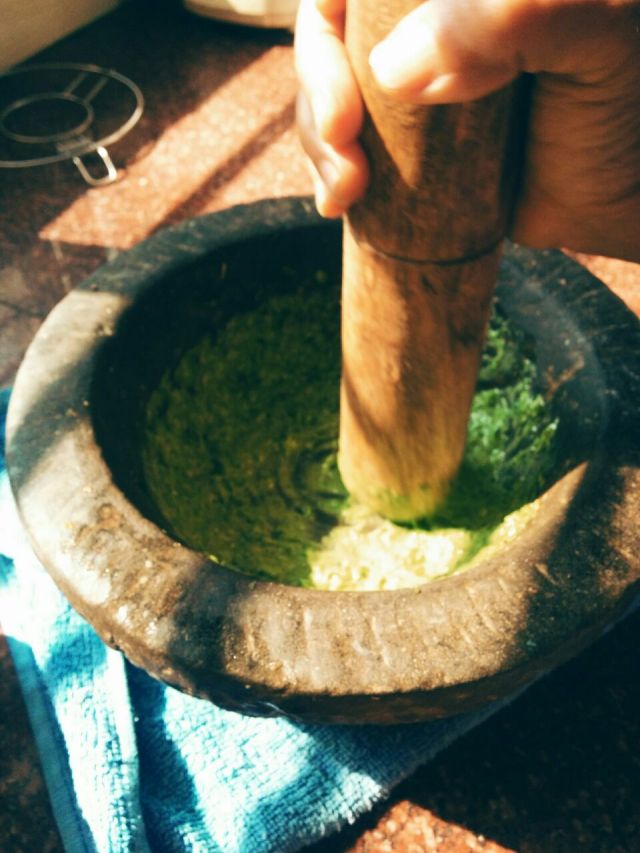
One fine, crisp morning, I curiously spotted my mother-in-law pounding something in one corner of the kitchen. Her name is Rajbala and she resides in Haryana. She was adding a few ingredients in the mortar and pestle, and later, emptied the paste in a steel box. When I ate it with my paratha, I tasted the world’s best raw chutney.

I have had the usual coriander chutney umpteen number of times, but a fenugreek one totally blew my mind away. I love the taste of garlic and I like curd in every form. My MIL picked up some fresh leaves from her kitchen garden and transformed the simple food ingredient into a powerful punch that pleased my taste buds like never before.

My lesson? Have this healthy chutney for breakfast and stay away from cereal packets and cold-pressed juice bottles. We Indians use fenugreek in various dishes. Personally, I use it in theplas, my roti batter and curries, but using it in my chutney is a sure hit. Its tangy flavour and smell is cheer magic.

Often, I get tired of the heavy, creamy curries and crave for something raw and simple to eat. Be it a freshly cut salad or a fruit chat, raw dishes touch my soul and are good for the body too. I have always had a craze for such recipes and dive right into the raw dish first, that is served on my plate.

img-20160324-wa0014

I guarantee, you will be ready to eat this chutney for your breakfast, lunch and dinnertime. Here you go:

Recipe: Methi ki chutney or fenugreek chutney

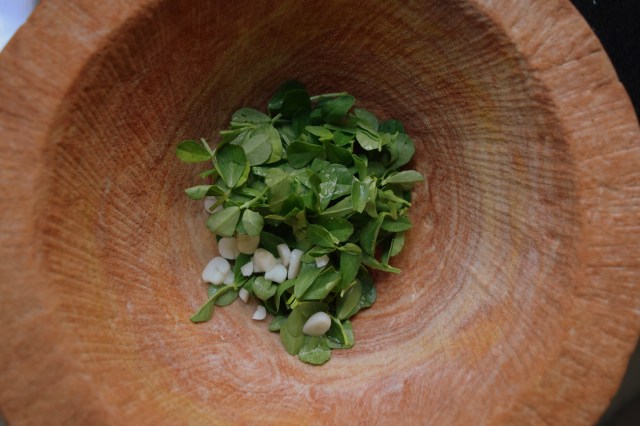
Pound a handful of fenugreek leaves and 4-5 cloves of garlic. Now add salt and 2 tablespoons of fresh curd. Pound for some more time. As soon as you see the ingredients have blended well, remove the coarse chutney into a glass or steel bowl. Eat it with a paratha or roti, or have it with your tikkis or pakoras.

Notes

Pounding is an enjoyable yet tough job. You don’t want to pound so much so that you faint. So keep the chutneys grainy. That’s the beauty of it.

Winter comfort

dsc_0657

Vinod aunty, my mum’s friend (and neighbour for more than two decades) is an ardent cook. Talk about the importance of cooking everything at home, and she’ll proudly say: Eating homemade food is the best feeling. Apart from my mum, it’s her who has always encouraged me to make everything at home. Whether it takes time or effort, it’s all worth it. Originally from Udaipur, Vinod aunty has truly used her cooking talents–not to miss her home science degree–and has successfully kept traditional recipes alive.

As a child, I remember when she sent us her day’s special dish in a tray, only for us to taste. On one such occasion, I tasted the raab. Basically, it’s boiled buttermilk. But, when you sip it, you can feel its healing effect. Whenever I used to be down with the winter cold, she used to send me a cup of hot raab. Sitting on the bed, I used to pray to recover soon, with my spoon clacking against my bowl of the nourishing raab.

Recently, when I caught cold, I realised that I have to try making my favourite ‘recovering’ drink. And, guess what? It’s damn easy! I have pledged to make it often. Thinking of which, I fret I will have to set the curd even more often. Nevertheless.

Also, dear readers, in the image above, I have gone way too much with the cumin seeds. You might want to control a bit. Happy Winters!

Recipe: Raab

In a pan, heat a teaspoon of ghee. Add two pinches of cumin seeds. Let it splutter. Add a glass of buttermilk (thin consistency) and salt as per your taste. After a few minutes, add two tablespoons of boiled rice. Remove from the flame after one or two boils.

Notes

Make sure the curd (from which you make your buttermilk) tastes mildly sweet (meetha). Avoid using sour (khatta) curd. Also, you can use uncooked rice and cook it in the same pan.