The chickpea affair

IMG_3470

With every season, you see different seasonal greens, fruits and veggies in the food market. You are supposed to change your kitchen ingredients, and eat local produce because they help you stay healthy by providing that nutrition punch that you need in that particular season. Talk about winter, and one of the things that was cooked in my mum’s kitchen was Hoole (होले). Called as Cholia in Delhi NCR area, or green chickpeas or green garbanzo beans worldwide.

Now, my issue was with its availability. I don’t buy pre-cut veggies from the market. So, when I saw these cleaned green chickpeas, packed in a plastic wrap, I totally refrained it. Cleaning these chickpeas is a process that makes sure that you’re having fresh green beans. And most vegetable vendors or grocery stores don’t keep the green bunches or half-cleaned Hoole. So, the other day, I was searching for them on my way, when we went to visit a local temple. The temple was closed before we reached there, but I was happy to see a man with a tiny cart, sprinkling water on these green bunches of Hoole. Both I and my husband smiled at each other, and bought 1.5 kg of it.

IMG_3544
Green Chickpea Pulav

It’s a process, you see. It takes time and patience. So, we started cleaning these bunches and when we saved a cup of these green beans, we stopped and kept the bunch back in the kitchen balcony. For about three days, I did so, and ended up making three variants. That’s how I attained my wishes, as I knew, its season is going to end anyway.

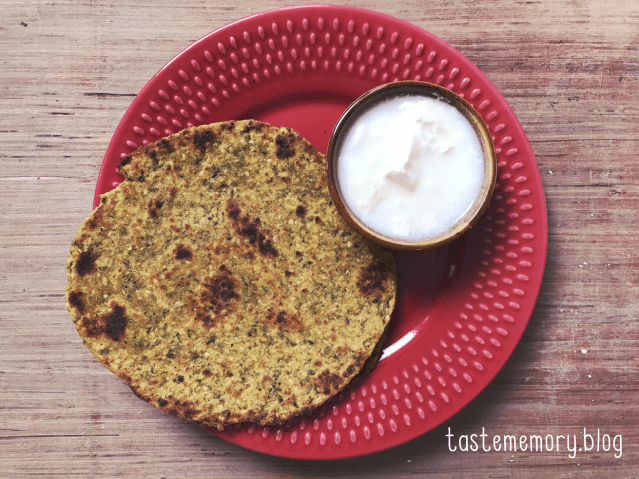
So, the first batch went like this: my husband sat in front of the TV, and sweetly cleaned a cup of beans for me. I made green chickpeas pulav with this batch. The next day, early morning, I sat on the kitchen floor and cleaned a cup of Hoole. It took me more than 20 minutes. And I made some yum Parathas with it (stuffed thick rotis), and served it with fresh yogurt.
IMG_3543
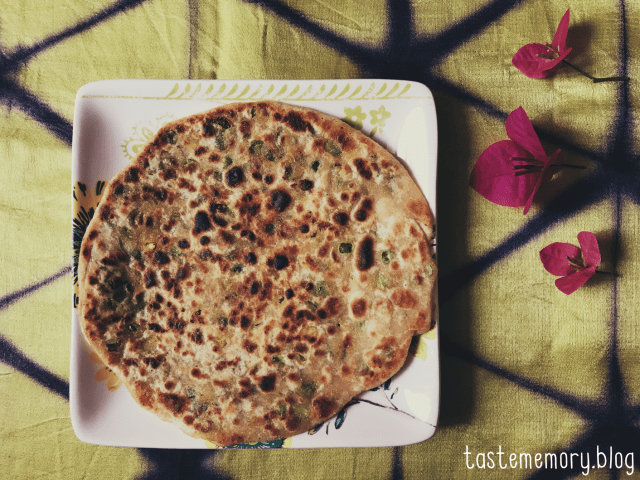
Green Chickpea Paratha

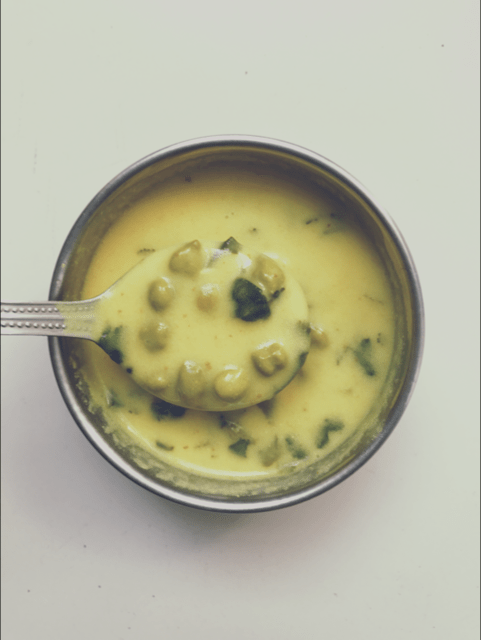
Yesterday, late morning, I cleaned one more cup of these green chickpeas but ended up eating most of it. And today, again, I sat on the kitchen floor (this time I spread a tiny mat or aasan) and cleaned another cup full of these young garbanzo beans and made some delicious Kadi (a buttermilk dish).

You know, I have always noticed my elders at home doing these kitchen chores in the calm morning hours. So, it isn’t a strange thing for me. Also, when you prep for a simple dish, you also kind slow down and learn to have patience in the process. On my recent trip to Indore, I noticed my uncle (JP Kaka; my father’s younger brother) do the same thing. And it inspired me.
IMG_3682
Green Chickpea Kadi 

So, dear readers, here goes the three dishes that I made with Green Chickpeas or Hoole (so called in Rajasthan).

Recipe # 1: Green Chickpea Pulav

All right, so first, soak 1 cup of rice in water for 15 minutes. Make sure you clean the rice with water three times before soaking it. Now, take a kadai, add 2 tbsp oil in it and let it heat up a bit. Once hot, add in a bay leaf, ½ tsp cumin seeds, ¼ tsp or a few pinches of turmeric powder, and stir. Now, add in 1 cup of the cleaned green chickpeas. Stir for 30 seconds.

Next, add ½ tsp red chilli powder, ½ tsp coriander powder and sauté the chickpeas so that the spices coat it well. Add salt and ½ tsp garam masala. Now, strain the water from the rice bowl and add in the soaked rice in the kadai.

Here’s a thing. You need to roast this mixture for a minute or two, before adding water. After roasting the rice, green chickpeas and spice mixture, add in some water. I usually go with 5 to 6 cups of water. Will measure it next time. Close the lid and let it cook. After a few minutes, check if the water has boiled and if the rice is cooked or not. If needed, add in some more water.

Once you run a ladle or flat rice spoon in the bottom of the vessel to check if there’s no water, you can switch off the flame. Serve this pulav with hot Kadi or chilled Raita.

Recipe # 2: Green Chickpea Paratha

Take 1 cup of clean green chickpeas in a plate and mash it. Alternatively, you can also churn these green beans once, in the grinding jar. Or, steam these beans so that you can easily mash them.

After this, take a kadai, add in 1 tsp of ghee. Once it’s hot, add in cumin seeds, turmeric powder, cumin powder and coriander powder (all ½ tsp). Stir it for a few seconds. Now, add in the mashed chickpeas, and some salt. Cook it for a bit, and remove it into a plate to cool down.

Next up, take some whole wheat dough (salt and wheat flour), roll it into a round shape and add in some of this green filling. Cook this on a tava/griddle and roast it with 1 tsp of ghee. Serve with a cup of fresh yogurt.

Recipe # 3: Green Chickpea Kadi (buttermilk dish)

Take 2 cups of fresh, homemade yogurt in a large vessel. Mix 4 cups of water in it and blend it for about 30 seconds with the help of a hand blender. Now, we want an even/nice-textured Kadi. So, for that, you need to strain this liquid into another vessel. After this, add in 2 tbsp gram flour (besan) and whisk it lightly till you see no lumps. Add ½ tsp red chilli powder and ½ tsp of coriander powder, and keep it aside.

Take a Kadai (I use a steel one for this; gave up aluminium ones long back), and add in 2 tsp of ghee/clarified butter. Once hot, add in ½ tsp cumin seeds, ¼ tsp black sesame seeds, ½ tsp turmeric powder and sauté for a few seconds. Now, add in 1 cup of green chickpeas or you could also add ½ cup. Really doesn’t matter. Next, add the liquid gram flour mixture. Now, stir it quickly and continuously. Don’t leave the ladle whatsoever!

The key to a well-made Kadi is stirring it well. My mum used to temper the Kadi and give me the ladle to stir it for about 15 minutes or so, while she did other kitchen work. So, if you really want to make some good Kadi, with the perfect texture, you need to stir it. You can’t be restless and think of other things in hand. You just can’t. Forget every kitchen chore (I know it’s morning time, and you’re getting late to pack that lunch box) and stir the Kadi well.

After about 10 minutes or so, you can smell the aroma of the cooked buttermilk when you closely sniff it. Now is the time to switch the flame from low or medium-high so that the buttermilk can boil well. Stir it every 30 seconds now, and let it boil. After about 5 to 8 minutes, switch off the flame. Add in some chopped coriander leaves, and transfer the Kadi into a different vessel. This will avoid spoiling its texture. My green chickpeas cooked perfectly, thanks to the boiling process. Serve it with hot rotis/chapatis. PS. Have you ever sipped onto to hot Kadi? Once you make some Kadi, reward yourself like this: Take a bowl of Kadi, sit on the sofa, and sip it (with all the noises). You will truly love it!
Hello, Spring!

IMG_3236

I’m in absolute love the way my plants are coming back to life and blooming; especially the bougainvillea and lemon balm. And, this week, I went to art class without any sweater! It was such a great feeling to drive my two-wheeler without any jacket or muffler. Winters are almost gone. And I’m so happy the summer wave will hit us soon.

I have been listening to a lot of spiritual chanting tracks of late. Singing makes my heart weep, and I get really emotional when I sing these classic spiritual numbers, like the Ram Stuti written by Tulsidas, I believe. There is a nine-year-old girl called Sooryagayathri who sang a few lines from this Stuti and I downloaded it on YouTube to hear it again and again. Solace, I must say.

This year, I wanted to use more of pulses and lentils in my kitchen, and not stress only on vegetables. And this Monday, I happened to see this jar of coarsely pound split green mung dal. It then struck me that mum must have sent me this for Korme ki Roti. So I called her to know the recipe, and had it for breakfast. She always used to make Korme ki Roti for our travels and even for those hectic or slow holiday mornings.

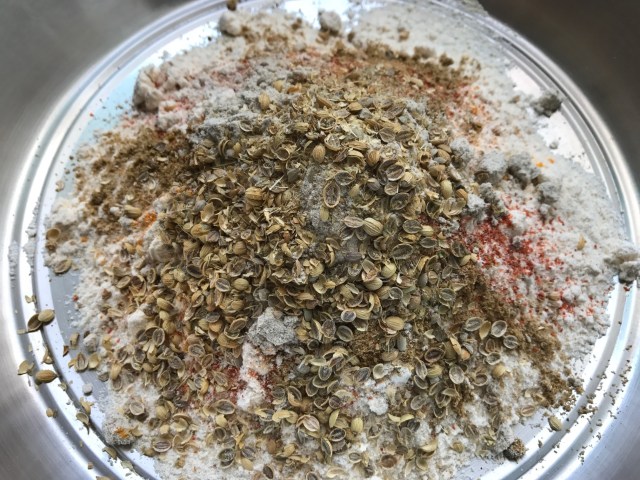
Korma is nothing but slightly ground split green mung dal. Take a few cups of it in a jar, and grind it once or twice to get a coarse and slightly powdered texture. It’s made in Rajasthan, and is a common kitchen ingredient. You need to soak it for an hour before making this Roti. Also, I love the texture that coriander seeds in my Korme ki Roti. I’m used to eating the dry and slightly grainy Korme ki Roti since childhood, and it’s really filling.

So, if you’re looking for healthy breakfast recipes, you know what to try next. My mum used to make lots of Korme ki Roti and keep it wrapped in a muslin cloth in a Roti box for later. Perfect for those 4PM hunger pangs! I have to have something at 4PM; it’s dreadful for me when I find nothing to eat in the kitchen. So, a Roti box is a no else blessing.

IMG_3207
Let’s make the dough! Oh, where is Korma?

Recipe: Korme ki Roti

Ingredients

wheat flour – 2 cups
spices (coriander powder, turmeric powder, red chilli powder) – as your preference
coriander seeds – 2 to 3 tbsp (coarsely ground)
Korma – 3 to 4 fists (soak it clean water before an hour; strain the mung flakes and water and then add it to the flour)
salt to taste
oil – 1 tsp (optional; we use it to make a tight dough)
bajra flour – 1 tbsp (optional; this makes the Rotis softer)

Method

1. Make a dough with all ingredients. But, be extra careful when you add water. Somehow, it’s extremely easy to bind these ingredients together and this dough takes less water. So, you can add ¼ cup of water, or may be less, initially. And then add more water, if required. After about five to 10 minutes, knead it for 30 seconds with a hint of oil to make it easy for you to roll the balls.
2. Now, just as we make rotis, you need to make one with a small ball of this dough. Roast it with a hint of oil or ghee on the griddle.
3. Serve your Korme ki Roti with mango pickle or garlic chutney. I love it with plain curd. And make sure you make some extra rotis for later.

The humble pumpkin

IMG_2970

At home, back in Surat, we never had pumpkin in our household. As I have mentioned several times in my earlier posts as well, my parents grew up in the deserts of Jaiselmer (Rajasthan) and they never had loads of vegetables in their kitchens anyway. Those were barren lands then unlike the present times. My aunt (my masi/mum’s elder sister) actually once told me, how they almost always had Kadi (a spiced buttermilk dish) in the kitchen. Even green chillies (leeli mirchi in our language) were special back then, she added. “So, when it was leeli mirchi with kadi, it was special!” she said, with an innocent smile.

And, it continued almost in the similar way in Surat (Gujarat) as well. Things like paneer (cottage cheese), pumpkin and colocasia root (arbi) have never been part of my childhood. Slowly, we did start including local ingredients in our dishes, but it’s still not too much.

So, when I taste the different yet local vegetables here in Delhi NCR, it takes me some time to get used to it. But, there have been a couple of instances, when I tried something in the office, and it totally blew my mind. And one of the instances has been the combination of Pethe ki sabzi (pumpkin) and Pooris.

In my last workplace, it was in that congested room where we all colleagues used to sit down and eat our lunch, happily. A workmate, who originally belonged to Muzaffarnagar (Uttar Pradesh), asked me to taste his lunch. As usual, it was overloaded with stuff; his mother always gave him extra portions for us all. And I asked him what it was, but he asked me to taste it anyway. It was the first time I tasted pumpkin. And it blew my mind!

The sweetness of the whole-wheat Pooris with the sweet and tangy pumpkin sabzi was a mouth-watering combination. It just melted in my mouth, and I couldn’t believe the heavenly taste of it. I could recognize the taste of fenugreek in it, with a bit of mango powder and sugar. Every element of the dish, in fact, stood out. I couldn’t help but wonder, how can such a simple combination as this one be so delicious. After a few bites, we exchanged our lunch boxes. I had to.

You know, it takes time for someone in her 30s to appreciate something she hasn’t tasted before. At least when it comes to the veggies. And I truly loved the pumpkin curry that my workmate’s aunt made for him. I could sense his background, and suddenly, I was also curious to explore the food of Uttar Pradesh. I’ve certainly missed out, I thought to myself.

So, dear reader, go ahead and try this combination at home. That is, if you’re like me, someone who’s obsessed with simple, regional food. Don’t be ashamed of something you haven’t had till now. Most pumpkins available in the market are too big, but I always end up finding a small one with which I can make this sabzi at least twice a month. And, guess what, I made this for my husband’s lunch box this Valentine’s Day. Not a fancy dish, eh? Too rustic? Well, wish I cared.

Recipe: Pethe ki khatti meethi sabzi (pumpkin/yellow squash)

I would like to thank one of my favourite YouTubers, Nisha Madhulika for this recipe. It’s always a delight to watch her videos. This dish turned out to be just what I tasted in my office cubical. Words fall short when one has to describe Nisha ji’s cooking skills.

Ingredients

Yellow pumpkin – 1½ cup (chopped; also, remove the seeds and soft pulp)
oil – 1 tbsp
turmeric powder – 1 tsp
coriander powder – 2 tsp
red chilli powder – ½ tsp
ginger paste – ½ tsp
green chilli – 1 (chopped)
salt to taste
juice of half a lemon (you could use mango powder if you want)
fenugreek seeds – 2 pinches
sugar – 1 tbsp
coriander leaves (chopped)
garam masala – ½ tsp
cumin seeds – ½ tsp
asafoetida – 1 pinch

Method

Pumpkin is almost like potato, but I believe it takes a little less time to cook. If not paid attention, it can go utterly soft.

1. Peel and chop the pumpkin. Make sure you remove the seeds and the soft part that’s there in the middle.
2. Take a kadai or wok, heat some oil in it. Once hot, add the asafoetida, cumin seeds and fenugreek seeds. After a few seconds, add the ginger and the green chilli, followed by the turmeric powder and red chilli powder.
3. Next, add in the coriander powder and salt. Now is the time to soften the pumpkin. So, add in about a cup of water, and close the vessel with a lid.
4. Keep checking, and once the veggie has turned soft, add garam masala, sugar and the lemon juice. Finish it with a good sprinkle of chopped coriander leaves.

I always serve it with fried whole-wheat pooris, exactly what I tasted for the first time. I really don’t want to change my memory of it.

In the lap of Himalayas

IMG_1856For me, going to the hills for even two days is enough. I’m always up to leave the home affairs and hit the train station and hop off someplace where we can recharge ourselves. It doesn’t have to be a luxurious hotel or a faraway land or an 18-hour flight. A five-hour train ride is enough. A secluded place, with a lovely place to stay at, and that’s enough for me.
Slow travelling. Talk to us about it. I and my husband like to completely unwind, chat with strangers staying around us, and soak in the local life as much as we can. Some people even call us lazy. But that’s our idea of a holiday. As for me, I’m an extremely chatty person. Love to listen to people, sometimes cut talks and share my stories. And if I do end up making a friend, it’s a bonus.

So, the day came. I had rolled our sweatshirts and thermals into a small trolley bag, packed a backpack with his kindle, my medicine kit and a small toiletry set. Not forgetting the berry mix, mufflers, and hand gloves.

Our train was at 6AM, and it was supposed to reach Kathgodam at 11AM. We had to literally run to catch it as we were running late. Once inside the train, we just sat back and enjoyed the Shatabdi food that was served us. There was a lot of fog, as the forecast went on the prior day. As for the view, I absolutely loved the trees in the fields, all lined up perfectly.

IMG_1686

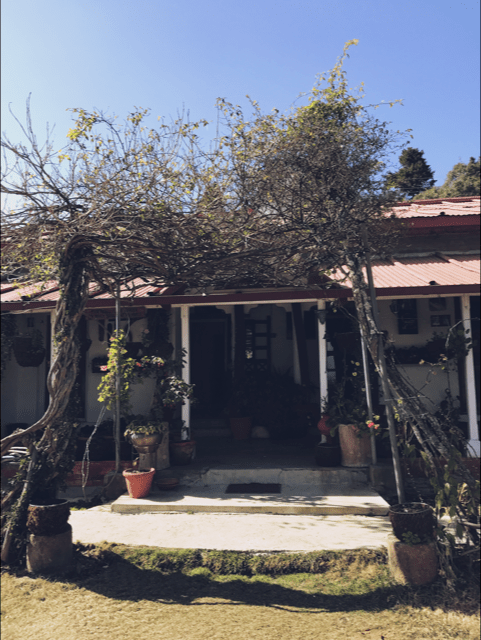
We were received by a car driver, who took us to Somerset Lodge, the place we had booked for our trip. It was a two-hour drive to this beautiful place, and though it was a bit cloudy, I liked the feel of the quiet place. Mukteshwar isn’t a commercial destination like Nainital or Bhimtal. People usually come here to see the Himalaya peaks, and get back to their hotels. Staying at the lodge and enjoying the nature was our only plan at the time.

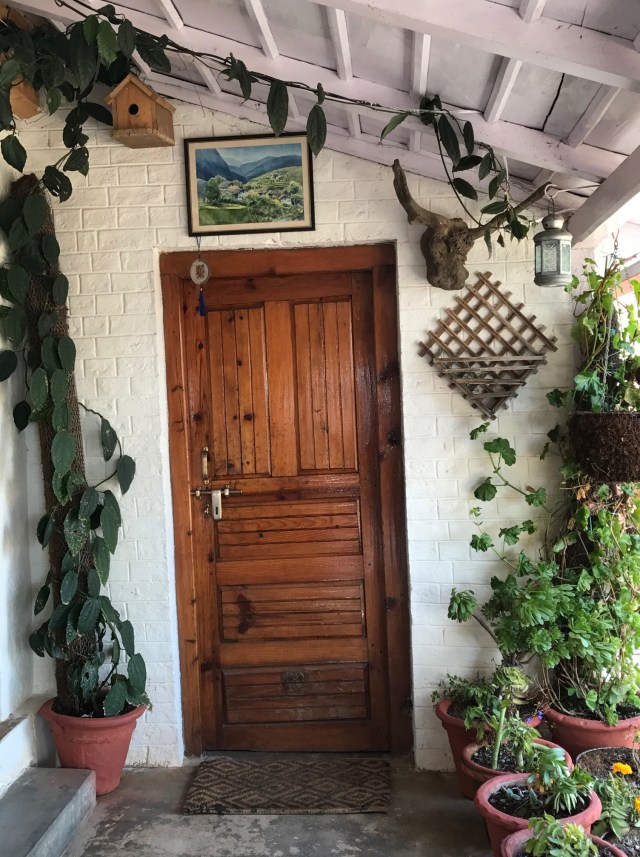
I could clearly see the passion of Rajender Singh Mehra, who takes care of Somerset Lodge, for nature. There were beautiful creeper plants all about the place, and such beautiful succulents and flowers. And the people here credited him for this. It was January, and I wondered what the place would look like in spring.

So, there we were, relaxing in the garden area after having a scrumptious, homely meal. Took a nap in our room, which seemed like a family suite (there were three rooms attached in here with a bathroom). We paid for a basic room, by the way. In the evening, we went for a walk, and I loved the silence of the place. During dinnertime, the husband had a word with Vijay, who works for the lodge as well. He asked us to go to Bhalu Gaad Waterfalls during the first half of our next day.

IMG_1629

Next morning, we had a delicious breakfast (people here can feed you like a mother; seriously!) and headed to the waterfalls with Goodwin, the driver. Giving us company was a very talented and interesting guy, Shashank Joshi. Shashank is a professional photographer and has been staying at Somerset for the last couple of months to capture nature and the mighty Himalayas. So, all four of us went to see the waterfall. There would be a bit of trekking required, informed Goodwin.

IMG_1922
Shashank with the local dog, Roger

It was a 20-minute drive, and we reached the place. And just when we started walking inside the woods, I could feel a gush of wind welcoming us. I just turned my head up, and the sound of the wind took me by a surprise. Within a few minutes, I could hear birds chirping around us, and green fern leaves adorning our pathway. It was such a break from the city life.

IMG_1767
The path to the waterfalls

Don’t go by the pictures of the waterfall that are available on the Internet. It’s all about the nature walk that you take to reach the waterfall. And I promise, it’s worth your time, and will leave you inspired. Take your parent or kid along; I saw old parents and little kids during the trek; cautiously walking on the pebbled path and crossing the beautiful little streams (we crossed two). I touched the clean water of one of the streams, and the cold water made me smile. My trip was already made, I happily told the husband.

The sight of Bhalu Gaad Waterfalls was beautiful. My husband regretted not getting a towel. “I would have loved taking a dip in the cold water,” he confessed. All four of us, took a place to sit around this waterfall, like many people around us. I just tried to soak in the feel of nature. Gosh, I cannot forget the experience, and I can still smell the fresh air of the forest even while writing this.

IMG_1888

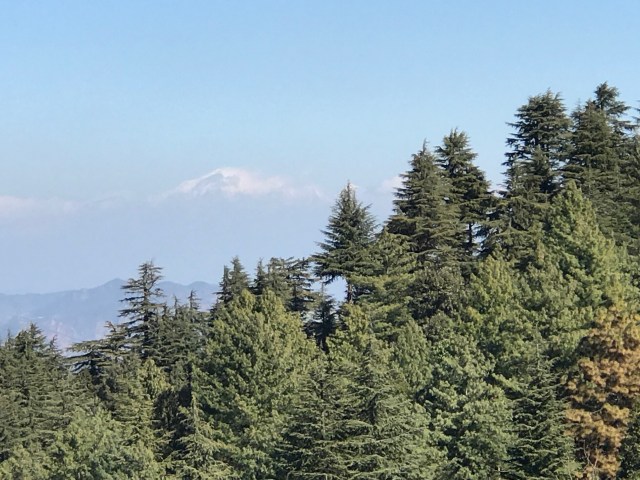
Later, we headed for Mukteshwar (our lodge was on its outskirts) for the Him Darshan. Again, the walk in the snow-laden road was amazing; it snowed before we came here. Now, I could feel the chilly air. The view of the snow peaks of the splendid Himalayas was beautiful. The peaks, however, were covered with tiny clouds, and we couldn’t get the full-fledge, clear view. Nevertheless, had it been snowing, even this sight wouldn’t be possible, I thought to myself.

IMG_1887

While walking back, we went to the Mukti Dham temple. It was surreal to just visit this temple. Soon, we headed to the lodge for our lunch. It was 4PM, and we were starving! Our meal was simple yet delicious. Later in the evening, we went to the nearby shops and bought a few local goodies like apricot jam and plum chutney.

It gets really cold in Mukteshwar once the sun sets down. By 8PM the temperature had dipped into the negative and we were wondering what to do next. Luckily, we met a very interesting couple at the lodge, who have been coming regularly to the hills and now plan to settle permanently near Mukteshwar. We discussed a whole range of topics (food, marriage, Indian traditions, Shoojit Sircar) and didn’t even realize that it was already midnight!

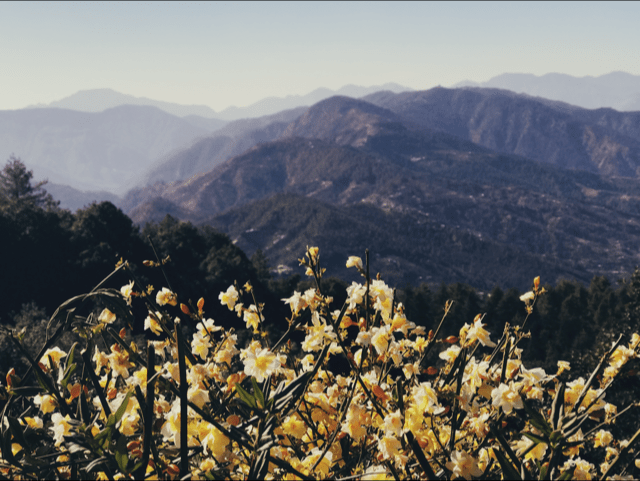
So, next morning, we went back to the step farming area near the garden area. After a long breakfast (we sat on the stone stairs and lucky for us, our breakfast followed there), we had a chat with a few people around the place. Soaked in the sun, collected a few pebbles and dried leaves. Enjoyed the view of the green hills and the snow peaked mountains from the garden area. And I wished how all Sundays were like this.

All in all, it was a lovely weekend in Mukteshwar, and it was time for us to check out. And, as it goes without saying, we will knock the doors of Somerset Lodge in the future. But, it will definitely be spring.

Back to my plough

IMG_2556

Home.
Where we celebrate small victories
Laugh at mistakes
Love each other’s imperfections
Where bonds grow stronger

Home, a lovely feeling
Can be a chaos, a mess actually
Aspirations dwindle, yet, become strong
Heavy conversations take place on the kitchen counter with a sibling
Oh, the feeling of home…

When I think of home, I think of a few people who always make me feeling special, and accept me just the way I am. There’s no need to hustle and clarify. No one is judging with a telescope, pointing your flaws.

And the list includes Pooja, a neighbour of mine, who’s indeed a soul mate. I might meet her after months, but it always feels like we were never away. It’s such a bliss to catch up with her, and you almost feel like you’re home. And everything is great, again. Everything will be all right.

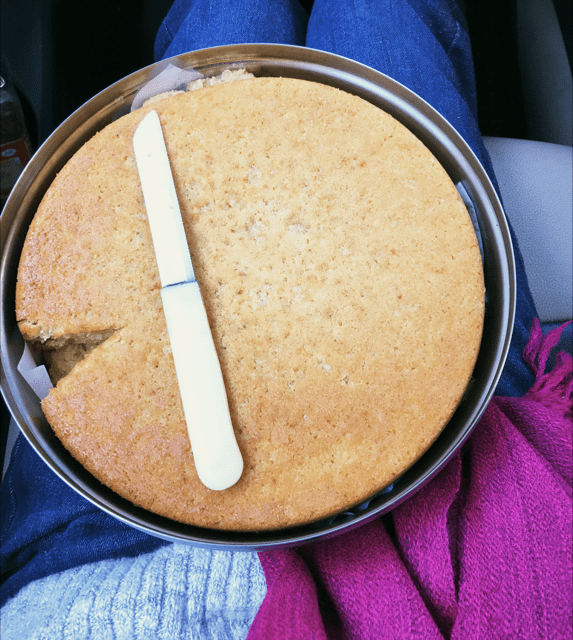
Last time I was in Surat, she called me to celebrate her Anniversary. Pooja brought a freshly baked cake from the kitchen, and you could see its hot air coming out. I enjoyed our quick meet, and the taste of the cake was in my mind for long! After a day or two, I had to ask the recipe of her cake. I was shy, but I still texted her. I didn’t want to miss out on this one.

And within minutes, she texted back the recipe. It was extremely simple, and I couldn’t believe the tiny list. When I came back to Gurugram, I tried it one busy morning, when we were planning to meet up a bunch of friends. There were so many lumps in my cake batter. I don’t have an electronic cake beater; so it didn’t help either. But, surprisingly, it turned out yum. Just like how Pooja bhabhi makes hers.

You know, as I’m turning older, I feel more attached to simple things. No frills, please. I like it plain, and that’s it. You can have 4 to 5 pieces of this cake, without feeling full. I can never do that with the fancy cakes. That’s the magic of this simple, homemade cake.

Make it this Sunday, and celebrate the little victory your family member or friend had this week. As that’s what matters.

Happy baking and happy bonding!

Recipe: Simple Whole-wheat Cake

Ingredients

2 cup whole-wheat flour
1 cup Malai (the layer of cream you see over boiled full-cream milk) – preferably room temperature, if you want to avoid lumps
1 cup sugar
1 cup milk powder
Milk, for consistency
1 tsp baking powder
½ tsp baking soda

Method:

Mix the dry ingredients first, and then add the wet ones. Add milk slowly, to avoid a runny batter. Bake your cake for about 45 minutes at 180 degrees. If a toothpick comes out clean (when dipped in the middle of the cake), consider it ready. And, don’t forget to pre-heat your oven.

Note: The second time I made it, I added double the baking soda, and the cake was really fluffy. So, don’t go overboard with it, if you like a decent spongy cake. Also, you can taste the batter, if you want to adjust the sugar accordingly.

Wrote this post while listening to Sara Bareilles, hence this title (from the lyrics of her song, Good Yellow Brick Road).

Words

“If all the world hated you and believed you wicked, while your own conscience approved of you and absolved you from guilt, you would not be without friends.”

– Charlotte Bronte in Jane Eyre (also quoted in the Netflix series, Anne with an E).

The Glass Powder

They say time heals everything. Every wound. Every cut. Every scar. But, I somehow, don’t think anything can ever heal the minute broken pieces of the glass powder. When pressed against the skin, it can hurt the most. And when there are a million pieces of glass broken into a powder, the jar can never be kept close. Never. It has to be abandoned. Immediately. And forgotten. Wish, we could abandon our dreams too. Forever.

Words

“Our lives are not in the lap of the gods but in the hands of our cooks. Hence befriend your cook because so much of the enjoyment of life lies within his power to give or take away as he sees fit. It is the invariable test of a wise man whether he has good food at home or not.”

– Confucian (Chinese teacher) view of food (as read in the book, The Essential Andhra Cookbook)

Spark joy?

IMG_1322

I was in no mood to cook. It was the weekend, and at least once or twice a week, it’s no big deal to order food from outside. Right? But, we really didn’t want to step out for long, so we took a look at the various restaurants, which could deliver food at our doorstep. And, I liked none of them. Wasn’t up for Biryani, no noodle dish, no pizza, or any other thing. Nothing created a spark in my mind, and I thought, I might as well feed our hungry selves and get over it.

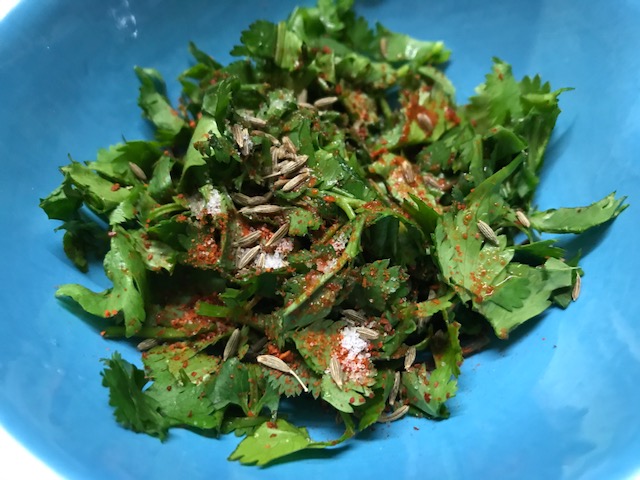
So, the menu was set, as usual a last-minute task that I excel in. Dal Tadka, whole-wheat Tandoori Rotis and Coriander salad. I was excited for the coriander part only. It sparked joy (Marie Kondo style).

As a young girl, I always thought what these coriander leaves were meant for in a salad or side-dish like this? Aren’t these supposed to be meant only for garnish? My aunt, Tamanna Mamiji, who’s my mother’s sister-in-law, made this quick recipe with super fresh coriander leaves. “My mum used to make it and feed us when we were kids,” she once told me.

The truth is, I could eat my Rotis with it, without any other sabzi. It’s tangy, spicy and fresh. Also, this mix of coriander leaves and lemon juice, is loaded with vitamin C. Goes out and shows, how one shouldn’t underestimate small or simple things. And that night, never did I imagine that this tiny side-dish could do the trick for me, and boost my dull mood.

Who likes to step out in winter anyway? Go, try this coriander sabzi, salad or side-dish–whatever you may like to call it–that can be made in less than five minutes.

IMG_1316

Recipe: Coriander salad (serves one or two)

Ingredients

1 cup fresh coriander (roughly chopped)
juice of half a lemon
salt to taste
¼ tsp red chilli powder
a pinch of cumin seeds

Method

In a bowl, mix all the ingredients. Mix well for 30 seconds and you’ll notice that the size of the coriander batch has shrunk a bit. Salt does it, I think. When it does, go ahead and serve it with a hot Roti.

An Indian Safari

20170311_175222
Khem Villas, Ranthambore

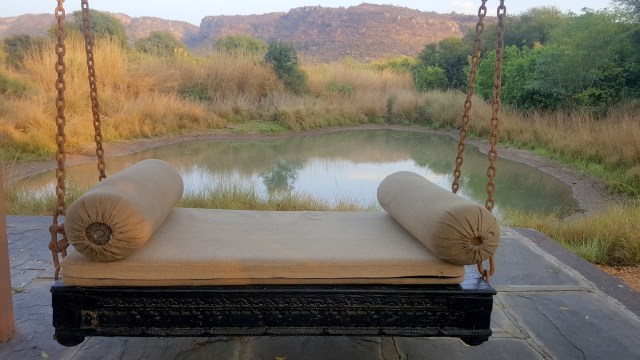
It was March, 2017, and I and my husband were looking for a place on the internet, where we could go and celebrate our marriage anniversary. My husband always wanted to see a tiger, roaming in the jungle (not in a zoo).  So, I thought, why not? The thrill of a safari ride made me gave in to his idea of Ranthambore. And we booked a room at the luxury jungle camp, Khem Villas.

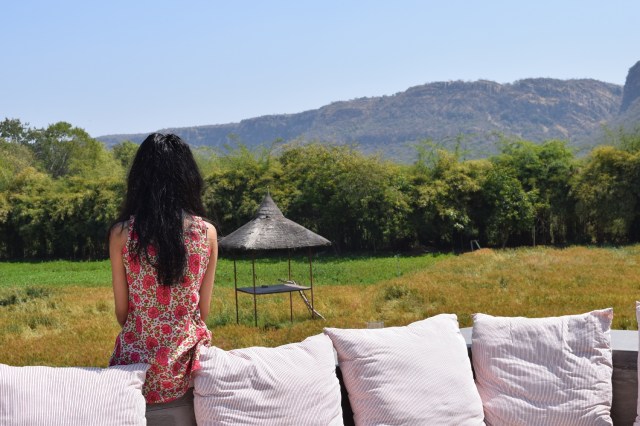
Khem Villas is a gem of a place that offers a peek into the wildlife of Sawai Madhopur. It was the perfect offbeat spot for us. It’s amazing to discover a place like Khem for travellers like me, who want to ditch the so-called most-trending resorts that only offer villa-sized rooms and on-time services. Khem is different. It gives you a taste of the wild, and the stories you get to hear every day from the people who work here will never fade from your memory.

We hit the road, and it took us a couple of hours to reach Ranthambore from Gurugram. After parking our car at the villa, I asked the helper boy if he’d ever seen a tiger in Sawai Madhopur. “Madam, a tiger was spotted in our CCTV four days back, exactly where you have parked your car,” he quickly replied. I almost had terrible jitters. Surely I don’t want to be eaten by a tiger!

At the entrance, I met Mittal Gala the naturalist, who took us around the property. Soon, I realised that if I genuinely want to explore nature, I need to spend some time with her as she seemed to be fearless and knew amazing facts about nature.

At Khem, you will only be served vegetarian food (mostly organic), and all the rave reviews you read about their food on Trip Advisor are true. The food served here is not just tasty, but the menu (comprising multiple cuisines) is divided in such a way that you will never eat the same item again. I was already impressed after our first meal in the mess area.

DSC_0988
Ranthambore National Park

So, the next morning, it was our time to experience our first safari ride ever! The pressure of spotting a tiger was high! It was 5.45AM, and I saw foreigners and other tourists with their individual blankets wrapped around them. Some of the travellers were spotting birds or a planet through a powerful set of binoculars that Digvijay the young naturalist had (you don’t want to miss talking to him, if you want to see the local birds, stars and the planets).

My husband is the most calm person I know, and unlike most of the restless travellers, he gave me a suggestion right before our safari began. “Just enjoy the ride. Don’t be disappointed if we don’t see the tiger. It’s all about the wildlife experience, and that’s why we are here.” The bitter fact was, nobody was interested in seeing the deer or the monkeys; all tourists came here to see the tiger. What he said actually made sense to me later.

I clearly thought in my head that our chances were anyway less, as our canter bus was filled with a chatty group of tourists who couldn’t stop cracking stupid jokes on each other! But, guess what? After about two hours, we saw Krishna the tigress, who was sitting on the ground, hiding in the bushes, and was about to sleep soon. I couldn’t believe our luck. The talkative crowd on the bus? I didn’t mind them on our way back.

During our evening snack time near the bonfire area, Usha Rathore, the GM and CEO of Khem Villas, shared interesting bits of information with us. She said that Machali, the ever-so famous tigress of Sawai, breathed her last here at Khem Villas. Usha pointed out the exact place. Machali was here for more than 15 days before she passed away. Fateh Singh Rathore, Usha’s father-in-law, was known as the tiger man. He had made a huge impact on the conservation of the local tigers here; and they say, even the tigers knew him well. “He had a flirtatious nature about him, and may be, because of this, tigresses like Machali liked him in return,” said Usha, with a broad smile.

So, usually, during the bonfire time, we get to see the stars with all the chirping of the local birds and tourists sharing their experiences with one another. But, I’m a food person, and I couldn’t stop munching on the crispy and hot momos and onion fritters that the waiter boy served us.

Next day, a guide from Khem Villas took us to the local fort and temple. Babu bhai, the guide, took us to every nook and cranny of the fort, and I had to actually stop him from talking so much, as he couldn’t stop sharing historical facts about the place! It was amazing to hear his stories, though. “How come you don’t have any fear of the tigers?” I asked him, while he constantly checked for the alarm calls from the monkeys and other animals here and there. Babu bhai said that he already had an encounter with the tiger, and since then, he doesn’t fear the big cat. “Just keep looking the tiger in the eye, and you’ll be safe,” he added.

DSC_0020
Babu bhai, the best guide we could ask for

After our fort tour, we settled for yet another delectable dinner which comprised the crustiest apple pie in the world! We had two more days to go. Although we did spot Krishna in our first safari tour, I wanted to see her walking or drinking water from one of the lakes. My greed was clear. And soon, our last night at Khem Villas came by. We didn’t spot any tiger in our last two safari rides, but, I really didn’t want to leave.

We had booked a normal room for two nights, but for our last night, we were upgraded to a luxury tent by the manager.

We were at the bonfire area where I caught up with Usha, and asked her where she came from, and she replied, “Actually, I grew up in Udaipur. I still remember, my first few nights as a newbie wife in Sawai Madhopur. You won’t believe, we had our honeymoon in the jungle! I remember, one night, we were in the middle of the jungle, and we had to sleep in a jeep in the open jungle. After some time, I stopped fearing the wildlife. In fact, now, I can’t live in the city! I get agitated by all the noise pollution, and it’s in the cities that I’m afraid to sleep in. Who’s scarier than us human beings? You tell me.”

Usha surely was trying to help me as I struggled with the idea of sleeping in the tent. Most people I assume would have liked it. But the truth was, unlike my husband, I couldn’t imagine myself sleeping calmly in the tent.

Many scary thoughts came up in my mind when I walked my way to the tent late after dinner, in pitch dark. I quickly rolled the canvas fabric down that served as a door. After an hour of reading, we turned off the light. I was trying hard to sleep, but, then, I heard an animal walking towards us. I knew I won’t be able to sleep in the tent after that minute! My husband also heard the noise from the animal, but he was too sleepy to think about it. I had no option but to call Usha for help around 12 in the night.

“Hey! Sorry, all our rooms are booked. But, you can sleep in my room,” it was the naturalist, Mittal, holding a glass lantern, outside our tent. I quickly tip-toed outside the tent and held her hand, tightly. “Do you need a room as well?” she asked my husband. “No. I’m all right. Just take her along with you,” he said in a cool manner. And, I went to a room inside the building.

I was pretty embarrassed next morning. “There was a cat near your tent. You had forgotten your cookie tray outside on a table. She ate the cookies and ran away. You thought it’s a big animal that will eat you up,” the naturalist said. “A tiger was also found walking in the mess area,” she quickly added, with a straight face. And, my heart skipped a beat.

DSC_0088
That’s me, looking at the Machan and enjoying the view

I bid Khem Villas farewell with some great unforgettable memories. After leaving the property, we shopped a few items made by the local women at Dastkar next door.

While driving back, I wrote a text message to the naturalist, thanking her for all the help. “The next time you come here, you will explore the insects and worms in the greens,” she texted me back. “No. I’m afraid of them,” I quickly reverted. “Okay. Butterflies and birds?” came her reply. “Yes! I would love to!” I wrote back.

If I had stopped overthinking, I could sleep in the tent that night. After reaching home, I kept thinking about the people who worked at Khem Villas. I could hear the monkey calls (actually made by our society dogs) that were considered alarm calls of a tiger or a leopard nearby there. But, did I feel safe in the house? I don’t know.