A December in Surat

DSC_0038

I hate flying; particularly, taking flights from Delhi to Surat. But, because of the recent reduced air fares or inflated train ticket prices, I take the former option more often. I was going for a month-long trip (November-December) to Surat, my parents’ place from Gurugram (where I live with my husband).

After my 7AM flight landed, I was already hungry. Of course, I had better things to eat here than the breakfast served on the flight. You see, I’ve gone on my dad. We share a lot of habits. One of them is, being impatient, when hungry; and to eat whatever you actually want to eat, without shame or guilt. For example, if I have to eat a particular dish that none of the family members want to eat, I will still go ahead, cook it and eat it. I have to; there’s no other option.

And just when my parents came to pick me up at the airport on a beautiful Sunday morning, I wanted to eat Tameta Bhajia (tomato fritters). I had to eat it. Dumas is the near the beach area, from where you can catch a sight of the Arabian Sea from far. And near the beach entrance (which is a rather muddy place), at the crossroads, is the Bhajia shop, where 4 to 6 people at a single stall, sell these mouth-watering fried items.

You get Aaloo Bhajia (potato pakoras or fritters), Tameta Bhajia and I believe, Onion Bhajia; out of which, I love Tameta Bhajia! You know, in this particular fritter version, you dip a slice of tomato with a layer of coriander chutney into a gram flour batter, and fry it till golden in colour. When you bite into the sizzling hot and crunchy Bhajia, you can actually taste the steamed tomato in it. The best part is, you don’t even have to dip your Bhajia into a chutney, as it’s already stuffed inside.

My parents were not even surprised to see the long queue at this tiny food stall. “It’s Surat. Anything is possible! People love to eat! So what, if it’s 7.30AM in the morning? It’s the best way to start your Sunday morning, right?” I thought in my head. After about 25 minutes, my dad returned to the car with a pack of Bhajias. And I knew it was my day. I could see my soul return him a big smile! I and my friends have been coming to this spot since our school and college days and each bite of the Bhajia brought back so many memories and happy faces.

At home, we had preparations going on for my brother’s wedding. One such afternoon, around 12.30PM, I was out to get some craft material that my creative cousin asked for. I was at Sargam Shopping Centre, on my two-wheeler. After buying the craft item, I realised that it was the perfect time to hit the Khaman seller, whom I could view from across the street. He only comes and sets his food cart around 12.30, five to six times a week; and I was more than happy to see Kaka’s face, which brought back fond school memories. This junction was on our way, where we school girls used to take a halt after school, and snack on some soft and flavourful Khaman that was served with chopped onion, nylon sev and tempered green chillies.

I bought a huge pack for myself; but before that, Kaka gave me a handful of Khaman and asked me to have it, before my turn came. None of the people from the queue got it, and I couldn’t stop blushing. He did recognise me, I muttered. For many, this Khaman was their only lunch item.

You know, I sometimes wonder how these things taste the exact same even after decades. I mean, it’s been a decade or even two, us school girls coming here for Kaka’s Khaman. The taste of the Khaman till today is the same, just like Kaka’s innocent smile. Sound memories, these.
DSC_0046 - Copy

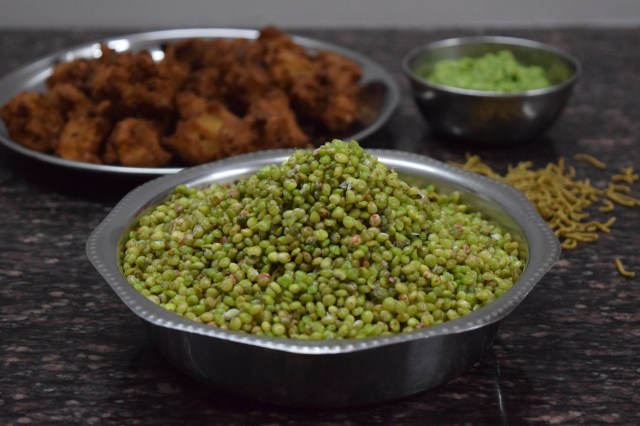
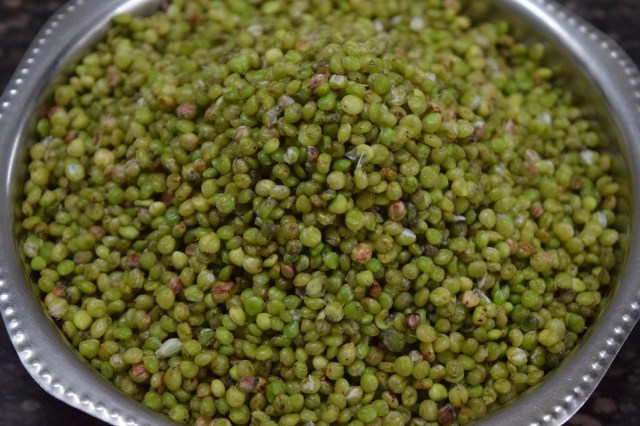
Apart from the usual Vrindavan’s Cold Cocoa and Chana Jor Garam chaat (flattened black chick peas) that we get on the roads in the evenings, wintertime in Surat stands out because of a few special delicacies. Ponk (green ripe Jowar seeds) tops it all. I was buying a gift item for my brother and sister-in-law; and after about an hour of strolling from shop to shop, I knew what to go home with. After voicing my order loudly in the middle of the crowded stalls near Rangila Park, I bought a huge batch of steamed Ponk, some Ponk Vadas, smooth green chutney and a small batch of Lemon Sev to go with it all.

I haven’t seen Ponk anywhere in the country but Surat. They say cities like Baroda also have it; but mainly, it’s a Surati food item. A lot of my cousins buy it in bulk and take Ponk to their respective cities for their friends and families. Ponk is very nourishing for health, and the wintertime delicacy that is rejoiced and relished by all Suratis. The basic steamed Ponk is soft in texture, and extremely fresh in taste. And the hot Ponk Vadas have spices and condiments in them, which make it a perfect winter snack item that you can have in mornings or evenings. At social gatherings and parties, people don’t miss adding these Ponk dishes in their menus. It’s a must.

DSC_0053 - Copy

What makes Surat a truly rich city is its food. Be it the poor, the middle-class or the rich, everybody in Surat likes to hit the street food vendors and eat their heart out. No wonder, the city’s food scene is famous. Those who haven’t been here, can only wonder what one attains by eating such delicious and historic food items on the streets, footpaths and in every nook of the city. We don’t crave for restaurants, in Surat! Never. I craved for some homemade Undhiyu, another Surati wintertime dish, but didn’t get a chance to have it.

Having lived in Surat for more than 23 years, I cannot even begin to tell you how much I miss the Surati street food. I left the city seven years ago. Which is why, I can say, it was a special December, indeed.

No rules in my kitchen!

final copy

Frankly, I was very reluctant when my husband asked me to try some Lebanese food. ‘How will I like it? I have never eaten it in my childhood!’ I said. Yes, as kids, we had pizzas, pastas and Chinese noodles, but not Shawarma. Thanks to this restaurant, Lub Lub Lebanese here in Gurugram (run by a Masterchef India contestant), which had rave reviews with the food that was fairly priced too, we went ahead and ordered a Paneer Shawarma. And, after a few weekends, we ordered a Lebanese platter that changed my thoughts about this cuisine. It was mouth-watering, the platter; everything in it, from the dips to the Paneer Shawarma.

After ordering this platter for the fifth time, I thought it’s time that I make this platter myself. But, where are the recipes? I started researching for the recipes on YouTube, and let me tell you, it wasn’t so easy. There were so many sauces and dips and spices, I started to think that it’s going to be one expensive task, this one.

So, weekend after weekend, I started to collect courage to try the entire platter. And last Saturday afternoon, I hit a gourmet store with a huge list of ingredients. Now, I decided to make everything from scratch. I’ll tell you what; local food companies literally loot us when they sell a Tzaziki Sauce. It’s so freaking simple to make; why pay so much for a bowl of it? And, when I saw the prices of Tahini sauce, Harissa sauce, etc. I was all the more surprised to see the prices. If I’m getting a Lebanese platter for Rs300, why should I pay Rs300 for each sauce and dip and make it an affair of Rs3000? Just saying.

Here’s how I went about it. I researched all the recipes from scratch and picked up all the local veggies only. In fact, I used all the Indian spices that I had with me. You know, this is what I have learnt from my experience. I end up buying all the expensive ingredients and then the bottles and packets go waste in the fridge.

My husband kept telling me that he could order the platter from the same restaurant, as he wanted to save me from the drill, but I didn’t listen to him or cared for his expressions. It was almost 5.45 PM when I entered the kitchen and the platter was ready by 8PM. Yes, it took me almost two hours to make this entire spread, but I did it.

One of my resolutions this year was to try authentic world recipes, and that’s what inspired me to go crazy for this one. Was I happy? Of course! We ate for almost 45 minutes, and then, gave up. There was no space in our tummies for anymore; we had stuffed ourselves so much.

So, dear readers, here’s how I went about it. Hope you like the recipes; in spite of all the local ingredients in it. I couldn’t get the recipe of Paneer Shawarma that I liked from the Lub Lub Lebanese restaurant platter, but I tried to go as close to the dish as I could.

For the recipes, I would like to send my huge thanks to the YouTubers, BaytBushra (you’re awesome) whom I referred for Musabah and Muhammarah, Akis Kitchen (run by a passionate chef) whom I referred for the Tzatziki sauce, and Cooking with Jen (owned by a sweet home chef) whom I referred for the Harissa Sauce recipe. I would ask you guys to subscribe them and spread some love.

Recipe: Indian-inspired Lebanese (Mezze) Platter

  1. Tahini Sauce

Now, this is something that you’ll need a lot, so, make this one first. Churn some white sesame seeds with a little olive oil, two cloves of garlic, salt and two tbsp ofwater (I just couldn’t get the right consistency without it).

  1. Musabaha (or Hummus)

Soak some chickpeas overnight, and boil them. In a small grinding jar, add 3/4 cup of boiled chickpeas. Add 2 tbsp Tahini sauce,olive oil, two cloves of garlic, 2 tbsp lemon juice and all the spices (salt, pepper, cumin powder and red chilli powder). And your Musabaha (as chef Bushra likes people to call it) or Hummus is ready. Serve it with a drizzle of olive oil on top with a sprinkle of cumin powder.

  1. Tzatziki sauce or dip

This was the best dip on the platter, and I’m always going to have it my fridge. I love the smell of the dill leaves; it’s so fresh! By the way, both the ts are silent here, so you actually have to pronounce it as Zaziki. And I couldn’t stop repeating it in my head.

For the Greek yogurt, all you need to do is take a colander or strainer, put a cheesecloth or muslin cloth on it. You can also use an old but clean white handkerchief. And add two or three cups of fresh curd. Now, twist the cloth and keep it on a deep plate (for the excess water to drain off). After about six hours, you’ll see that the curd has become half, and you’re left with a waterless yogurt called the Greek Yogurt.

Now, to a cup of Greek yogurt, add half grated cucumber, 1 crushed clove of garlic, a tsp of distilled white vinegar (or white wine vinegar as chef Akis Petretzikis highly recommended on his channel), and some chopped dill leaves (my local veggie vendor had it; didn’t go to gourmet store for it and saved some bucks). Don’t forget to add a good drizzle of olive oil and season it with some salt and freshly ground pepper.

  1. Muhammarah (Red bell pepper dip)

All right. So, the ingredient list of this specific dip freaked me out. I didn’t have pomegranate molasses, and nor did my local gourmet store had it. I felt a feeling of guilt while trying this recipe. But here’s what you can do. I googled what it is, and it’s basically a concoction of pomegranate juice, sugar and lemon juice. So, don’t freak out or buy that pricey bottle of pomegranate molasses; just make your own. I skipped it for this dip, but I can do this recipe for later surely.

For this recipe, add a roasted red bell pepper (deseeded) in a grinding jar with a handful of walnuts, 2 tbsp Tahini sauce, 1 toast of bread, and a drizzle of olive oil. Grind it to a paste. Now, add 1 tbsp of water (I used it for a smoother texture), and season it with some salt and red chilli powder.

  1. Falafel

In a grinding jar, add two cups of boiled beans, 1 cup chopped coriander leaves, 2 to 3 chopped green onions (optional), 5 cloves of garlic. Blend it, but mind my tip-off. I grinded it so much so that it became a runny thin paste. You don’t want to do the same. Add water only to blend it all. You want to make a thick paste for the Falafel tikkis or balls. Don’t make the mistake that I made. I had to use huge amounts bread crumbs to make it thick. So, always check in between while grinding this paste, as we are looking for a thick paste. To finish it off, add the spices (salt, pepper, coriander powder, red chilli and cumin powder) with a ½ tsp of baking soda. Now, you need to make tikkis and deep-dry or shallow-fry them. As you like it.

  1. Pita Bread

I just made some dough with my whole wheat flour and a pinch of salt. Then, I made 3 thick parathas with no ghee or butter. Just roasted them on the griddle. And cut it with my kitchen scissors.

  1. Paneer Shawarma

All right, so this was the most difficult recipe to find on the net. I wanted to make the exact Paneer Shawarma  that we order from Lub Lub Lebanese restaurant. But, there was no way I could phone the chef and get the recipe, no? I had to find its recipe, and I just couldn’t figure out how. But, then, I knew there was Harissa Sauce in it. So, I found a YouTube video wherein the home chef made the sauce. I tried her recipe and added a few things for that zing. And it worked. So, here’s what you can do for this.

In a hot pan, add cumin and coriander seeds. Roast it for some time. Now, some olive oil, 1 chopped red bell pepper, 1 chopped onion, 2 red chilli pepper (I used the local thick red chillies), 1 clove of garlic and salt. Roast everything until you can smell the aromas. Now, let it cool and grind it to a paste.

In the same pan, add in the paste, 3 tbsp tomato ketch-up, 1 roughly chopped tomato, and cook it. You might want to add 2 tbsp of water to improve its texture. Now, add some chopped pieces of homemade cottage cheese or paneer (recipe: boil 1 litre milk and quickly add juice of 1 big lemon; switch off the flame and strain it in a colander that’s covered with a muslin cloth. Twist the cloth and put something heavy on it for 2 hours). Finish it off with a dash of lemon juice.

  1. Salad

In a bowl, add some length-wise cut red bell pepper, capsicum, lettuce (I didn’t have it at the time), beetroot, onion, etc. Whatever you have in hand. Mix lemon juice, vinegar, salt and black pepper and give it a mix.

My husband was happy when he tasted the platter, and it was fun to prove him wrong. My dishes were almost there, if you know what I mean. A total win-win this one. Also, I have saved the dips and sauces for later. I will share how I use them this week. Until then, happy cooking! And, remember, always keep an open mind when you try new cuisines and know that you can cook anything in your kitchen because there are no rules!

The art of jamming

1

It’s January, and I’m already learning my lessons; both in the kitchen and otherwise. Don’t beat yourself up. Learn to pray. Think happy thoughts (the toughest). Believe in yourself a bit more. And, yes, don’t forget to make your bed, every morning.

Moving to my food experiments, there are so many YouTube chefs that I follow; I have been wanting to try their recipes. One of them is Maangchi, who makes Korean dishes and shares the authentic recipes on her channel. I keep looking for the vegetarian part of her videos and make notes of the things that I can create in my kitchen.

My husband, the other day, said that one of his friends can get reasonable strawberries from some place. So, I asked him to get me two packs of fresh strawberries. Well, that was after I saw Maangchi’s video of strawberry jam. I was really keen on trying it; and my fridge was out of jam anyway.

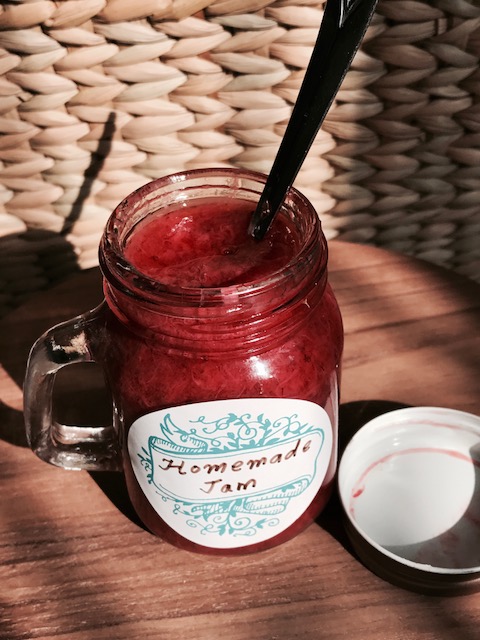
The jam turned out to be yum, and since the day I made it, I haven’t been able to put the jar down. Believe me, guys, homemade jams are delicious, and way, way better than the store-bought ones that are filled with endless ingredients.

With this one, I kind of wish to make a fruit jam in every season. You can have this jam with any kind of toasted bread or even crispy roti or paratha for that matter. Spread it generously on a crispy slice of bread and enjoy the goodness of the berries.

2

Recipe: Homemade Strawberry Jam

Ingredients

Strawberries (2 packs – normal ones that are available in most food markets)
Sugar – 5 tbsp (or as per your wish; I wanted to use as little as I could)

Method

  1. Now, first things first, wash the berries and remove the tip of each piece.
    2. Dump them in a big, solid vessel with the sugar.
    3. Put this on low to medium flame for about 15 minutes with the lid on.
    4. Switch off the flame and start mashing it with your potato masher. Keep the jam aside to cool.
    5. Store in a clean jar.

Note: All right, so here’s the deal with this jam. When I kept it on the flame, and closed the lid for a few minutes, I noticed that the strawberry mixture was bubbling and coming out of the vessel. Then, I shifted the mixture into a bigger vessel and put a heavy kitchen item on the lid so that the mixture doesn’t come out. Well, guess what, my stove was red with the bubbling jam mixture still escaping from the vessel. So, if you want to avoid this from happening, use a big vessel and after about 8 to 10 minutes, keep a watch on the jam; stir it to avoid the spill. Also, a lot of people use lemon juice in their jams; I didn’t, because the strawberries that I had were citrus enough.

Make this jam at home and get ready to put smiles on people’s faces. A good start for January, no?

Go local, Delhi style

Today, we went to Dilli Haat to attend the Dastkari Haat Crafts Bazaar. It was the first day of this exhibition. Why, you may ask? Well, I was just tired of browsing Netflix and YouTube for inspiring and fun videos. Really wanted a break from that. So, after a having a heavy breakfast, I and my husband stepped out in our car and hit the highway, from Gurugram to Delhi (INA area was our destination). Although I have been to Dilli Haat several times earlier, I still wanted to spend some time here.

In the first five minutes of stepping inside, I bought a cotton backpack that had block prints on it. Cotton is a better version that polyester backpacks, I thought, while buying it. In the next hour, we just roamed and saw different crafts that artists exhibited there.

Soon, we decided to go for a quick visit to the nearby Lodhi Gardens. Took a rickshaw (our car was parked safely at Dilli Haat parking lot), and walked inside the garden area for a bit. I was surprised to see so many people enjoying picnics there; to them, much like us, the smog didn’t seem to matter. After about an hour of walking aimlessly, we were hungry. But, the restaurant there had a long waiting list, so we grabbed a plate of sweet potato (with a dash of lemon juice and black salt) that the street vendor was selling at the entrance gate.

Then, we took a rickshaw to yet another historic place, Humayun’s Tomb. After entering the main gate, I noticed a huge line for tickets. It was around 2 o’ clock in the afternoon. I almost fainted looking at the queue, and announced to my husband that I have no energy to stand here for tickets. It could take at least an hour for us to just get our entry tickets. “We’ll come back next time, early in the morning,” he said, and we quickly hired a rickshaw back to Dilli Haat.

Once inside the open and crowded area (1st January seemed to be a happy ‘strolling’ day for us all), my attention went to a Shibori dyed Kurta. It was a green piece with white parrots printed/hand-pressed on it. But I wasn’t convinced with the price and gave it a miss. The vendor was from Bikaner, Rajasthan, I noted.

A small stall nearby was selling hand-block quilted bed covers and quilts. These furnishings were extremely beautiful and decently priced as well. I knew if I bought something like these from a website or a decor store, I will be fooled for the price. So, I bought a red Mogra print quilt that I absolutely loved. Though, the print has become extremely common, I thought I might myself have it and not regret later. It was somewhere hidden in the pile of stuff, and I was glad I noticed it before anybody else could.

We were starving presently. After looking at a few spaces (that were mostly distributed state-wise), we zeroed in on Navdanya Organic Food Cafe, where we had Rajma Chawal and Sarson and Makki ki Roti. Both our orders were decent in taste. Soon, we reached the parking lot, and hit the road for home. It was nice to see the sun setting during our long drive. Some great trance music was being played by a local English radio station, and I and my husband were almost dozing off (with our eyes open) at the moment; thank God for our seat belts that saved us from hitting the dashboard.

How did you spend your first day of 2018?

My Food Wishes for 2018

IMG_7521

I was going to write the title of this piece, my food resolutions, but going by history, I hardly follow what I resolve to do every New Year; so here are my food wishes that are close to my heart. I have been thinking about them a lot, of late. Hope I continue to follow my gut in the kitchen and don’t get bogged down by situations that seem daunting no matter what. For me, cooking is a healing therapy. It might sound cheesy or even a joke; but, believe me, right now, I have nothing to hope for. It’s just me, my kitchen stove, my kneading bowl and a few equipment that I use three times a day, just to see some optimism throughout the day. When you live in a city that hardly inspires you, have no job in hand, and feel unaccomplished, let your kitchen be your companion in thick and thin.

  1. Swearing by my granny’s kitchen rules

She will clean her kitchen and keep it spotless, especially before going to sleep in the night. Her kitchen is locked when not in use, and the stove top shines. She doesn’t even waste food; but for her, respecting food doesn’t mean eating a dish that was cooked two days back. You see, some people keep refrigerating food thinking it will be the same forever. Not this lady. She doesn’t even use the fridge. My Nani ma (mother’s mum), was a revelation when I got to spend some time with her a few days back. As a grown up, it was a different experience; I kept watching her in the kitchen. For example, she never leaves her dough for next day; there will be stale rotis in the box. Stale rotis, according to her, are way more nutritious than stale dough. So, basically, I don’t need to look at any international chef or a celebrated author to tell me what to do in the kitchen. Nani Ma is enough.

  1. Bring in the pulses

All right, so up until now, I thought cooking is all about veggies. If there are no vegetables in the kitchen, I can’t cook anything. Well, I did a bit of research (just looked at my pantry, to be precise), and found that I absolutely forget most of the pulses. Only three to four of them go in use. So, here’s a food wish I truly want to work on. Why leave the pulses behind?

  1. Use less oil

Whether it is cold pressed oil or unrefined oil, the truth (according to my recent readings) is that too much oil is anyway not good for you. So, I want to make sure I keep changing my oil every day; and that, I use less oil. If the vegetable is sticking on the pan, I should add water; but I anyhow should avoid using spoonfuls of oil just to make the dish look rich in flavour/colour or texture.

  1. Try skipping wheat, once in a while

Nani swears by Bajra; and hence, I have realised that it’s high time I give wheat a break, at least a few times a week. Up until now, I only cared for rice, but now, I want to explore more. Jowar, Ragi, and other ancient grains, bring it on!

  1. Make your own goodies

All right, so if possible, try making your own sauces, butters and jams. That’s something I have been telling myself a lot, lately. From pizza sauce to peanut butter, there’s a little improvement that I have made towards this. But, there’s still a long way ahead. Also, if one makes something at home, he or she will make sure it’s finished. Your store-bought bottles will never achieve the same stature. No? Also, I have learnt how to bake bread. So, if I keep my lazy self alert, I can actually bake bread and cookies, instead of avoiding the ready-to-eat ones altogether.

  1. Record more recipes

It takes determination to ask rigid family ladies their food recipes; yes, I experience it all the time. Either they think that their recipes are worthless or they are too busy to share the actual recipe with you. But, if you actually crack the task, you can get a hell lot of unique and great recipes that will be otherwise forgotten. So, whenever I taste something flavoursome, something that’s extra ordinary–be it a basic chutney or pickle–I make sure I ask that person how to make it, without letting shame or impatience come my way.

  1. Seek authentic world recipes

Let’s accept it, cooking wasn’t easy as it is now. We have a huge database of recipes before our screens all the time. Each day, colourful photos hit our social media feeds. All you need to do is cook the recipe. But, I need to draw a line here. Instead of knowing the trendy dishes like mug cake or kale smoothie, I need to try authentic recipes from various cuisines and enjoy cooking a few of them. This gives me a boost, as I get to cook something that’s a part of an other land. Second, it forces me to be creative. And third, I believe that it is a way of respect, which only the original recipe that is years old, deserves.

What are food wishes for the year 2018?

An old melody

20171113_130232

I’m at my mum’s place these days, as mum wants to buy my outfits for my brother’s wedding that’s coming up next month. But I have decided to stay back for more as we need to take care of the Sangeet (one of the most important wedding functions for us). From selecting the songs to convincing the family members that things would be all right at the Sangeet, there is a lot that needs to be looked into.

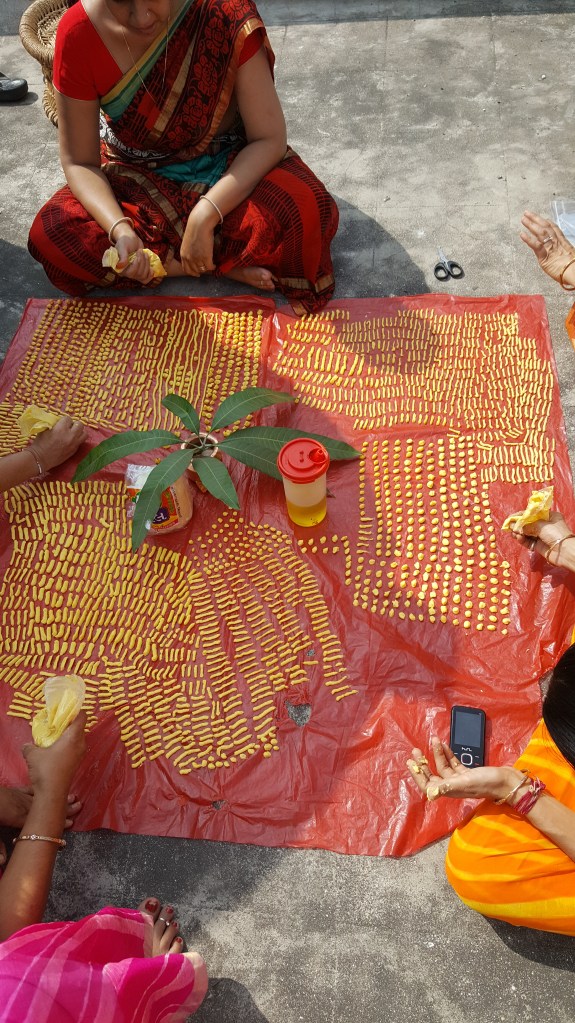
Today, however, the best part came when I got to know that the ladies of the family (who are in the same city) need to make badis to mark the start of the wedding festivities in the house. When my mum announced this to me in the morning, I was delighted as making badis in the morning or noon sunlight on the terrace is something I could recollect from my childhood. I absolutely loved it as a kid when mum used an old cotton saree to make badis. Never did I care about its recipe, but it was just her and one of my aunts drying the badis in the sun and the whole thing never ever looked tedious to me.

20171113_124103

Mum soaked 1.25 (an auspicious number for such important events) kg of yellow moong dal for a few hours, and made its paste with a dash of turmeric powder. We took the paste in a white tub, a big spoon, a small copper jug (with water and mango leaves), and a copper plate (with kumkum powder and rice) for a little pooja (prayer) that was supposed to be done before making the badis. Now, not always do we perform the little pooja, but because this activity was only a signal of the start of the wedding preparations, the pooja had to be done. Each lady got a tikka on her forehead (with soaked kumkum powder and rice grains). There were a few plastic covers that we spread at one of the corners of the terrace that had some shadow. Then, there were those plastic airtight bags, a pair of scissor, a small piece of jaggery and a bottle of oil that neighbour aunty suggested to spread on the red plastic sheet before making badis.

Soon, the ladies started singing songs for lord Ganesha and drawing the badis. Some ladies drew broken lines and some of them created dots with the dal paste that was filled in the zip-lock plastic bags. The scissor was used to create a small hole before adding the paste though. These badis were supposed to be kept in the sun for the entire day. In the end of little activity, one of my aunts gave little jaggery blocks (decorated with gota lace) as a token to thank them.

20171113_232445

Later in the evening, mum, dad and I went to the terrace and brought all the badis home. The badis had sticked well on the plastic, so we had to use a knife to remove them quickly.

In Jaiselmer, we use badis in sabzis like Papad ki sabzi, Gawar fali badi kachari ki sabzi, etc. All ladies of my family have a bottle of badi in their kitchens. And somehow, it’s always considered auspicious. I’m assuming one of the reasons could be the many health benefits of moong dal.

Whatever the case might be, I’m always curious to know what happened in the kitchen when my mum and beloved aunts were growing up as kids. How tough their life must be and but, yet so beautiful. “Oh, we had no money. We never had the luxury of unlimited and family food. But we were still happy. Not like these days where people are always dissatisfied with whatever they get to eat,” says my aunt, whom we call Bhua (my dad’s sister). These days, there are endless kitchen products available in the stores that we fascinate for. I wonder who fascinates homemade things like badis.

The little things in life

20171026_094311 - Copy

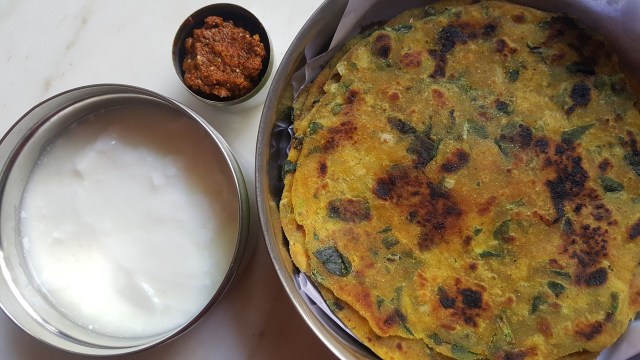
In Surat, almost every snack stall, general store and even some of the chemists, sell packets of Thepla. When hunger strikes, Thepla is the ultimate go-to food item for us, especially when one is at office or is travelling. Packed with a small pouch of pickle, a Thepla pack makes for a complete meal. When I was studying in Bengaluru, I totally missed the snack items that are sold in every nook of Surat. That’s when I decided to learn Gujarati snack items including Theplas, as craving for them sucked.

So, there I was, attending one of Niru’s Cooking Classes. I was serious like hell. I had to learn Gujarati farsan items. If you’re living in Surat, you might not take the load of learning these snacks; but my experience changed that completely. The thought of making my own farsan excited me. From now on, I would be able to make them in my own kitchen, wherever I go, I thought. And, truly, it helps me even today. I live in Gurugram and no place sells Theplas. Mumbai still had it. Also, in North India, greens are available mostly in winters only. So, these days, I try to make the most of fenugreek leaves; given its good nutrient factor.

I remember my neighbour aunty’s daughter used to live in France once upon a time. She used to knead the dough with a lot of curd, and it lasted her for days together; her daughter could enjoy these even in France!

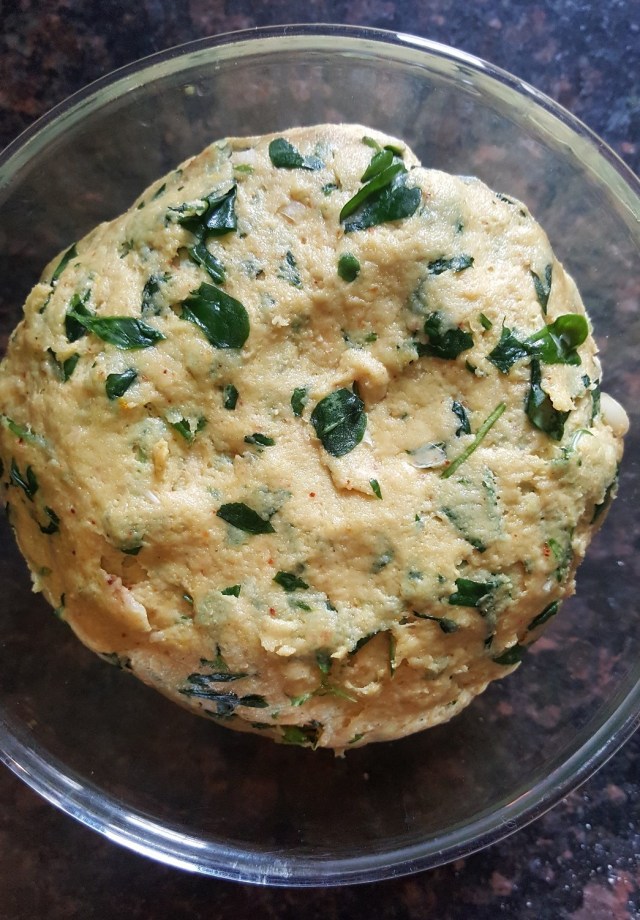
Initially, it took me a hell lot of time in preparing the dough. The ingredient list didn’t seem to end. With practice, however, I now know it by heart, and it takes me only a few minutes to add all of them at one go!

cropped

Garlic is the hero when it comes to Theplas. One of my brothers always wants the garlic flakes to be seen on his Theplas. You can, however, skip it if you’re a Jain. If you like crispy Theplas, have it fresh, right after you’ve cooked it. And, if you like your Theplas to be soft, make a pile of them, keep them in the Roti dabba (box) for half an hour or more, and they will turn soft. Also, you need to roll a Thepla into a very thin round sheet. That’s one of the secrets of making it well. You can’t be making it thick like a Paratha. Unless you don’t care of its resemblance to the original Thepla.

Today, my husband said he will have a long day at work. So I packed about six to eight Theplas extra for the evening.

If you are planning to hit the road, don’t forget this snack goodie. It’s not only delicious to eat, but is healthy as well. Also, if you have lots of guests staying over, and the breakfast menu is freaking you out, just prepare this dough and serve them hot and crispy Theplas. Make sure you have some mango pickle or curd to go with it, and you’re set.

Recipe: Thepla (the original fenugreek version)

According to Niranjana (my cooking teacher back in Surat), it’s best to knead the dough and make the Theplas right away. Don’t keep the dough aside; prepare it right when you will use it. No point in keeping the dough for long, as you might as well keep the Theplas on your kitchen counter for later.

Also, a lot of people in Gujarat and Maharashtra prefer sesame seeds to be added in their Theplas. I don’t see it in Niranjana’s recipe, and I would like to stick with it.

There are two secret ingredients that can be used to make your Theplas soft like clay dough that are mentioned here.

Lastly, if you like this recipe, secretly thank Niranjana Joshi for it, as the recipe is inspired by what she taught us. She’s my star! I still save the recipe booklet she gave me from the world, wrapped in a printed cotton bag somewhere in one of my bookracks. Holy stuff, this.

Ingredients

Wheat flour (around 4 to 5 cups)
fenugreek leaves (washed, dried and chopped)
salt to taste
sugar – 2 tbsp
chilli powder – at least 1 tsp
turmeric powder – ½ tsp
fresh curd – 2 to 4 tbsp (I use what I have in hand)
oil – 2 to 3 tbsp
a pinch of asafoetida
coriander leaves – chopped (optional)
rice and bajra flour – 2 tbsp each (I always forget to add these)
ginger garlic paste – at least 2 tsp 
green chilli paste – ½ tsp (optional)
oil to roast the Theplas on the griddle

Tools

1. Tawa griddle (I use a round cast iron one)
2. Wooden Roti press to press the Theplas while roasting (if you can manage without it, no need to buy it)
3. Rolling pin

Method

1. Mix all the ingredients. If you’re planning to go on a long trip, add more curd. This will act as a preservative and will keep your Theplas fresh for long.
2. Roll out a thin Thepla, and roast it like a Roti with a little oil.
3. Serve with a cup of fresh curd or pickle.


Collecting hope

DSC_0540 - Copy

I never got to spend time with my in-laws in my six years of marriage, as I’m getting to do so these days. My mother-in-law is suffering from brain aneurysm, and she had to admitted again in the ICU for a couple of days, as her present medicine is really strong. As I write this, I’m thinking to make her some masala tea, that she’s craving inside the ICU. The hospital is a strict one, so I will hide the tea flask in my purse and hand it over to the nurse. Hopefully, she will allow my MIL to have it.

So, I’m cooking a lot for my father-in-law (my MIL can only eat the food served at the hospital) these days, though I have to make sure that the food simple, whatsoever. I really don’t want to goof up with the dishes I serve to him. You see, my quest for cooking good food will never end. As I’m growing older (turning 30 this month), my likings are changing too. And rarely do I crave for a royal spread as it is. And, hey! It’s not a beautiful thali that we have at home on daily basis. Just the basic items. A green chutney, raita (yogurt) and a salad (for lunches) are enough. And may be a sweet dish, every once in a while (for dinners). You will never three curries/sabzis in my thali or 10 bowls of goodies on the platter at one go (hate Instagram for that, as the food pictures make me question the simple food I have at home). Just saying.

Mostly, a dish made at home turns out to be a winner when its ingredient list is small and its flavour intact. My in-laws, especially, are into simple food, and this is the one rule they go by. When I try to act like a wannabe chef and serve dishes that are complicated, it doesn’t go well at the dining table. For them, it has to be a no-nonsense vegetarian fare. I have seen cases of constipation and gas taking place after such foolish attempts, when I try to fool around in the kitchen. Actually, I’m still trying to learn which foods trigger such issues for them. And, with time, I’m learning to go with whatever that can be cooked simply, without any overload of the so-called fancy ingredients and dishes.

It was only two days back, when my mother-in-law came home after spending couple of days at the hospital. She slept really well that night, and loved being at home. It was Dussehra morning, when I asked her about the special dish to be made. She said Kheer. However, around 9AM in the morning, we noticed that she was looking lost for a few minutes, and we rushed to the hospital, fearing a clot in her brain. And the angiography report showed just that. After about a couple of hours in the hospital, she was transferred into the ICU. We three (my father-in-law, my husband and I) had spent 12 hours strolling around the hospital, and at 11PM, we came back home. She said she missed the watching the Dussehra festivities. And, there was no Kheer in the kitchen.

Recipe: Kheer

My father in law cooks occasionally, but whenever he does, it’s always a precise procedure. His Kheer (rice and milk pudding) is liked by us all, and we always try to copy what he does. From the measurement to the stirring, everything matters when it comes to preparing Kheer. During winters, he always asks us to prepare this Kheer often at home, over phone calls. Here’s his recipe.

Ingredients

2 litre milk
2 fist rice
150 to 200 gm sugar
saffron threads, cardamoms and its powder, raisins, coarsely crushed nuts (all optional)

Method

1. You need to wash the rice properly, and soak it for at least 15 minutes.
2. In a deep vessel, add the milk, and once it boils, add in the soaked rice (remove its water).
3. Once you add the rice, make sure the flame is in its lowest speed. And you should be able to see little bubbles in the sides, which means that the Kheer is getting cooked.
4. You need to stir the milk and rice mixture, every couple of minutes. Make sure the vessel’s bottom is clean; if you don’t stir from time to time, the Kheer will stick on the bottom.
5. After 20 minutes, check if the rice has been cooked. Also, now, you will see that the milk has turned a little yellow in colour. We don’t want a runny, water-like consistency. The milk should get a bit thick and creamy.
6. Add in the sugar, as the final step. After about five minutes, shut the flame. Add the seasonings, according to your choice. My father-in-law likes to keep it simple.

Now, as I write this, I’m waiting for my mother-in-law to return home soon, with good health. I keep thinking of all the simple dishes that she cooked for us, these days in the kitchen. In my next few posts, I will be uploading a few of the things that she made in the kitchen. And, I hope, this Diwali would be a really special one, with her at our side. A smile on her face, and her heart content as it always is.

What’s your special wish for this Diwali?


Words

“Sometimes fate is like a small sandstorm that keeps changing direction. You change direction, but the sandstorm chases you. You turn again, but the storm adjusts. Over and over you play this out, like some ominous dance with death just before dawn. Why? Because this storm isn’t something that blew in from far away, something that has nothing to do with you. This storm is you. Something inside you. So all you can do is give in to it, step right inside the storm, closing your eyes and plugging up your ears so the sand doesn’t get in, and walk through it, step by step. There’s no sun there, no moon, no direction, no sense of time. Just fine white sand swirling up into the sky like pulverised bones. That’s the kind of sandstorm you need to imagine.”

– Haruki Murakami in Kakfa on the Shore 

Daily inspiration

IMG_20170904_203540_587 - CopyMonotony. We certainly need to strive hard to break it, constantly. There are so many things that can stress you out. Sometimes, you can’t stop thinking about how things could be better. But, then, you have to let go of your worries, and start breathing; once again.

As a homemaker, and, now, as a freelance writer, I have to find joy in every household chore. Cooking, however, is something that takes a lot of my mental work. ‘What should I cook today?’ is the question that kills my mind every morning. I do enjoy cooking; and when I don’t, I feel that something is missing; but, cooking, as a daily chore can be extremely monotonous. And, many a time, I fail to live up to it.

And, come on, I can’t be making pasta, hot and sour soup, Japanese-style salad or a chia seed drink daily to feel better. I have to face the veggies! Before preparing every meal, I see the veggies in the fridge and find none of which I feel like eating. Creativity and veggies hardly go hand in hand during the week, for me, at least.

Nonetheless, when you play with textures and flavours, you can, I believe, break the monotony. We never got new items to eat every week in my mum’s kitchen. But, still, almost all the dishes that she made, had us kids drool them. Like this Mirchi ki sabzi.

It looks hot, but it isn’t. It is tangy in taste and soft in texture (can be mashed easily) and goes perfectly with my roti or rice. What I really like about it is that it doesn’t go stale easily. So, I always end up enjoying it the following day also. I can imagine, in a climate like that of Jaiselmer’s, this dish fits aptly.

Till date, I haven’t been able to crack my mum’s exact recipe, but, that said, I’m not afraid of trying it again an again. So, the next time you see these green chillies in your vegetable market, add some in your cart/basket as well. I hope you try this recipe, and feel a little better about the ‘daily cooking’ process. Remember, we have to constantly break the monotony, or else. Well, or else, you might end up picking up the phone and making the food orders ever so often. What do you think?

Recipe: Mirchi ki sabzi (green chilly sabzi)

Ingredients

7 to 10 green chillies (these are thick and long green chillies that are milder than the small ones; don’t mix them with fat green chillies that we use for mirchi pakodas)
1 tbsp sesame seed powder
1 tbsp coriander powder
½ tsp mango powder (optional; I didn’t use it in my recipe)
2 tsp peanut oil or any oil
salt to taste
2 tbsp cream or homemade malai, you could use milk if you don’t have fresh cream (use this only when you think that your chilly is too spicy)
½ tsp cumin seeds (optional)
2 pinches of asafoetida
¾ tsp turmeric power

Method

1. When you buy your green chillies, wash them and make sure all the water has dried up before you make this sabzi. Now, chop them and throw them inside a strainer. Make sure there is a plate below. You basically have to remove the white seeds inside the green chillies; so, you can keep moving these chillies lightly in the strainer, so that the seeds separate.
2. Now, heat oil in a small skillet. Add the asafoetida, cumin seeds, turmeric powder; stir for 2 seconds and add the chopped green chillies. Make sure the heat of the stove is not on high. If I don’t pay attention, I end up coughing.
3. Stir it for a few times till you see the chillies more than half cooked. Now, add the spices and salt. The coriander and sesame seed powders are the winners of the dish.
4. Once you stir in the spices and let them cook for about 3 minutes, add a tsp of malai or cream. This will soften the texture and reduce the heat of the chillies as well. But, remember, if you add malai or milk, your sabzi won’t last long.
5. After about 3 more minutes of stirring, switch off the flame. I usually have this with hot whole wheat or sorghum rotis.