A kitchen secret

20170405_194250

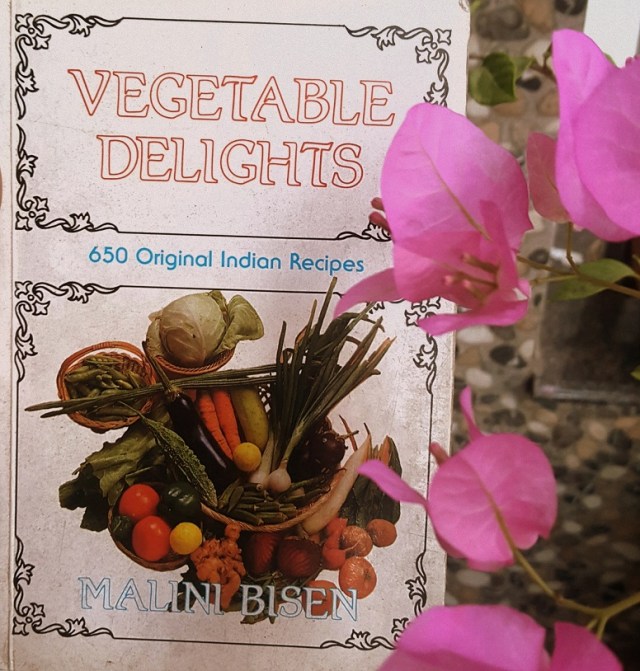
Once I was talking to my ex-boss, Archana Pai Kulkari, about the despair of deciding menus. She was the magazine’s editor for which I used to work as a sub-editor. I wanted a book that could help me in the true sense. No, I didn’t need any fancy photos. Didn’t want to bring exotic veggies or ingredients for a recipe as well. Essentially, I wanted a book that could give me recipe options that I could cook up with whatever I have in hand. Archana immediately asked me what cookbooks I have with me. And she highly recommended a book called Vegetable Delights by Malini Bisen. Now, it’s hard for anyone to put down a suggestion given by her. She’s that good. I wasn’t a fool not to follow her.

So, the next morning, I found a copy of Malini Bisen on some weird online bookstore, where I didn’t shop before. They promised to deliver the book in 15 days. May be it’s a rare copy, I happily thought to myself. I clicked the buy button.

When I received the book, and looked at its contents page, I knew exactly what Archana was talking about. Published by Wilco Publishing House, the book offers recipes for 51 vegetables. Plus there are many other varieties of recipes as well. It made my daily job in the kitchen simple. I couldn’t stop thanking Archana for this gem of a book.

In my kitchen, it’s all about authentic recipes. I rarely use packaged food or readymade food. In fact, I don’t even have a mircowave. I don’t mind working hard for hours on a dish and doing things like soaking and fermenting, if the recipe calls for it. It has become a way of life now. Being at home allows me more time, though. I get that. Whenever I have a job in hand and a cook in the kitchen, I’m no more creative with planning our meals.

There are times when I need to cook a dish in minutes, and here’s when a book like Vegetable Delights comes to my rescue. For a popular vegetable like potato, Malini has given 30 recipes in her book. For green peas, she’s come up with 11 recipes. And for a rare one like cucumber, she’s written five recipes. Who cooks cucumber? Certainly, Malini knows the vegetable world better.

The vegetables go alphabetically in the contents page, and believe me, there’s no easier way to use the book. I also go through the chutney section of the book many times. If you’re an eager Indian cook, or a lover of authentic Indian recipes, you must have this one in your kitchen shelf.

PS. I miss our crazy talks, Archana Meedem. Only if I had a time machine at my disposal.
Layers of love

DSC_0613It seems to me that missing things has become a norm in my life. When I first left home to study in Bangalore, I realised how much I miss my city Surat, especially the food. Thankfully, my mum sent my favourite snack items in packets from time to time. My hostel cupboard was never empty. From her handmade ladoos to pani-puri flavoured khakhras. And now, while I live in Gurgaon, she does the same. Whenever my brothers come to visit me, they always complaint about the heavy luggage bags. After completing an year of studies in Bangalore, I came back to Surat. The year was 2010, and I had a goal in mind: to learn Gujarati snack items. And for that, I knocked the doors of none other than Mrs Niranjana Joshi.
I’m yet to find a perfectionist like Niranjana Joshi. She’s incredible. Since my college days, I have enrolled for many ‘Nira’s Cooking Classes’. She is grounded yet sophisticated and competitive. She respects each one who attends her class yet doesn’t encourage gibberish talks in-between the classes. She has own little secrets that does the magic in every dish. I just love to sit in front of her, see her teach a trick or two and have a good laugh with the lady herself. All that said, Niranjana is extremely alert when it comes to her recipes. She likes to handover her recipes only to her students. If you happen to visit Surat, make sure you attend at least one of her classes.

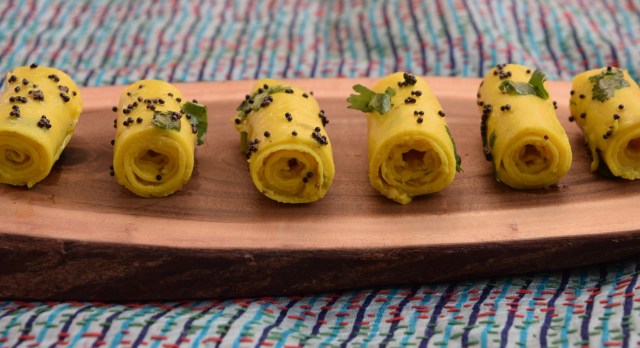
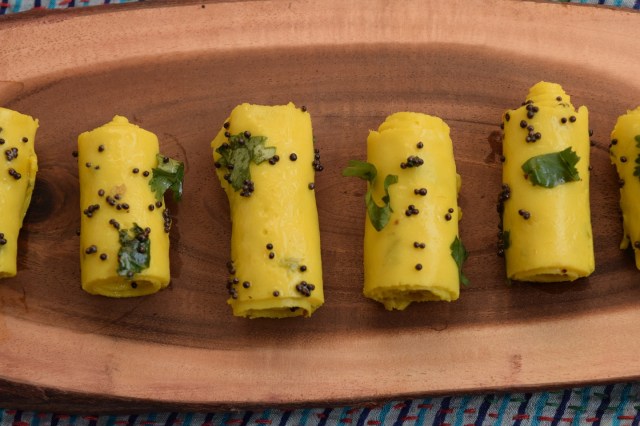
Talk about Gujarati farsan items, and Khandvi or Patodi will top the list, at least for me. Some home cooks, however, find it a hassle to make Khandvis. For me, it’s all about sticking to the technique, trying no short-cuts and being precise. You can’t goof up with recipes, at least, not with Khandvi.

The soft layers of Khandvi makes it a winner of a dish. So, here you go, dear readers. I’m sharing Niranjana’s recipe here. You will, however, have to bribe me to know the little secret that she gave us during the class. Ha-ha.

DSC_0620


Recipe: Khandvi/Patodi or Gram Flour Rolls

Are you ready for some arm muscle exercise? If you can’t stir the kadai for more than 20 times, don’t try this recipe. Once you put all the ingredients in the kadai, you need to keep stirring it hard for a good 10 to 15 minutes. If the gram flour mixture is not steamed well, the stirring can go on for a few more minutes. That’s exactly where people promise not to try this recipe at home, ever again. But here’s why I like it. My mum has taught me this stirring-the-kadai business ever since I was like 12 or 13 of age. I love this farsan. For me, there’s no looking ahead than a Khandvi dish that’s been perfectly steamed and rolled. So, hold on, and believe me, you’ll get there too. Just be precise and give it your best.

Ingredients

For the mixture

1 cup gram flour
2¾ cup butter milk
1 tsp ginger paste
2 tsp green chilli paste
½ tsp turmeric powder
a pinch of asafoetida
½ tsp garlic paste (optional)
½ tsp ajwain or carom seeds (optional)
salt to taste

For tempering

oil
½ tsp mustard seeds
curry leaves (optional)

For garnish
coriander leaves, chopped
grated coconut (optional; somehow, I never end up using them)
roasted sesame seeds (optional)
a pinch of red chilli powder (optional)

Tools needed

A deep kadai
A big ladle spoon and steel spatula
Steel dinner plates (alternatively, you can also use a clean kitchen counter to roll the steamed gram flour, but I like to do it on my steel dinner plates)

Method

  1. What I like to do is, make a good buttermilk first. And strain it too. If the texture of buttermilk is good, the Khandvi’s texture will be good too. And I like to keep my buttermilk out on the kitchen counter for a few hours, so that it gets a bit sour. Sweet buttermilk is what I tend to avoid.
    2. So take a deep bowl, and add in the gram flour. Add all the ingredients in it, except the buttermilk. Mix it all well.
    3. Slowly, start adding the buttermilk. What happens with me is that I end up using too much of buttermilk and later, it takes me hours to get the perfect consistency. So, make sure you don’t put too much of it. Thin consistency is what we’re looking for. But don’t go overboard with the buttermilk.
    4. Here comes the arm muscle part. You want to heat a strong kadai and once hot, add in the gram mixture. Stir it constantly. You don’t want to let this burn. No you can’t talk or look around or do anything when doing this. Just keep on stirring this mixture on high flame with a big ladle spoon you’re comfortable with. After the right hand, switch it to the left hand. Do it so for five minutes and slow down the flame to medium. Also, you just don’t want to see any lumps. Mash all the lumps and mix the mixture well.
    5. After about eight minutes of more stirring, you want to get a thick consistency. Now is the time to do the consistency test. Take the back of a steel dinner plate. Wipe it clean and grease it lightly. With the help of spoon, take a spoonful of the steamed gram flour on the plate. Spread it with a steel spatula. After two minutes, cut it our into a thin sheet and try rolling it. If you’re successful, your next quick task is to switch the flame to slow and spread the steamed gram paste on all plates. This has to be done fast, because if the paste dries up, it won’t spread easily.
    6. After about four to five minutes, start drawing long lines on the sheets. And start rolling them. Don’t worry if they cut in between. Keep rolling the cuts and you’ll see them hidden under the rolled piece.
    7. Put all the rolls in a plate. Now is the time to do a little temper round. Heat oil in a small kadai. Add curry leaves, mustard seeds and asafoetida. Let it splutter. Now quickly add this oil mix onto the batch of Khandvi. Mix them lightly, just in case if the oil hasn’t reached a spot or two.
    8. Before you serve them, garnish it with coriander leaves, grated coconut, roasted sesame seeds and a hint of red chilli powder. I like to add the latter two when I serve them to special guests.

Voila! Enjoy the delicate savoury Gujarati snack to the hilt! Khandvi isn’t made in machines, dear readers. You can easily make it at home. Plus, it can be prepared in less than half an hour. Go for it.

The humble meal

dsc_0885

Growing up, we’ve always sat on the floor to eat our meals. After coming home from school, my mom sat us kids down and fed us hot rotis with dal and sabzis. For me, a hearty meal is dal chawal. Place an aasan (a small mat) on the floor, your thali and eat with your hands till your tummy is full!

But at my in-laws’ place, nobody sits on the floor, forget eating there. Here, all eat at the dining table. It becomes awkward for me to sit on the floor and eat, in front of them. I and my husband live alone in the city where he works, and it’s completely all right to sit anywhere and eat! Not that any of my in-laws will have a problem with any of my doing. But it sure becomes comfortable for me, when they’re not watching me.

Also, for me, eating on the bed is something I find weird. Growing up, my parents never allowed me to sit on the bed and eat. “You’ll become sick if you eat on the bed,” my mum says. So, even if it’s winter and you don’t want to come out of your blanket, I make sure to get up and eat my meals near the kitchen.

Talking about my in-laws, they eat their rice with spoon. Which is why, it always becomes a comic scene (at least for me), to keep the spoon aside and mix the dal chawal with hands and hog! So, here’s what I generally do when I’m with my in-laws. I serve them the food, and once they’re done eating, I find a corner or wait for them to move elsewhere. It’s only then that I mix everything that’s there in my thali and eat with my hand.

Of late, I have started making chana dal once a week. My mum prepared it on special occasions. I absolutely love this dal. Give it to me, and I will let the world’s best pastas and pesto sauces go away. A basic dal chawal after a long day makes me a happy person.

You can use this recipe with any other dal as well. It’s just that, generally, dals like arhar, require two whistles in the pressure cooker, and chana dal requires more.

Also, whenever you are done boiling the dal, make sure you whisk it well. Once, my father’s elder brother (whom I call Bade Papa) was home. I served him a dal that was not at all whisked. He could make it at the first glance, and softly uttered, “Dal ghoti nahi hai,” (you didn’t whisk it). I was in the kitchen, and my arms were up with embarrassment. It was a lesson I’ll never forget. Each technique shows.

Recipe: Chana dal

1/2 cup chana dal or Bengal gram dal (I usually consider one full fist for a person)
1 medium tomato – chopped
1 medium onion – chopped
2 green chillies – chopped
1 tsp grated ginger
salt to taste
1/2 tsp turmeric powder
1 tsp coriander powder
1 tsp red chilli powder
2 pinch garam masala
1/2 tsp cumin seeds
1/2 tsp sesame seeds
1 pinch asafoetida
ghee for tempering
coriander leaves (chopped)
curry leaves, for tempering (optional)
1 tsp crushed garlic (optional)

Method:

  1. Soak the dal for at least half an hour or overnight. Boil it in the pressure cooker, and give it 4-5 whistles. Once it’s done, whisk it for a couple of seconds with a wooden whisker. Keep aside.
    2. Heat two tsp of ghee in a kadai. I use my iron kadai, which gives it a dark shade as well. Add all the spices (except garam masala and salt) and give it a quick stir. Add the chopped green chillies and ginger as well. Ginger is the hero of this dish.
    3. Add in the chopped onions, followed by the tomatoes and salt. You might want to bring the flame to medium from low. Sauté it well, or else the masala will stick on the kadai. Just in case if it already has, scrap it off and sauté again.
    4. Mix in the boiled dal that you have whisked once.
    5. Add 1 cup of boiled water, if the consistency is not thin.
    6. Let the dal boil for a few minutes. Add the garam masal before switching off the flame.
    7. Garnish with coriander leaves. In the picture, you can make out that I was out of it.

Recipe: Rice

Soak basmati rice for at least half an hour. I take one and a half cup of rice for the two of us. Take the soaked rice in a pan and add clean water to it. I usually keep adding water until the level of it is about half a finger from the rice, and then I start the boiling process. The flame is usually slow. When a rice granule breaks easily with my finger tip, I know it’s done. I also put a wooden spoon on the pan so that when it boils, the water won’t flow out. Then, I strain the rice to remove the excess water and place it in a vessel or casserole with a dollop of ghee shining on it.

Because, when it comes to dal chawal, the more the ghee, the happier I am.

Kaka na Khaman

You don’t value things until they go away from you. In retrospect, even a small thing can take a big space in your heart. Having lived in Surat (Gujarat) for more than 20 years, it becomes really difficult, at times, to settle in an another city. And the street food, especially, is one of those things that will always stay in my heart.

Back in 2009, when I went to study in Bengaluru, I liked the city’s cool vibe. From the weather to the relaxed attitude of people, there was almost nothing that I didn’t like about the city. But after a few months, I started craving my Surti farsan (snack items) like crazy. And I promised myself to learn each farsan item when I go back home. After all, who likes to eat burgers and donuts as street food? Not me.

For us, back home, enjoying Surti farsan every Sunday morning is a way of life (read Khaman, mini chana Samosa,  Idada, Khandvi and Fafda). In school days, I and my class group had a plate of khaman with salted onions on the side, every day. That paper-wrapped khaman would cost us 20 bucks and it meant a lot. And I’m not talking about the juicy, sugar syrup-laden khaman-dhokla with tri-colours that the world buys from air-conditioned eatery joints. I loathe them from the bottom of my heart.

img_8408

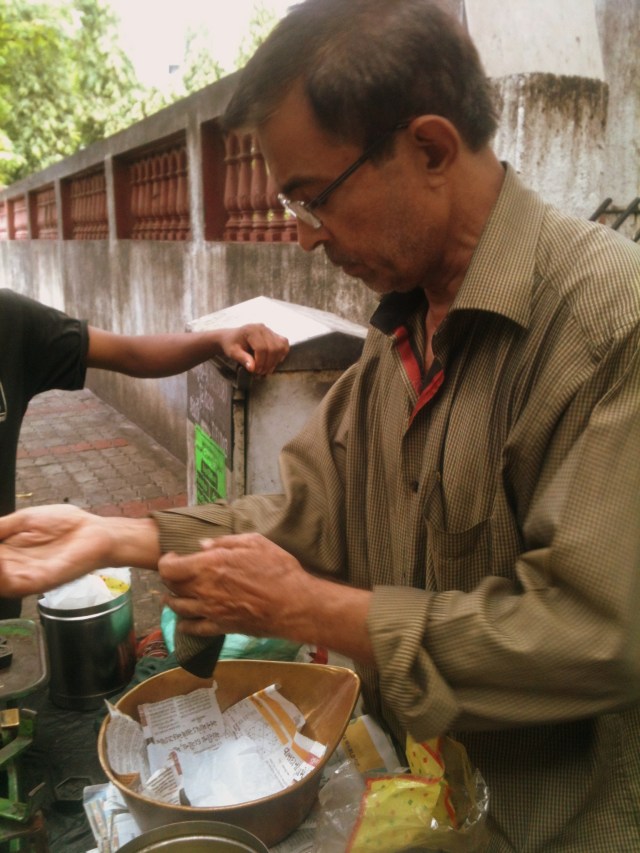
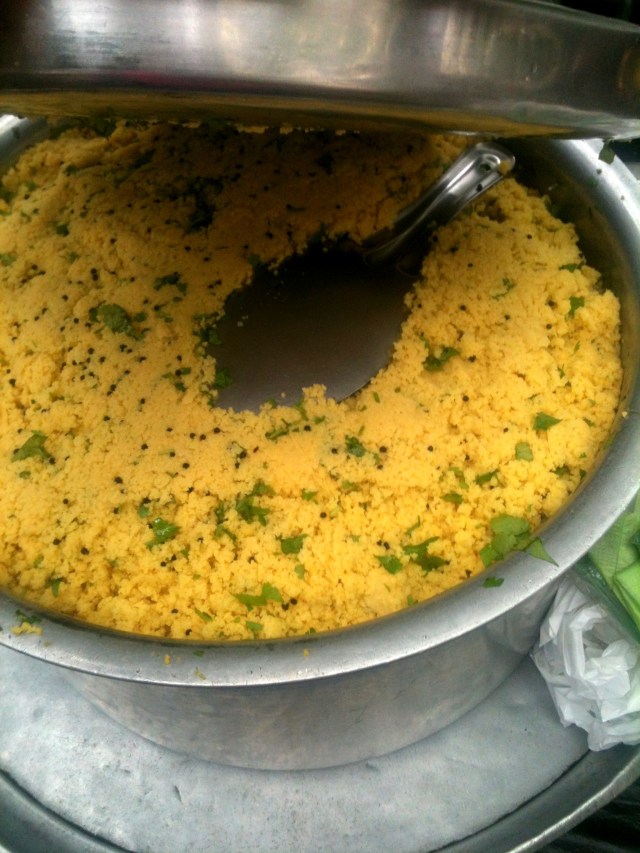
I’m talking about the dry khaman that usually the young boys carry with them on their heads in a huge utensil, with a knife to cut the onions and newspaper cut-outs for serving, kept on the lid. You can easily spot these boys around 4PM in the lanes of Bhagal or Nanpura. And I’m also talking about the fresh khaman that old women sell to kids for 5 bucks per plate, near the school gates in Surat. When we were in school, while going back home, we would usually drop at Neelkanth apartments for this. I would like to call this the original version of khaman that had lots of powdered chunks as well. The food hawker was a jolly fellow. He always smiled at us schoolchildren. And when he saw us smiling back, he would give us a bit of extra khaman. In the picture (below), he’s folding his shirt’s cuffs before serving his famous khaman to the people standing in the line. I’m sure all of them are cheering in their heads: Yes, kaka has arrived!

img_8409

Now, when I visit my family in Surat, I make sure to visit this building at 1 o’clock sharp in the afternoon. That’s when kaka arrives here. In the picture, the vessel is filled with khaman. Mind you, I was the first customer that day, and I can’t express my happiness in words. All those school memories (and our endless chat sessions) flashed back in my mind. Those were golden days of our lives. I bought a batch of khaman worth 50 bucks; went home and ate like a pig, and didn’t let anybody in the house touch it. No, I think I did allow each a small bite. I was generous that day.

Local hidden gems

dsc_0721

My husband is a huge falooda fan. One of his friends recommended a local street shop called SK in Sadar Bazaar in old Gurgaon, for some lip-smacking falooda. So, we decided to check it out.

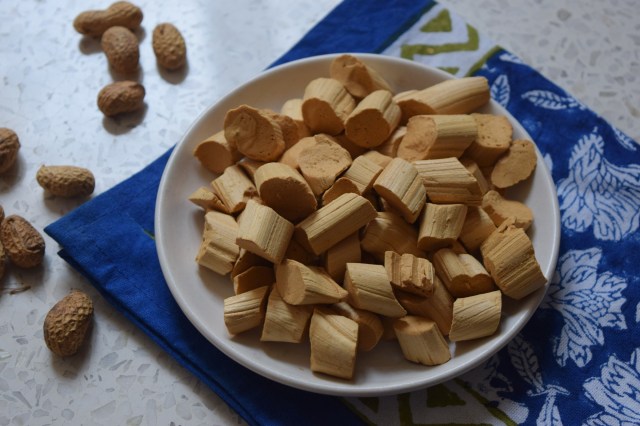
When we reached SK, I was totally surprised to see a shop so tiny and yet so popular. There was, however, no falooda; it’s only available in summers. We took a quick look and just when we were about to move towards our car, the shopkeeper offered me a small wooden piece to eat. “Try kijiye, madam,” he said. “Huh? What is this? This will break my teeth!” I laughed a sarcastic laugh, looked at my husband, and asked him to try first. But, he asked the dukaan-wala again, “What is it, bhaiya?” in total bewilderment.

It was crunchy and sweet, and we didn’t want to stop eating it! “Yeh Gud Gatta hai, madam,” the shopkeeper said. Gud means jaggery and gatta means a kind of a knot. Gud Gatta amazed us, and since then, we also love to see the same reactions from our relatives and friends when they see it. Now, a visit to SK is a must in winters. Apart from Gud Gatta, we also make sure to buy some ghee rewadi (groundnut chikki) and gajak (thin jaggery sheets made with sesame seeds, rose petals, etc.)

Local bazaars in every city has something special to offer, it only depends on how willing you are to get lost in the crowd and try something new. It might be new to you, but, the street food that you tried, can be something that’s been sold since decades.

dsc_0736

Another local snack item that I absolutely love to eat is Rasikbhai Chevdawala’s green chutney. Originally from Rajkot, Rasikbhai Chevdawala’s flavoursome snack items are available in many cities in Gujarat and also in Mumbai (Chedda stores in Matunga has it at their payment counters). To me, this green chutney that’s made with peanuts, green chillies and some other ingredients, tastes like a lemon chutney. It’s sour and grainy, and I can’t stop eating it. You’re supposed to have it with potato chips. I make sure to have a box of this green chutney in my fridge. You can add some yogurt or water to a small amount of the green chutney and add it to your bhel. It tastes divine!
dsc_0755

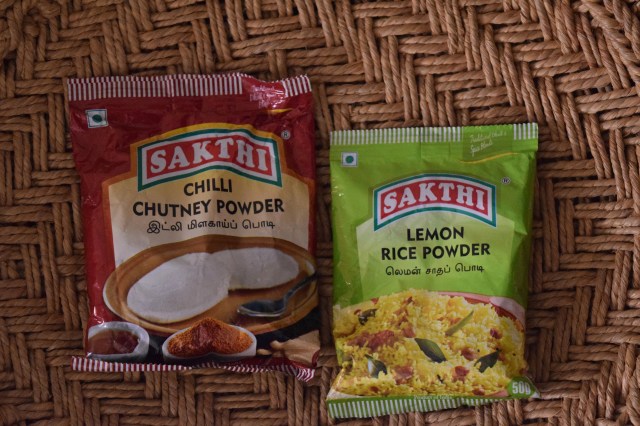
Once, my cousin sister from Chennai came to visit us in Gurgaon. So, we decided to hang out at Galleria market, but before that, we made a quick stopover at Vyapar Kendra in Sushant Lok for some pani-puri (a popular roadside snack item). My cousin gave me a quick shout-out, when she saw a small stall selling Sakthi’s spice mixtures. “I use Sakthi’s rasam and sambhar masala, and it’s amazing! Do try it,” she excitedly said to me. That cousin of mine is an amazing cook, so I had to take notes. I was surprised, as something that’s popular in Chennai, can also be available in Gurgaon. The next time when my rasam and sambhar powders were out of stock, I went to Vyapar Kendra and got these spice mixtures. Today, I must say, I’m fixated to them! They add a great taste to my South-Indian curries, and I can’t stop bragging. I also got some other mixtures, like the one that goes with lemon rice.

dsc_0728

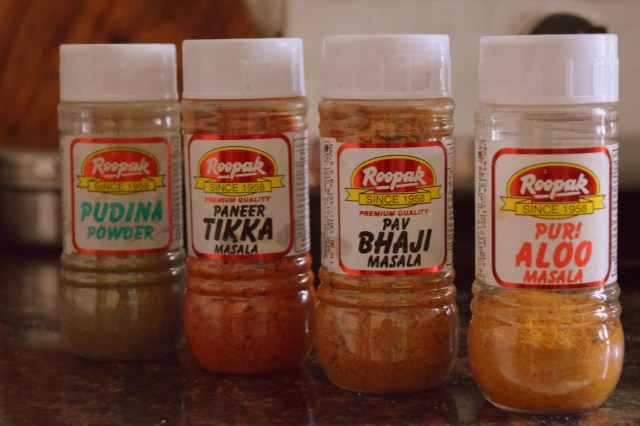
Talking of spices, once my neighbour aunty (in Surat) asked me to get two jars of Roopak’s Puri Aloo Masala from Delhi NCR. She’s someone I look up to, especially when it comes to cooking. When I asked its speciality, she said, “All you have to do, is add a spoon of this masala, and your potato curry is set!” Later on, I also met many other local women, who couldn’t stop praising of Roopak’s spices. I also tried the brand’s mango pickle, and it was great. Many NRI women make sure to buy a huge stock of Roopak spices, before leaving India. A few years back, I was shopping in Karol Bagh, in Delhi, and I found a big store of Roopak. Standing at its door, I could see stacks of spices, pickles, etc. kept inside. I’ll never forget that sight. It was truly a spice mecca. I make sure to use this precious spice mixture sparingly.

These are a few local gems that I love, dear readers. I feel lucky to have discovered them. They complete my pantry. What are your favourite local goodies?

Note:
Falooda – A lip-smacking Asian dessert that comes in a glass that has cream, vermicelli, sweet basil seeds, rose syrup, crushed ice pieces, etc.
Bhel – An Indian snack recipe made with puffed rice, onion, tomato, spices, lemon, coriander, etc.

Fear or hope?

20170105_103833

In big cities in India, almost every household has a maid, who does the basic home chores. Maids are crucial for these homeowners. Women, in the metro cities, run their houses successfully because of their maids. And nobody is even shy to accept it. Women can’t function without these women. Which is why, I couldn’t believe my ears, when my maid announced that she is going to discontinue work, from the 1st of January. New Year blues were about to set in. And, that was just the beginning.

It’s been almost five days now, and I have been doing all my work myself. I must admit, I like it now. I wash my dishes the minute the sink becomes half-full, wash all the kitchen linen with my hands (the rest of the clothes go in the washing machine), sweep my floors and mop them too. Doing your own work does make you feel content. I shall see what happens ahead, though.

Last evening, I felt like a perfectionist. Had it all sorted. The hot and sour soup was ready and I was about to make my dinner. And. Suddenly. My hand has a habit of hitting things. I dropped a jar of black pepper seeds onto the floor. And the seeds were spread all over the kitchen and dining space. “Do I have to pick them each up?” I thought. I took a deep breath, and with a long, sad face, started collecting each seed. It required a hell lot of patience. You see, when you try to act like a perfectionist, this is what happens. Life is unpredictable, I thought, and kept picking each seed from the floor. I did wonder, once, if had it been my maid, I might have given a big scream or a big laugh (for I’m unpredictable, too). But I easily forgave myself. Why?

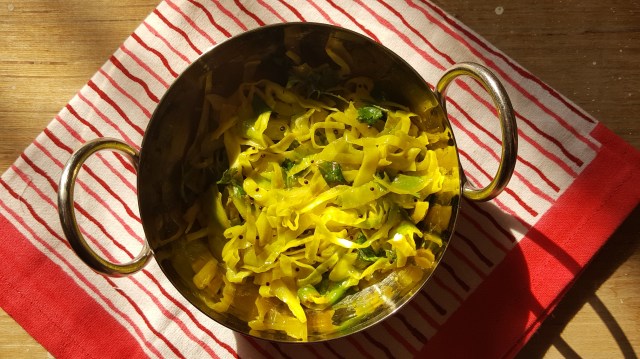
Moving on to this morning. I had a fresh, green ball of cabbage looking at me from one corner of my kitchen counter, and I decided to make a side-dish called Sambharo. I went to my neighbour’s curry tree (yes, it’s that huge) down the stairs, quietly cut a small batch of curry leaves, and placed them on my kitchen counter; it was time to do the important and fun task of tempering the spices!

I loved this cabbage this, and promised to make it more often. This is the quickest cabbage recipe you’ll find and the yummiest as well. I can’t stop eating it! It tastes tangy, and you’ll never get over it. I dislike almost all versions of this veggie, except for this one. And, again, my mum learnt this Gujarati style of cabbage in Surat (Gujarat, India), and I love it to death.

Recipe: Sambharo

Ingredients:

Some chopped cabbage
1/2 teaspoon of mustard seeds
1/2 teaspoon of asafoetida
A few curry and coriander leaves
1/2 teaspoon turmeric powder
roughly sliced green chillies
oil for tempering
salt to taste
juice of a lemon

Method:

Heat oil in a kadai or skillet. Once it’s hot, add asafoetida, mustard seeds, turmeric powder and curry leaves. After a few seconds, add the chopped cabbage, green chillies (I chopped them this time, as you can see in the picture) and salt to taste. Toss this mixture and give it a good mix. Now, you don’t want to cook the cabbage, but just toss it and mix the ingredients. I take about 30 seconds to do so, and switch off the flame. We want to keep the cabbage as crunchy as possible. Finish it off with the lemon juice and coriander leaves, and give it all a last mix.

By the way, I read my horoscope for this year, a few days back. And it wasn’t great. It said I had to let go of many things and learn to forgive people. I was excited for this year, but now, I don’t know, what events will unfold ahead. Do you believe in horoscopes? What do they say about your zodiac sign?

PS. I plan to hunt for a maid, soon. Can’t do without one. Wish me luck.

That time of the year

I have got a girlish pink blanket covered on my mattress. There’s a small kaam-chalau (workable) heater that is on in my room. It’s a cold, cold day, dear readers. The husband says it must be snowing somewhere in the north. But, hey! I made some gajar ka halwa (caramelised carrot pudding) two days back. What better way to beat the chill! You can find its recipe in one of my old posts. We just reheat it and eat it to our heart’s content. Also, roasted groundnuts are something that we’ve been munching on these days.

I’m feeling a bit lost today. Being a freelance writer since a year, it’s made it tough for me to say yes to a full-time job. Just the thought of a mundane, clock-wise work routine is giving me blues, but, really, I think I need a time-table of that sort. If only I could fly away from this city. That way, I could indulge in some performing arts and music classes of my choice. But till the time I’m here (which, to me, looks like forever) in Gurgaon, I need to sort things out. I’ve been yearning to learn Hindustani music, as I immensely miss my music sessions. I want to join a dance class as well. Can’t zero in on one though. Which takes me to another thread of thoughts.

I believe 2017 would be a slow start for me. I’m looking for a weekend getaway break already to recharge myself. What’s special is that finally, I’ve started drawing with water colours and sketch pens and enjoying journaling and hand-lettering. It’s something I have been wanting to do for the longest time. Art calms my anxious mind. I’m usually hyper excited about each thing in life, and it’s important to slow down my thought process that seems to run on a treadmill, nonstop. I got a Christmas card from a celebrated illustrator, Alicia Souza, whom I had interviewed a few months back. The envelop of her card was beautifully decorated, and I was inspired to post some New Year cards to my loved ones. It was truly a fun-filled activity, posting the letters with 5 rupee stamps and random drawings. If given a choice, I’d communicate through only letters. It gives you time to think before writing, and reads as a composed piece unlike text messages. So, yes. These letters and some cards that I made for my students are the highlight of my New Year festivities.

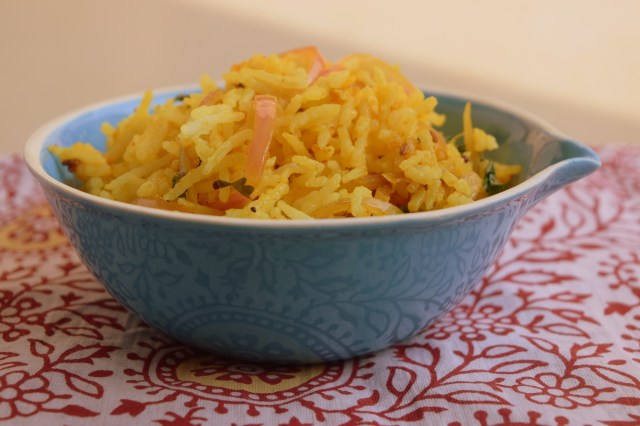
I’ve been meaning to share a leftover recipe with you guys. Actually, I always end up cooking rice a bit extra. And I’m left with a question of what to do with it the next morning. But, then, this recipe of masala rice comes up like a saviour. And, you can also pack it as a lunch item.

dsc_0626

Recipe: Masala chawal

Ingredients

leftover rice
1 roughly-sliced onion
1 chopped green chilli
1/2 teaspoon cumin seeds
1 teaspoon red chilli powder
1/2 teaspoon turmeric powder
1/2 teaspoon mustard seeds
juice of half a lemon
salt to taste
curry and coriander leaves
1 teaspoon grated ginger
oil for tempering

Method

1. Heat some oil in a kadai (deep pan). Add curry leaves, cumin seeds, grated ginger, mustard seeds and chopped chilli. Stir it a bit.
2. Add turmeric and red chilli powder. Give it a good mix. Next, add the onion, followed by salt. You want to keep the onion crisp, so we’ll just cook it for a bit, without making it brown.
3. Throw in the rice. If it’s tight, break it with your fingers and then dump it in the kadai. Now mix it nicely with the onion masala. Add the coriander leaves and lemon juice. Mix it one last time and switch off the flame.

Hope you have a wonderful time this weekend! Happy New Year, dear readers! Life can be tough, believe me. I have had my taste of it. But what I’m trying to learn is that if I stay mindful and be grateful for all that I have with me, things can lighten up with ease. So, don’t let any negativity bog you down and let those curves on your face go broad as you smile. Much love!

Raw beauty

dsc_0705

On one of my trips to a street grocery shop, I spotted some greens and jumped with joy! A childhood memory struck me. “These are the exact greens that mum used to temper with coal!” I thought to myself, as if I had found gold under a mud pile.

While going back home, I called mum. “Mummy, I found those greens!” She, being my mother, knew too many greens. What is it, she asked, and gave me a few options. Beans? Garlic leaves? Spring onions? “What did you find?” she finally questioned again. “Mummy. You used to mix onions and cumin seeds in it, with some smoke that you got from the ghee-tempered coal,” I answered. I was losing my mind. “Oh! Mogri?” she beamed and started laughing. And I broadly smiled! Yes. Yes. Yes.

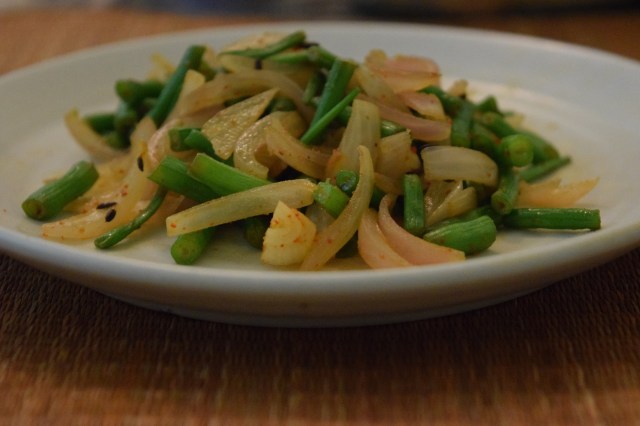
There are some food memories that are etched in your mind forever. Mogri or radish pods hold the same for me. As a child, it fascinated me how my mum used the smokiness of the charcoal and basically created magic with some roughly chopped onions and fresh radish pods. Eating it as a side dish gave me a rustic, homely feeling. Reliving a memory is incredible.

These radish pods, however, are not available the entire year. It’s a seasonal veggie. So, dear readers. Don’t ignore them the next time you go to your street grocery shop. For you’re not going to find this treasure in those high-end gourmet stores of yours.

Make some mogri as a side dish or salad with your rice/roti and dal/kadi. Believe you me, you’ll thank God for all the winter goodness and delight you’ve stumbled upon.

By the way, dear readers, I’m listening to some Kishore Kumar songs today. The peace one gets from his voice and tunes cannot be explained. Background score, presently: Khilte hain gul yahan, khil ke bikharne do.

How are you enjoying your winters?

Recipe: Chamkyodi Mogri or Charcoal-tempered Radish Pods

Ingredients:

Chopped mogri or radish pods (pick the tiny ones; they taste even better)
Chopped onions
Ghee
A medium-sized coal chunk
Salt
1/2 teaspoon chilli powder
1/2 teaspoon cumin seeds

Method:

Chop the veggies. Make sure you wash the mogri well. Now, heat some ghee in a kadai. Once hot, throw in the cumin seeds and after a few seconds, add in the veggies. Add salt and chilli powder and stir the veggies for 30 seconds and transfer it to a deep bowl. Next up, you have to burn a piece of charcoal on the stove. Once it starts to become gray, you know it’s ready. Put it in a tiny bowl, and place it in between the veggies in the deep bowl. Now add a teaspoon of ghee onto the hot charcoal and close the lid, quickly, so that the smoke doesn’t escape.

Finding faith

dsc_1686

It was 3AM, when I was entering the holy setting of the Golden Temple in Amritsar. Morning prayers were being sung in a low, soft tone that touched the core of my heart. I took a few steps around the temple with my cold feet, as I was trying to absorb the spiritual vibes slowly. I paid my tribute inside the temple and just when I stepped out, I felt like sitting for some more time.

dsc_1342

I was going through a personal loss. Something I didn’t experience up until then. What could I have done wrong? How could I save it from happening? Questions poured in my mind, as if I was conversing with The Almighty. Whatever has happened cannot be relived. Whatever that has been lost cannot be regained. I certainly knew the facts, but my heart kept asking why. And, I couldn’t control my tears.

dsc_1388

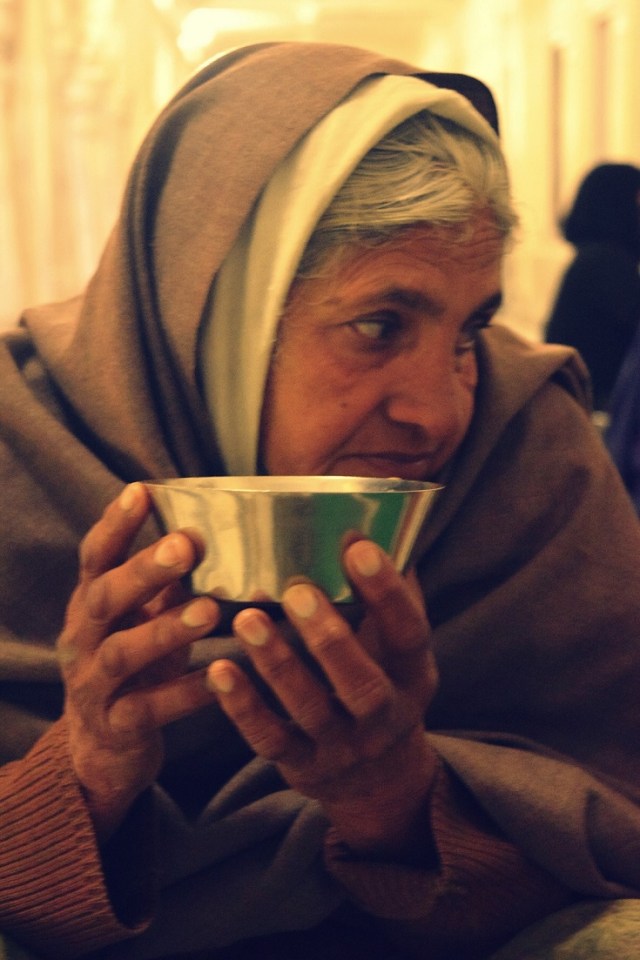
Finding faith. For a die-hard dreamer like me, losing hope from life was a big thing. From moving to Gurgaon (away from my family) to losing a part of me, made me erase all the hope at that time. But I didn’t give up. My eyes were looking for hope. And I could see it. I could see hope when the aged lady was drinking her morning tea. I could see hope when an old man was sweeping the floor at a corner. I could sense hope when people softly asked me to get aside and give them the way for them to walk. That’s the magic of this place. As I folded my hands before the temple, I only wished to understand His ways better and trust Him. I took a deep breath and started walking away.

Amritsar surprised me in one more way. It offered me soulful food. Before coming to this city, frankly, I thought, what special would the streets had for me? I was wrong, and how! A simple dish like paneer paratha and raita at Bharawan da Dhaba felt heavenly in taste. It was winters, and it was even more better in the cold season. The langar at the temple was simple and lacked no flavour. I specially loved the tea that was available at one of the corners.

My husband’s love for sweets went wild when he had Gurdas Ram’s jalebis. No wonder he kept coming back to the shop to enjoy his plate of hot jalebis. Yes, all in one day.

dsc_1680

The next crisp morning, we excitedly left to have our breakfast at Kanha Sweets. We were accompanied by an enthusiast couple, who were foodies like us. That doubled the fun altogether. The wait outside Kanha was a sweet one, as I couldn’t help but enjoy the sight of super hot puris fried in a large kadai. My thali that mainly comprised puri, chola, and sweet aloo ki sabzi was to die for, dear readers.

dsc_1611

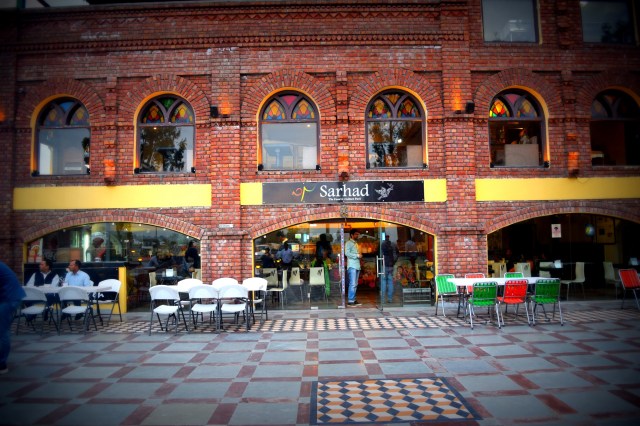
Our trip was incomplete without a visit to the Sarhad restuarant. The Lahori chai, Peshawari naan, and paneer curry blew our minds, and we call it one of our best restaurant moments. And the Kulfa that we had at A-One Kulfa for dessert was our best street food moment.

dsc_1616

Which is why, while coming back to Delhi, I felt content having found a pocketful of faith. Something that I took with me from the beautiful city of Amritsar.

Back to my roots

423602_294309600623526_100001334669023_707704_2074098423_n

I’m back from a much-inspired Jaiselmer trip, which also happens to be my place of birth. A native place so beautiful, I’m always speechless when I see its beauty.

Walking in the streets of Jaiselmer took me back to my childhood days, when I visited my late grandfather during my summer vacations. He was in his 80s, and his paper-like skin was clearly visible. He loved playing cards, solitaire being his favourite. He always concentrated on his card games, and was a man of few words. But, he had his own way of showing love. When the local ice-cream hawker came into our street, my grandpa bought us kids some dibba (box) malai ice-cream or flavoured ice popsicles. Whenever he stepped outside the house, he made sure to put on his neon pink turban and take his walking stick along. His picture is still set in my eyes; if only our grandparents could live with us forever.

This time, I came to Jaiselmer to attend a big fat Marwadi wedding. On the first day, my mother and the other ladies of our family decided to go to the killa (fort) to visit the temple of Laxminarayan ji. I was sitting in an auto with them and we couldn’t help but smile seeing the Manganiyar kids singing folk songs and playing khamaicha instrument. They made our morning a special one.

I liked how a mirror, a bowl of wet chandan and kumkum was kept inside the temple. Visitors are supposed to put on a round dot on their foreheads with the help of a tiny bamboo stick that you need to dip in the red or the orange bowl.

In the afternoon, I tagged along with my Bhua (my father’s sister) while she was visiting her relatives. It was lunchtime, and while entering the houses, I could smell the aroma of rotis and ghee. It was such a recognizable one, and totally took me back to my childhood when my aunt cooked fresh lunch and fed us in the open corridor near the kitchen, which had a huge jaali (grille) ceiling. Another thing that struck me were the huge wooden partitions that were made on the floors near the doors. These partitions are only seen in years old houses.

img_0994

Over the next few days, we were terribly busy with the beautiful wedding. I was put up with a few aunts of mine, and I totally loved spending time with them, laughing on amusing incidences. I also loved the traditional folks songs that the ladies in the family sang during the cultural events.

At the end of the trip, however, I did end up buying a few kitchen items. First up were green tomatoes. I love this vegetable, and somehow, I haven’t got my hands on them here in Gurgaon. So whenever I visit Rajasthan near wintertime, I make sure to buy a kilo or two of green tomatoes. The sweet and tangy flavour of its sabzi is to die for!

20161125_125709

My mum also got me two packets of papad, kachris (cucamelons) and a box of Ghotua from Dhanraj Bhatia Sweets. In the past few months, I was looking for dried rose leaves here in Gurgaon. And guess what? I found them in a local kiryana store in Jaiselmer. Oh, the smell of the dried roses was mesmerizing and I can’t wait to try them in my recipes.

20161125_125212

My Jaiselmer trip, however, was incomplete as we wanted to visit even more places, but because of limited time, we couldn’t do so. And, with a heavy heart, I bid adieu to the city.

Recipe: Hare Tamatar Ki Sabzi (Green Tomato Sabzi)

20161125_124646

Ingredients:
1.Green tomatoes – 2-3 (chopped)
2. Cumin seeds – 1 teaspoon
3. Turmeric powder – 1/2 a teaspoon
4. Chilli powder – 1 teaspoon
5. Coriander powder – 1 tablespoon
6. Oil – 3 teaspoons
7. Sugar – 2 teaspoons
8. Salt to taste
9. Water – 1 cup
10. Mango powder – 1/2 teaspoon (optional)
11. Asafoetida – 1 pinch

Method:

In a bowl, chop the green tomatoes into square chunks. In a kadai, heat oil. Add all the spices, except mango powder. Roast them for a few seconds and mix them well. Add the tomatoes. Let it cook for two minutes. Coat the masala well to your tomatoes. Now add water and close it with a lid. Let it cook for about ten minutes, or till the tomatoes turn soft. But make sure you don’t have mashed tomatoes. Hence you need to cut the tomatoes in medium sizes while chopping. Lastly, add sugar and mango powder. Give it a stir and let it cook for the one last minute. Serve it with crispy rotis.