Winter Special: Slow-cooked Sarson ka Saag

Motherhood can teach you so many things. For me, it’s this slow-cooked saag that I love to feed my kids in winters—even if it’s made once a year. And the rebel cook in me goes like—why do I kill the veggies in the cooker? Why the speed? Why blend all the greens? It took me a couple of years to nail this recipe. But I now love to make it! Here’s how.

Ingredients:

Sarson (mustard leaves), methi (fenugreek leaves), bathwa, palak (spinach), pudina (mint leaves; optional), maize flour (makai ka aata), onion, tomato, ginger, garlic, green chillies, ghee, homemade butter, salt to taste, kitchen king masala, garam masala, asafoetida, cumin seeds, turmeric powder, red chilli powder, coriander powder. Sometimes, I add a hint of kasuri methi too. Sometimes I skip it.

The prep:

Go to a nearby mandi, or wherever you find fresh winter greens. Buy a bunch of each green mentioned.

Now, I usually take half a bunch of each of these greens (for the recipe). Perfect for 2-3 people. But, sometimes, I take the entire bunch that the veggie guy sells. That much is perfect for 4-5 people. 

Now, thoroughly wash every veggie and chop it finely. This way, you won’t have to mash it too much. A hint of pudina (mint leaves—even 1 cup works) will add an aromatic flavour to this dish. I love it!

Once you have cleaned and chopped all the veggies, throw it in a big pan with half cup of water. Don’t panic. It will go down to half in 3-5 minutes. Let it simmer. You can put on the lid once the quantity lessens and the cooking process begins. No salt needed here.

Keep checking your greens. As there is the lid allowing it to steam it well, you won’t have to use a blender. Just give it a good mix with your spoon and you should be good.

Second step:

Grate 1 medium-sized tomato. Finely chop 1 medium-sized onion. This measurement is perfect if you take 1 bunch of every green. Now hand-pound 1-2 green chillies, a hint of ginger and 5-8 cloves of garlic. Once this is done, do the tadka and throw it in the pot of greens.

For the tadka, take a small pan. Heat some ghee. Once hot, add cumin seeds. Asafetida. Turmeric powder. Red chilli powder. Coriander powder. And quickly add the green chilly-garlic-ginger paste. After a minute, throw in the chopped onion. After a minute of sautéing, add the tomato paste. Now add salt. When making saag, it’s a bit tricky with the salt. Try not to go overboard. You can always add more later in the cooking process. Also, if you plan to use store-bought butter, you are anyway going to add more salt later.

Add a tsp of kitchen king and two pinches of garam masala as well. Let this cook a bit and throw it all in the pot of greens (when you see that the greens have cooked nicely). Mix it properly.  After 2-3 minutes of cooking it with the greens, you may add ½ or 1 cup of warm water to make it a bit runny otherwise it will be too thick to eat. 

Don’t miss the ‘Aalan’

This saag is called a saag because of maize flour. Take a small bowl of water (room temperature) and mix 1 tablespoon of maize flour in it. Add this yellow paste to your saag (after you have added the tomato-onion paste). This is going to give it that aroma and make it body. Without this, your saag won’t taste like saag. 

Taste. Taste. Taste. 

Give your saag a taste. Adjust the flavours if need be. Throw in some homemade butter/makhan for that desi taste. A spoon of ghee on top will make it shine as well. It takes me 30-40 minutes to make it (prep time excluded).

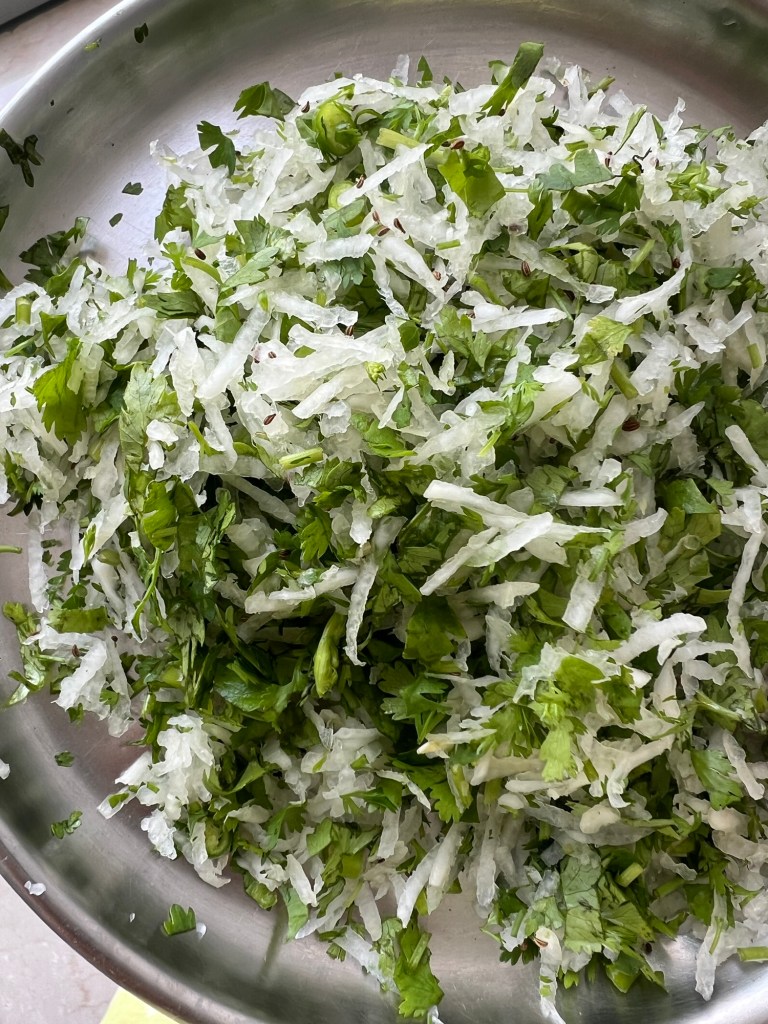
Serve it with makai ki roti (don’t miss the butter on top), a nice salad of onions, carrots and radish, chaas (buttermilk), and, a small chunk of jaggery.

Background music score: Ek Lau by Shilpa Rao, Dhaani and Najaney Kyun by Strings

A laid-back Diwali

Flights make me dizzy, pray harder, cuss a bit and more, but here I’m, ready to take a flight to Delhi. At present, we are at the airport. And I’m happy to see so many shopping outlets at the Mumbai airport. I could easily kill two hours at these stores, but today, I plan to skip these entirely. We are situated near our gates. And ten minutes into entering this space, our food bag is wide open. The kids eat some roasted Makhanas and I snack on my roti-achar. I try to see the travellers around me and guess who is taking which flight. After an hour, I kind of guess who’s flying to Delhi with me. A guy who is wearing a nice pair of sunglasses, a family of two couples and kids, and some more people. Ours is a connecting flight, so of course, not all will get down in Delhi. I do pity those people for their long travel hours. 

The sun is out and about. We sit near a coffee bar, and I see different folks using the chairs and tables but hardly ordering anything at the bar. There is an infant around, but I can only hear his cry. My son is now showing off his Rubic’s Cube skills. I’m amazed by this family of seven. Looks like two sisters are travelling together with their kids. I LOVE how one of the sisters is conversing with the kids. The kids are partly bored but patient enough to talk to her. It’s so important to enjoy this pause. And perhaps that’s the only reason I sometimes wonder to take my kids on long journeys and show them how to enjoy these pauses we get now and then. To breathe, to look out of the window, to just stare and perhaps read a book. We can’t be always doing something, be it playing games, sharing heavy information, or solving some problem. We still can keep it light.

I have checked my busy bag that I got for my two kids some odd five times. And re-packed everything as our gate calls started off. It was an utterly smooth ride to Delhi. The flight we sat on was an international flight, though our journey was from Mumbai to Delhi only. And hence, we got to explore some maps from our seats and some down- and front-views from our plane.

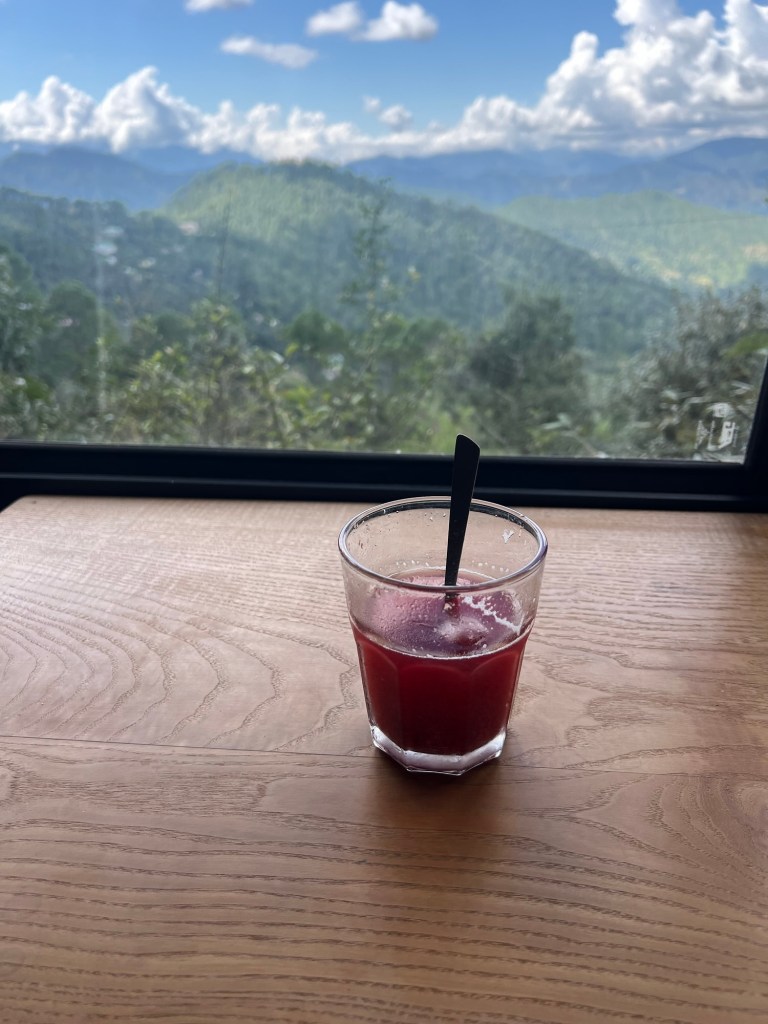
We are soon united with my father-in-law, and the kids are overjoyed. There is some Roohafza that he got in a bottle. Such a refreshing drink. And in less than 80 minutes, we are home in Rohtak. Thanks to all new roads that have come up recently. 

Winter hasn’t kicked in yet, but this mixed weather can really confuse you. I did miss doing a proper Diwali pooja in my Mumbai home, as I very well know where all the Pooja stuff is kept. In my MIL’s place, it’s nice but I kind of make-do with what we have in hand. But Diwali is truly the time to be with his parents. It feels complete. Shows me what matters the most. Not the decorations or Instagram-worthy home corners but a feeling of togetherness.

The pollution on the next day of Diwali sometimes makes us cuss for the fact that we are out of Mumbai, but the feeling settles down soon. We try to catch up on reading and sleeping early here. It’s also nice to dry your clothes in sun on ropes lined up on huge verandahs. Something that I don’t even dream of in Mumbai.

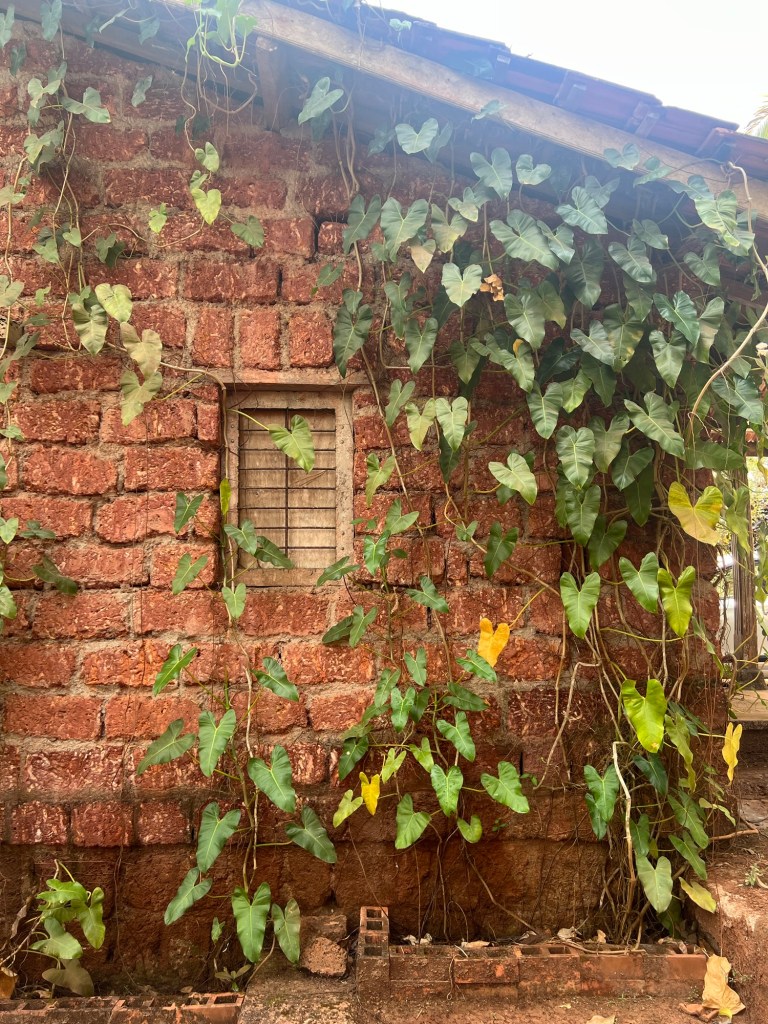
I like looking at the way people garden here. Mint is everybody’s favourite. Rose is next. Curry leaves. Some people also keep little boxes near their gates to store grains for the birds. Some people are fond of fragrant flowers like Madhu Malti, Raat ki Rani, Harsingar Parijat (night-flowering jasmine). People also like to grow bougainvillea. I also love those white and red brick houses. It just adds to the whole countryside view. 

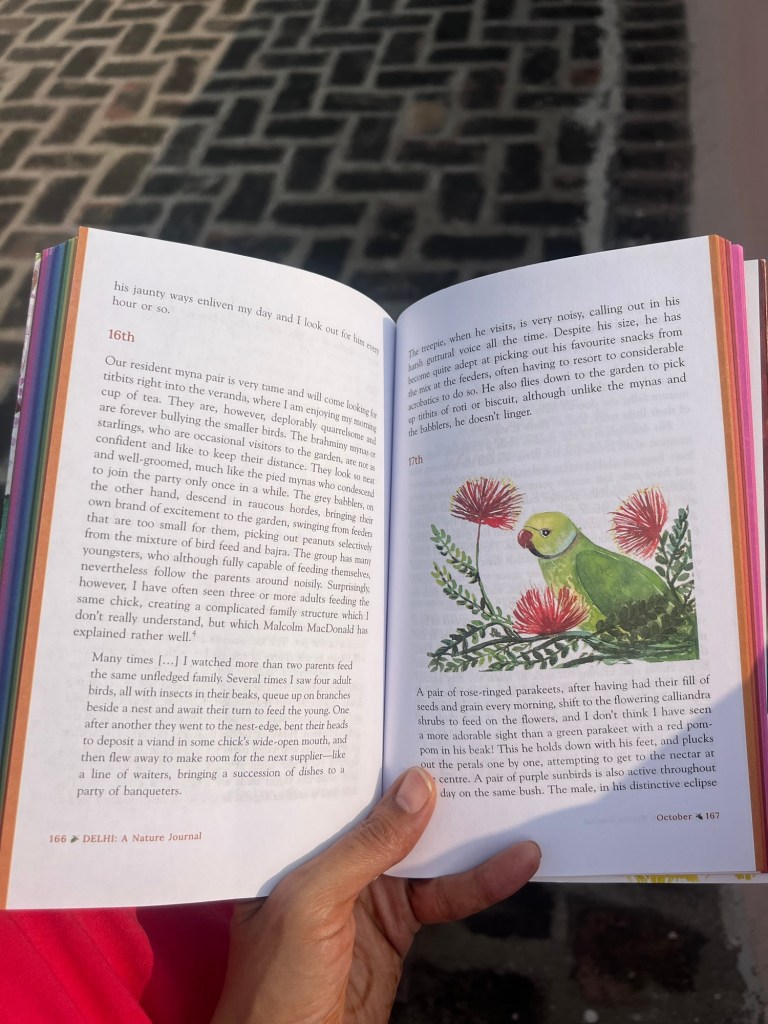
Rohtak is also a birds’ paradise. I see bulbuls, babblers, sparrows, parrots, robins, kingfishers, bee eaters, mynas, drongos and a few other beautiful birds around in gardens and kitchen windows. Once, I happened to spot a pied kingfisher. Didn’t know such monochrome-coloured kingfishers existed too. From the house terrace, the sound of the chattering of parrots is a constant.

When working in the kitchen or sitting in the corridor, I hear various announcement-making vehicles crossing by. Some sell veggies, some buy scrap materials. Some fix khaats (a locally made bed that can be assembled and dismantled in seconds). Around evening time, you’ll see women going to get milk in huge steel cans. It’s kind of an exercise for them and they thoroughly enjoy chatting around.

During winters, you’ll see men and women selling kacharis on their carts around the city. Which is why, it makes entry in our chutneys in the mornings.

The greenery, women sweeping leaves in parks, laid-back schedules, birds chirping around dense trees, the crushing sound of the leaves, ant colonies, droplets of water on grass that you find in the mornings, flowers laid on the roads—every sign of winter in nature is a beautiful revelation.

Exploring a beautiful Konkan village

Recently, we went to a beautiful homestay near Ratnagiri.

It took us almost eight hours to reach there. Upon arrival, we were welcomed with some delicious Kokum sharbat. Little did we realise the next four days would be our best time in an offbeat place like this.

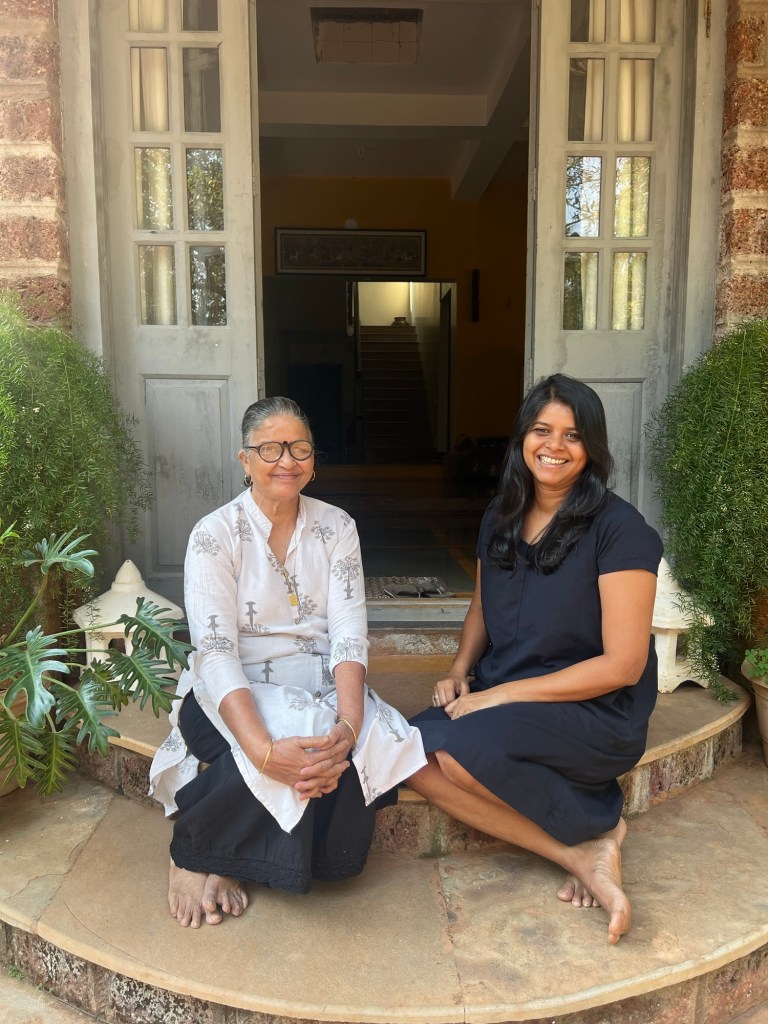
Owners of the homestay, Atithi Parinay

Our room was right above the kitchen area, which was nice, because my kids kept asking for something or the other (to drink/eat)! Our room was part of the building where Medha and her mother resided. So, luckily, for us, Medha interacted with the kids till midnight and they had a gala time together! That was our first night at the homestay. Kids already felt like home.

Backyard of the homestay

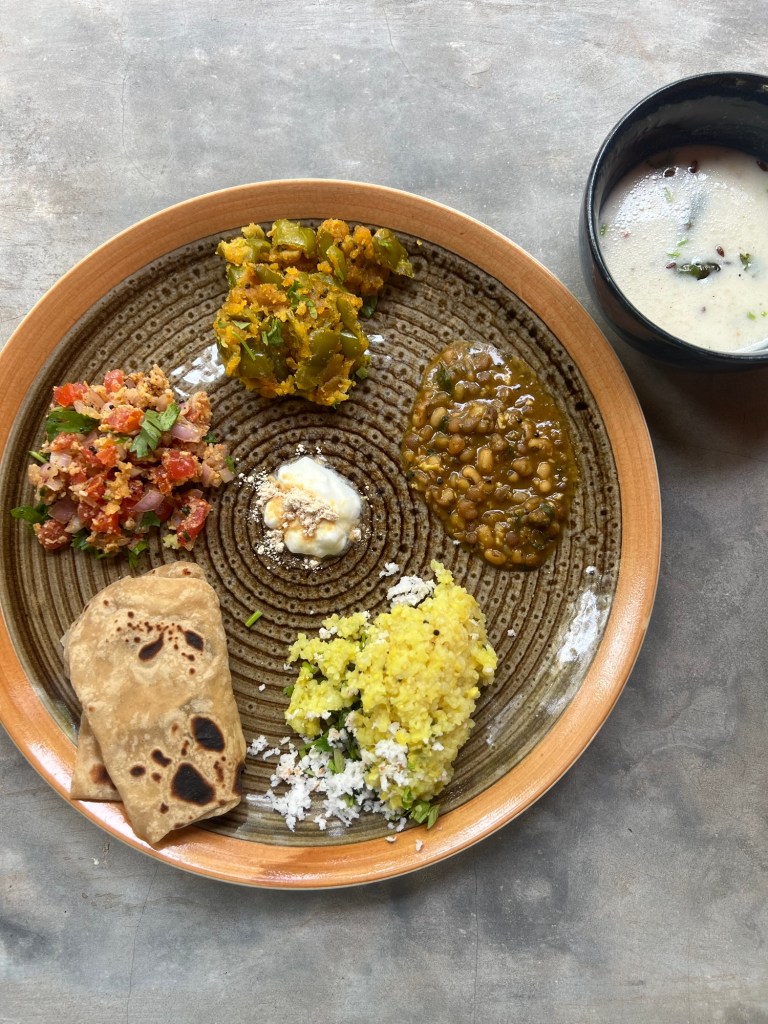
Atithi Parinay is an all-vegetarian place, in fact, you won’t even get garlic and onion in the food. But in spite of it having a satvik kitchen, none of the food items repeated in the course of my four days here. I was in love with the food! Didn’t even miss any Paneer butter masala or Pav bhaji or any of our continental food stuff for that matter. The local recipes of blew my mind. For instance, there would always be a matki or an usal, a salad, a chutney, a dal, roti and rice. Local spice mixtures like Daangar made their way to my plate.

Of course, this being a coastal region, shredded coconut was seen in some dish or the other, but it was all a party for a native food lover like me. Dapde Pohe, Sabudana Khichdi, Sol Kadhi, Dal (with kokum), koshember (every day, a new variety was served), rice flour crepes, a chutney preparation that ranged from raw mango to coconut, local sweets like modaks that were made of rice flour and some sweet coconut-flavoured filling–it just added to our overall homestay experience. Add to that some vibrant talks that I had with Medha that made our meal times so fun! 

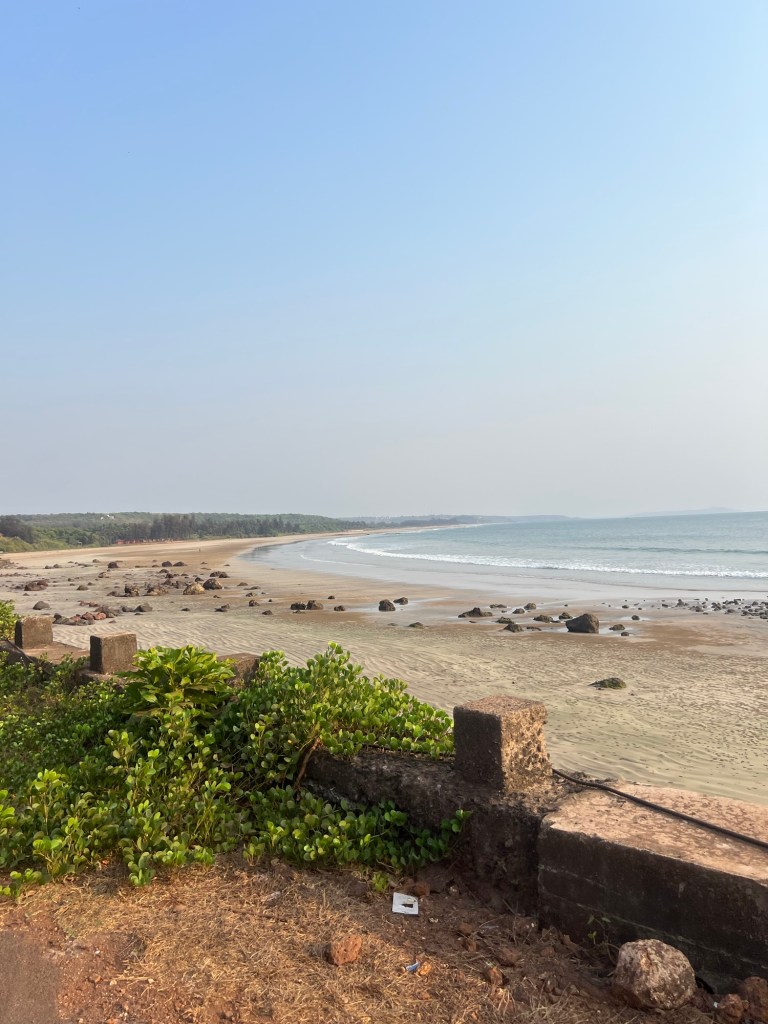
We went to the nearby beaches (Ware beach and the Malgund beach), where we saw a hornbill and a jackal. A morning treat! We also went to a nearby famous Ganapati temple that is almost 600 years old.
This coastal area is like a sleepy town, and so, you won’t like that touristy vibe here. Which offers a break from the usual commercial spots.

We spent most of our time at the homestay. And absolutely loved it. You can take 1-2 hour beach time in the morning and in the evening, but you really don’t need to bother missing your meals anyway. The food at the homestay is far better than the local restaurants, especially for families with toddlers. 

It’s interesting to see how Atithi Parinay is run by an all-women led team. I saw Medha talk about a young guy who is helping with social media marketing, but apart from that, I see women run the place like a pro. From cooking and cleaning to maintaining the open green space of the homestay, these women make sure of an incredible hospitality is being offered to their guests. 

Walks around the homestay

It’s also a good idea to take a stroll around and soak in the calm and green of the coastal village. 

When here, you can unwind and create some art, read a book, watch the birds (I enjoyed the view of a kingfisher twice from my room’s window), relax on the swings, go on walks, and enjoy the good food. 

Note:

1) Visit the Ganapatipule temple around 6AM in the morning, as you’ll be stuck in long queues during the day.

2) Do buy Yojak food products near the temple. During summers, you can pick mangoes from a local farmer.

3) If you are not a homestay fan, check out the Blue Ocean the Fern resort as it offers some scenic beach views.

4) We missed going to the lighthouse near Malgund beach. So either forget things and just chill at the beaches (like we did) or be ready to chase time and visit the lighthouse and head back on time to avoid getting lost without internet connectivity. You can download the map in your phone that can last-time confusion on the road, just in case the connection goes weak. 

5) Do take care when exploring the beaches around. You’ll be attracted to clicking pictures on the road, here and there, but you really have to be careful. Avoid the beaches when the tide is high, especially those who have toddlers with them. 

6) We travelled here from Mumbai and had two meals made from home that we carried with us (as suggested by Medha). If you too have kids in the car, it’s better to carry homemade food because there aren’t really good food options on the way. You might get a Vada pav or poha or even a dosa but not a proper thali-like meal.

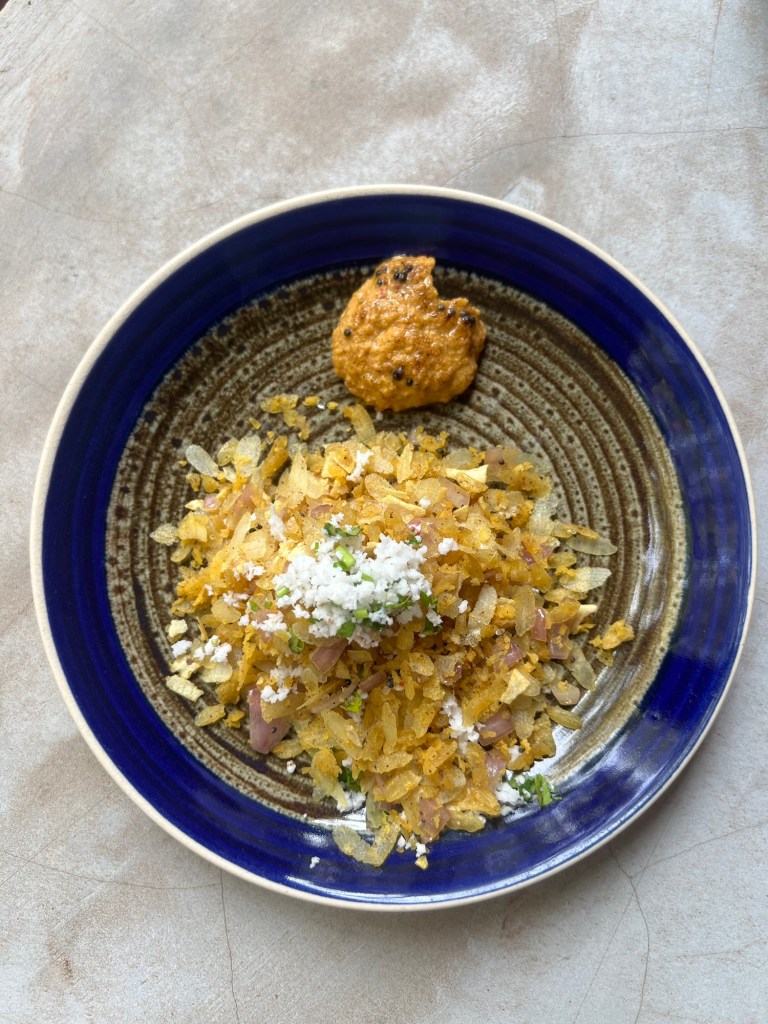
Dadpe Pohe

7) Things you can pack when travelling with toddlers: couple of busy bag folders to avoid kids getting cranky, plastic mats for the beach, extra towels, chappals, clothing sets for the kids when heading to the beach. Tiny plastic buckets and shovels to make sand castles. Frisbee? A dump truck toy to help your kid make a mess on the beach sand? Mosquito repellent cream. Binoculars. A fresh loaf of bread and perhaps a tiny jam bottle to save those last-minute hunger pangs.

Let me know how you liked this place. Happy travelling!

Photo courtesy: All clicked by me

How motherhood changed my relationship with food 

The last three times I made Dal I realised a problem. It was too bland, and the more I tried to play around with the flavours, I could not understand why it still lacked colour. Food was meant to be served. Edible food. Something that was homemade and served on time. Who cares for that dal tadka I craved?

Now, it’s a good run to get the right kind of flavours even with my favourite dishes. The game of ingredients over likings, and daily menu chaos over fancies for world cuisine took over my life in no time. And I taunted my mother how she has changed as a cook. She would laugh at it (like she does over all my weird taunts). Can I laugh on what has happened to me now? But, I know how to nail a good salad in minutes. My survival techniques in the kitchen too.

There is so much I see around. Mums doing videos of what their kids are eating (I can’t, in spite of being at home all the TIME). Beautiful reels of native cooking. I can’t. Why would be a good question. Why, do I find hitting on the sofa with nothing more to do is ever so relaxing?

I’m busy looking for creative things we (I and my kids) can do for an hour or two during the day. The actually creative process is even more tiring. But the end result? Oh. Even if we have something basic to eat, I love the painting we try to do. Or the book we try to read. Or just exploring something about the planet.

I do want to talk about food people I meet around. But even those transcribed notes get lost in notebooks I don’t remember where exactly I arranged while cleaning up the toy-laden flat of ours.

What do I want in life? Nothing much as of now. I want to start making more cookies with my kids. More cake. More cold coffee. And in-between all of this, I want to balance it with bajri or Dal khichdi. Add a dash of pancakes and laadi pavs. Make a good ‘busy bag’ for my kids and just get lost in the streets of the city or a nearby lush hilly villages in the country. That’s my sukoon. And oh. Don’t miss on those midnight sneak-outs in the kitchen. That bag of crispy corn chevda. Aha.

No more do I have the energy to watch interesting food videos. I want to look for veggies beyond aloo at the grocery store. How to hydrate my little girl? She hardly has any water during the day. That’s the topic that doing the rounds in my mind. May be a fancy straw or a coloured plastic bottle can do the trick? Who knows.

For the past four years, I have been settling in cities and then unsettling and settling again. What a storm. With two kids. Sometimes I’m focussed in the kitchen, the other times I struggle to make a basic meal. I have help, but I just want to embrace this city for now. Want to enjoy a good pause. In one place. Where there is no uncertainty. Just a mundane routine. For years or even decades.

Yes, I’m forgetting how to write (the tiny bit that I knew). I find myself anxious throughout the night. Drained before dinner times hit. But, somehow, with magic (thanks to the serious talks I have with the little people at home), I find hope. I find hope even in that school tiffin dabba with a sukhi sabzi and roti.

And here’s what I want to do. Think of ways in which we can sit and learn new words together. And how can i let my children explore this world and find beauty. Constantly. So, what if I can’t find it myself sometimes. I was never this kind of a person, but whatever. We got to find it. So, yeah. Fine dining do I crave? No. Just basic food that has been made well. Don’t get me started on my love for thandi roti and achar/pickle, a roasted slice of white bread with a homemade jam, and khari (a Parsi bakery find) with chai. And while I enjoy a meal, my kids should enjoy a good view. Hills, beaches, hammocks, you name it. Will that be part of the deal? Only then can we talk about good food!

Slowing down

I have been hating to read news in the last couple of days. While I understand some things are beyond our control, I still find anxiety hitting my myself every morning. What shall tomorrow bring, I wonder.

Here’s what’s nice though. Us, in his native place, enjoying our vacations. In this part of Haryana, I love how life slows down. Even basic things like white butter feel so heavenly. I feel like my expectations from life take a backseat and I focus on making every day peaceful.

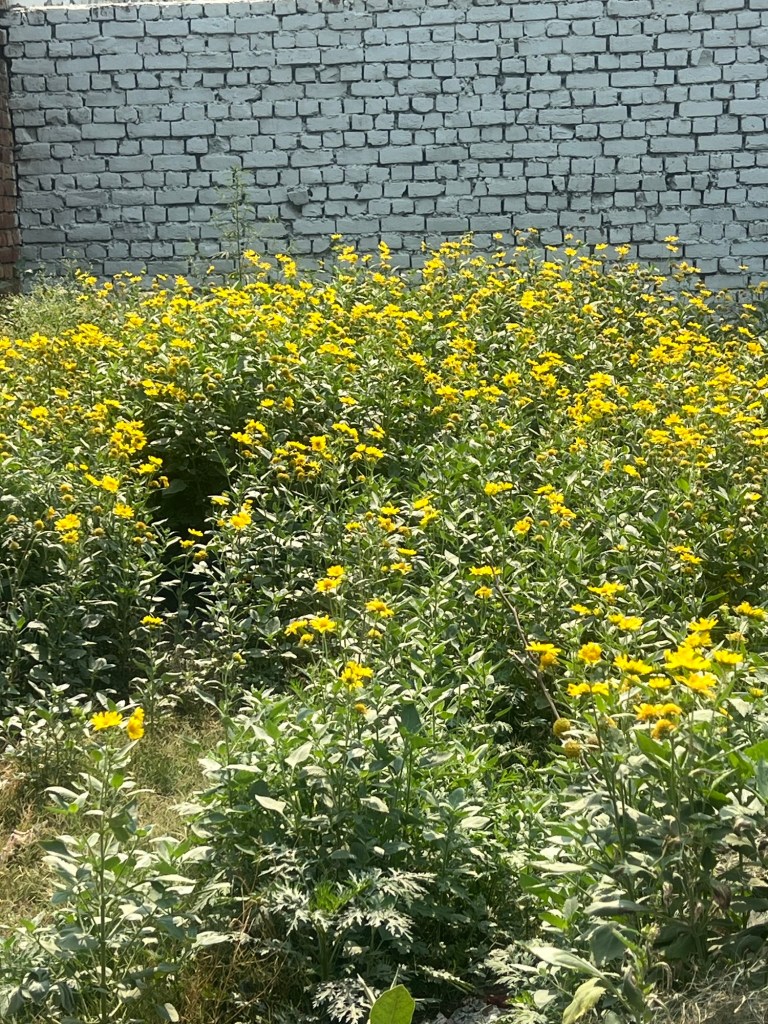
Firstly, the trees and birds here are so beautiful. Hardly find any crows. There are sparrows, purple sunbirds, babblers, grey doves, bulbuls, black drongos and whatnot that I spot here. And it amazes me. The trees make me awestruck too. Fragrant flowers of Madhu malati creepers, beautiful bougainvilleas, wild sunflowers, flowers blooming on Neem trees and whatnot. It’s just amazing how some households have mango trees, ash gourd trees, mint plants and whatnot. Love it all.

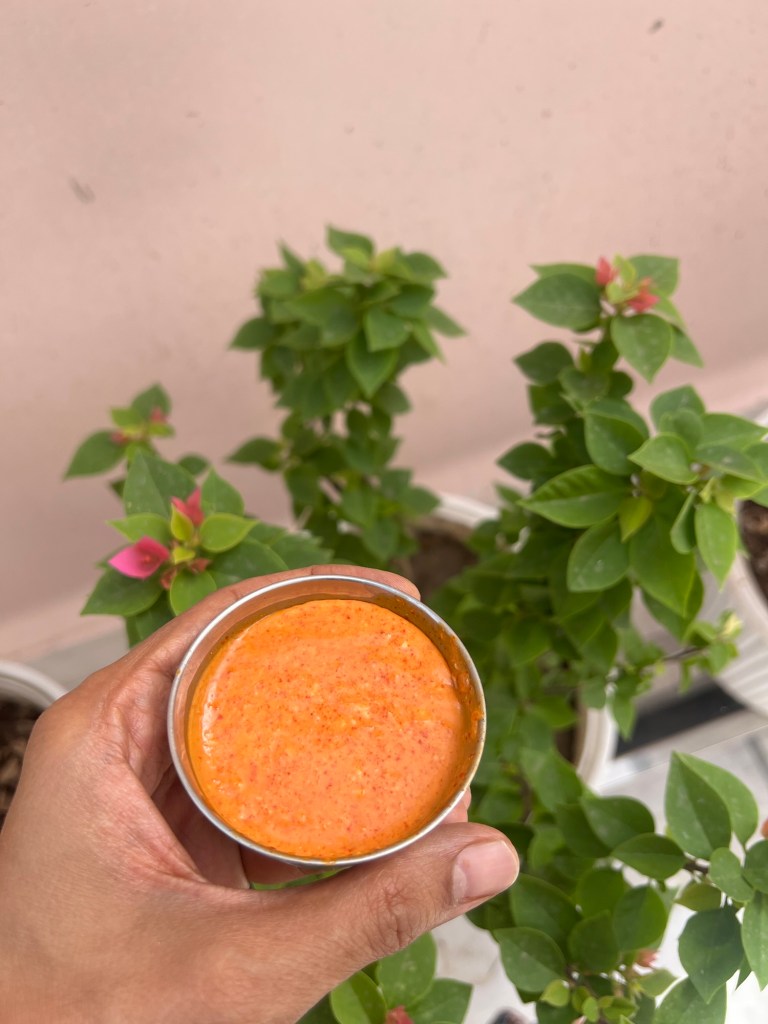
I also like how my mother-in-law takes charge of chutneys every morning. Sharing two recipes here:

Red chutney: pound a clove or two of garlic with some salt and red chilli powder. Add a few drops of water. Now throw in some curd and churn again. There you have it! I love it with rotis/parathas.

Mint chutney: Take half a cup of mint leaves that you have thoroughly washed. Take 2 small onions. 2 green chillies. Salt to taste. Anar Dana or raw mango pieces. Half a tomato. And that’s it. Make a coarse chutney and enjoy with rotis.

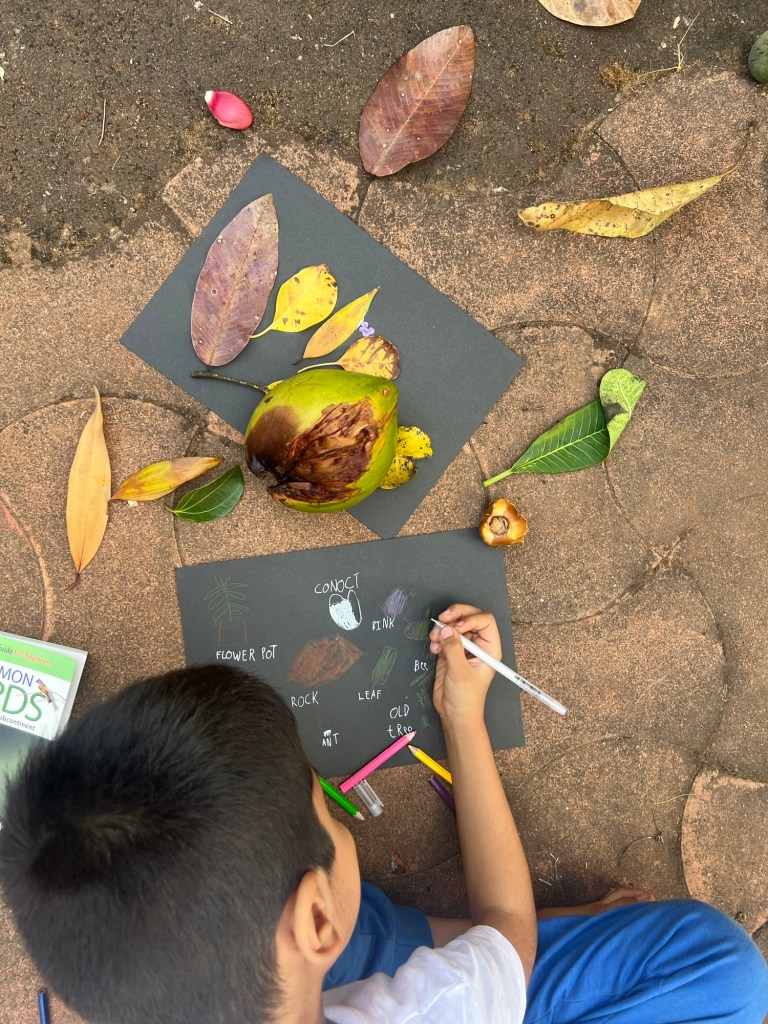
I constantly remind my kids to paint, colour, cut papers, do something or the other with their hands. Just to keep the anxiety away. I’m not going to deny the fact that here is where they see their highest screen time but what to do. It’s difficult to keep them entertained. But that said, I love it when they enjoy their drawing class (yes, we found a teacher here) and how they love to play with puppies in the parks. The catch-up time with their grandparents is something we all love to see.

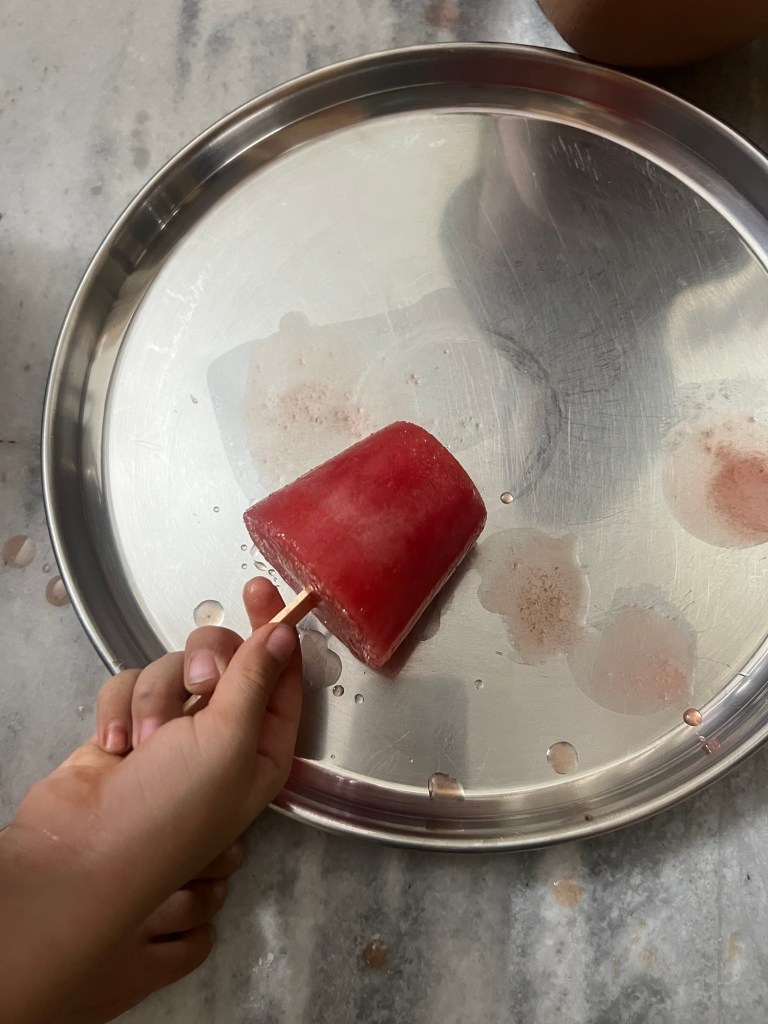
My daughter the other day, insisted on making popsicles. So here’s a quick recipe we tried.

Watermelon popsicles: Chop some water melon cubes, hand-blend and strain the juice. Add a tsp of sugar/jaggery/khaand, a pinch of salt and a few drops of lemon juice. Freeze it in small steel glasses. Enjoy!

How are you dealing with vacations? Do you miss your school routine?

Lastly, I want to ask you all: have you tried frying puris in pure ghee? It’s delicious! Puris made in ghee are much, much better than puris made in oil. Do try.

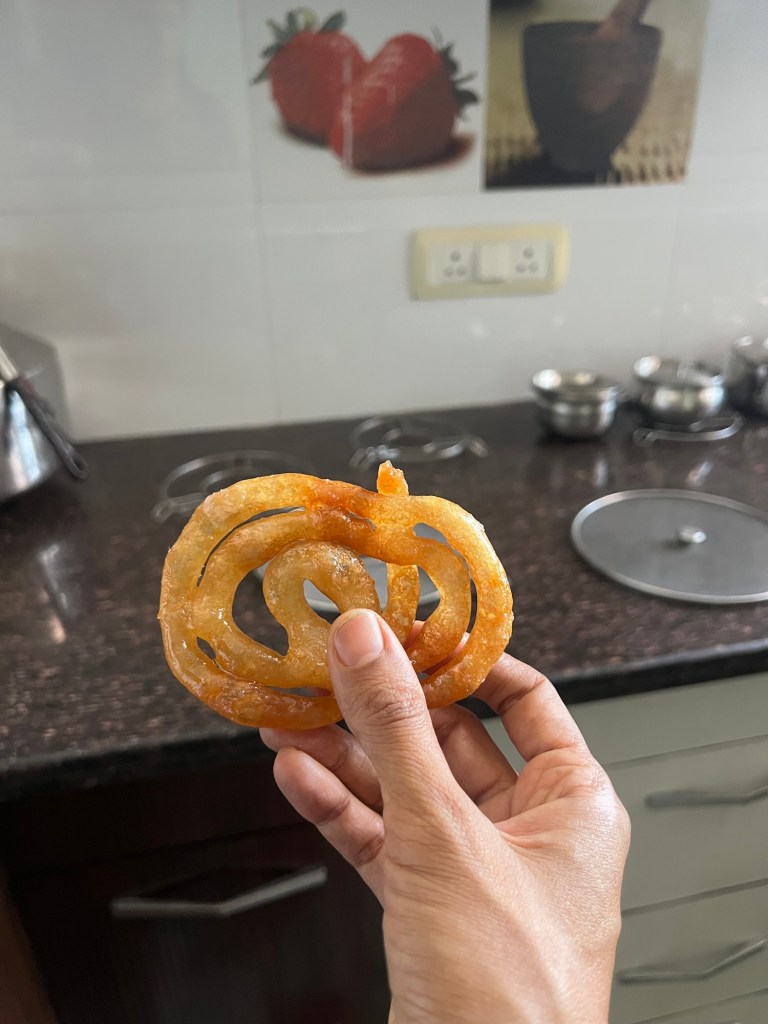
PS. I loved the Jalebis my FIL got from a nearby Vita store. In love with them! It has the perfect sugar, the perfect softness and the perfect crunch.

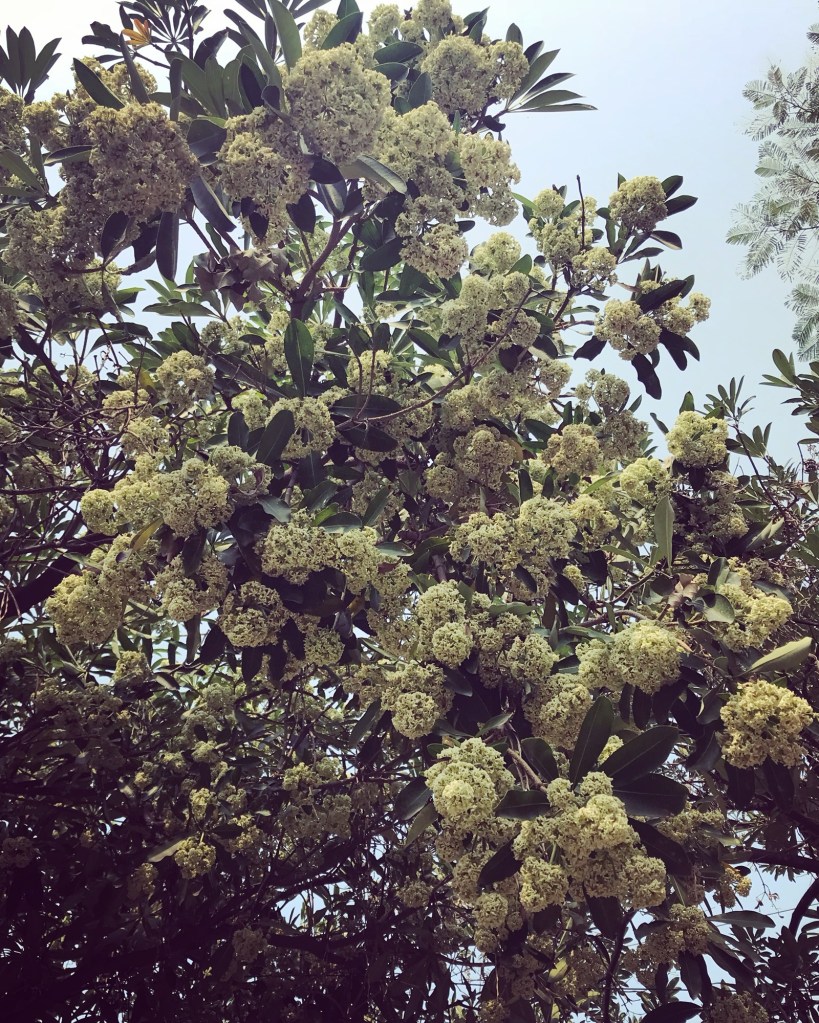
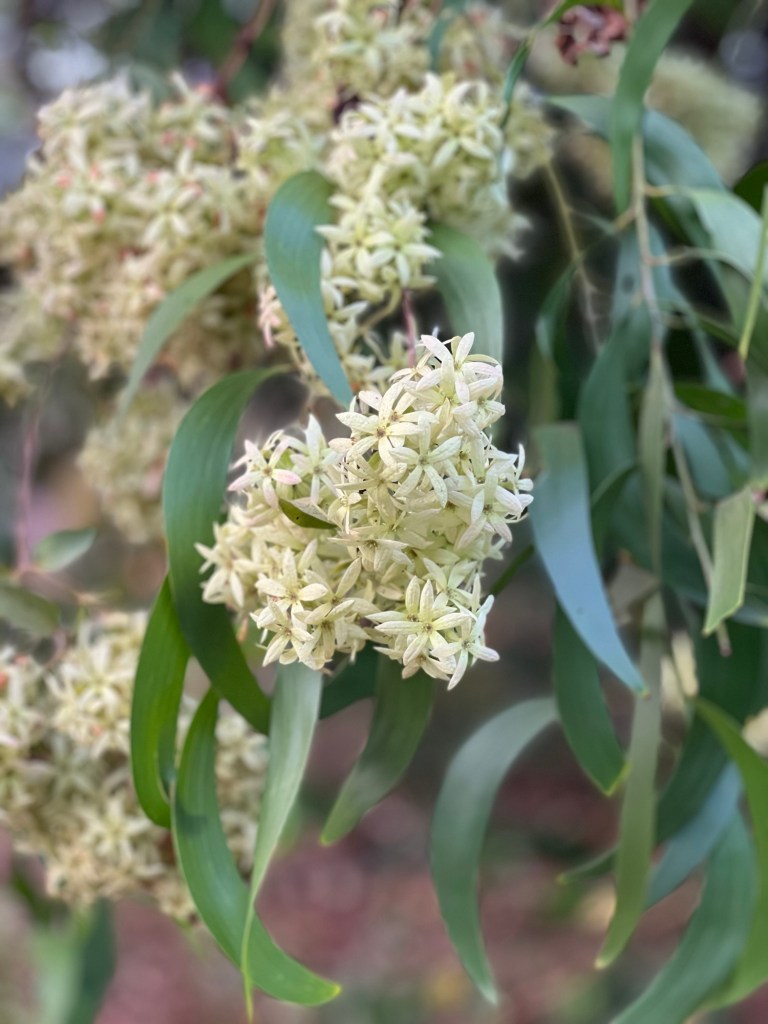
Neem flowers

I hope there’s peace and only peace that we find in future. Do share how vacations are treating you, the recipes you have fallen for and your ways of slowing down.

8 ways to make your kitchen ‘toxic-free’

It’s 2025, and we’re still figuring our kitchens out. Here’s a little help to manage those nasties.

1. Get rid of the nasty materials you cook your food in.

The dosas/crepes that you get in no time have a cost attached to it. It is through Teflon that minute plastic and other chemicals enter your food. It’s a hazard for your health! Once you avoid it for a long time, you won’t be able to stand the smell of a hot Teflon pan on the stove. You’d know it! Same goes for microwaves and air-fryers. It’s best to stick to your old ways cooking.

2. The thing about oils

Oil helps in giving flavour to your curries but with time, it takes a toll on your veins by ruining your cholesterol. Use a hint of oil and add a dash of water to cook your veggies/curries. Switch to filtered oil brands (we heard Rujuta Diwekar say it) or wood-/cold-pressed oils (preferably in recycled cartons/glass bottles for better protection of the ingredients). Secondly, once you fry something in oil, try not to use the same batch of oil again. 

3. Swap the spices 

Find a good resource through which you can get organic/natural spices. It’s something you use daily in your kitchen. I often explore nearby farms whenever I’m travelling to find reliable spice sellers. I once happened to tour the spice market in Delhi and was surprised to find many sellers (on the inner circles) that deal with ‘cleaner spices’. Explore. Explore. Explore.

4. Say no to ‘fridge’ food 

Whether you’re working or whether you respect every grain present in your fridge, if it’s there for 24 hours, it’s not good for you! From kneading a fresh dough for your rotis to cooking rice and consuming it in the first three/four hours, eating fresh is a habit that changes the algorithm for your body.

5. Keep an eye out for mold 

It’s an art to pick healthy ingredients and tools for your kitchen but guess what, even the healthiest foods rot. In fact, they rot much faster. So, keep an eye on your kitchen stock. Sieve your flour. Sun-dry your grains (don’t let it go too dry under the hot sun. An hour and a half is fine). I was disgusted to find worms in an organic rice bag that I had ordered from a luxury ‘organic’ food brand.

Moreover, taste those nuts and seeds (they should not taste bitter and oily). Keep your stock to a minimum so that you don’t have to finish the ‘expired’ food. Even pearl millet flour goes bitter after a couple of days. 

6. Opt for healthier alternatives 

A chilly sauce without MSG makes sense. Noodles made locally with healthier ingredients make sense. Coarse salt makes sense. Filtered oil over a refined one makes sense. Sourdough bread over white bread makes sense. Locally made cheese with less ingredients is healthier than that commercial cheese that doesn’t go bad ever! Keep reading the labels for toxic elements, and switch for better. 

7. Mind those habits 

Little habits in the kitchen further help you to remove bad bacteria and other nasties from your kitchen environment. A scrub that you might use to wash your utensils can’t be floating in soapy water all day, all night. Dry it after use. Change your kitchen linen once a day. Say no to aluminium foil. I ask my tailor to make mul tissues that I can use and wash.

Lastly, those insulated water bottles: wash those after use. Also, consume your idli batter in a day or two. Don’t keep it for a week. The nutrition levels go down day after day! Your tiffin lids, the strainer you use when serving tea—everything needs to be checked over time. Lastly, wash your chopping boards yourself and change them whenever you spot black patches.

8. Say no to plastic

Getting rid of plastic isn’t easy. You got to practice consistently to steer clear of it. Replace the plastic ones with glass/steel. A wooden spoon is better than a plastic, black-coloured spatula. Also, try to lessen your ‘outside’ food orders so that there is less chance of food coming in plastic/cardboard. Microplastics. You got to tackle it and how.

Just like Rasam

There are some recipes that you don’t want to mess up or change, while a few recipes constantly evolve. For me, of late, this has been my Rasam and my homemade pasta sauce. 

My days, suddenly, are jam-packed. And there’s a new rhythm at home. My kids are playing mostly on their own. Lots of sketching. Scooter-riding. Basketball dribbling. We have moved to Mumbai. I have lost my sweetest maids, and Yuvi is without his Gurgaon friends. But we have each other to cope with this change. 

Amidst our busy evening, when the kids make plans to hit the outdoors, I realised I have to make something different than just Kadi chawal or Dal chawal.  So, I made Rasam and we all ate it with all our hearts. Thanks to the next-door food store that delivered Appalam papads that went perfectly with it. 

I went back to my cousin, Kanchan Rathi’s audio notes. Found her recipe and there, I was ready to make it.

Recipe: Kanchan’s Rasam 

Ingredients:

2 tomatoes 
7-10 cloves of garlic
black pepper (1-2 tsp)
Arhar Dal (optional) 1-2 tsp
Cumin seeds – 2 tsp (for spice mix), ½ tsp (for tadka)
turmeric powder 
asafoetida 
salt to taste
oil/ghee
fresh tamarind pulp (I use around 3/4th cup) 
coriander leaves 
mustard seeds 
curry leaves
dried red chillies (I never have it when I make rasam)

Method:

1.        First up, roast cumin seeds, arhar dal (optional), and whole black pepper in a kadai for 2-3 minutes. 

2.        Now, clean the garlic and get 6-10 cloves of garlic. It depends on how you like it. 

3.        Take a mortar and pestle and ground the spice mix. You can also use the grinding machine. This time around, I started pounding with the black pepper, then cumin seeds and the dal, and lastly, in the same mixture, I added in the cloves of garlic and coarsely grinded it too. 

4.        Now, I take a medium-sized steel vessel. Add some ghee. Let it heat up. Throw in some mustard seeds, asafetida,  cumin seeds, dried red chillies (optional), curry leaves and turmeric powder. Mix it a bit and add the spice mix you made with your pestle. Give it a stir. 

5.        Chop the tomatoes (my cousin squeezes them out with her fingers for a rustic touch) and hand-pound them a bit for a coarse touch. Add these to tadka. Now, add in the tamarind pulp (strain it) and a couple of glasses of water (boil it beforehand if possible).

6.        Once the Rasam has boiled for 6-10 minutes, add your chopped coriander leaves, salt to taste. Give it a taste, and if it tastes well, switch off the flame. Kanchan says, the more you boil your rasam, the tastier it is. 

7.        Serve hot with Appalam papad and hot rice.  


I hope you like the dish as we did it tonight. The pasta sauce recipe is coming up tomorrow. Again, it’s an evolved version. And I love it. 

A food tour of Chandni Chowk

A long overdue trip to an ancient Delhi area comes into being as I step out for a heritage walk with a friend. It was planned just a night before we took the metro train together from Gurugram to Chandni Chowk. And while life has its own commitments—for me, it’s my two kids—I could still take the trip as my husband pushed me for it. “We are changing cities in less than a month’s time. So, you better go for it,” he said. 

Thanks to the changes that happened to the busy area of Chandni Chowk in 2018, we had only E-rickshaws and cycle wallahs around us. Thank God, we had some space to walk. Minutes of us walking a few feet from the metro station, young men start following us as if we were looking for lehengas. “Bhaiya, lehenga nahi lena. Hum shopping ke liye nahi aaye hai,” I told one of the guys after he followed us for a couple of steps. 

I skipped my breakfast. Didn’t comb my hair. Just landed at Chandni Chowk with my jacket and a friend. It was a busy morning as my in-laws were stepping out to their city, but I really pushed myself for this local trip. And so, I was hungry. 

We started with Matar Kulcha. The freshly cut ginger, onions and tomatoes tricked us to believe that it might be tasty, and boy, we were not wrong. It was lip-smacking! It costed us some 30 to 50 bucks for a plate. The kulchas were thin and freshly roasted. 

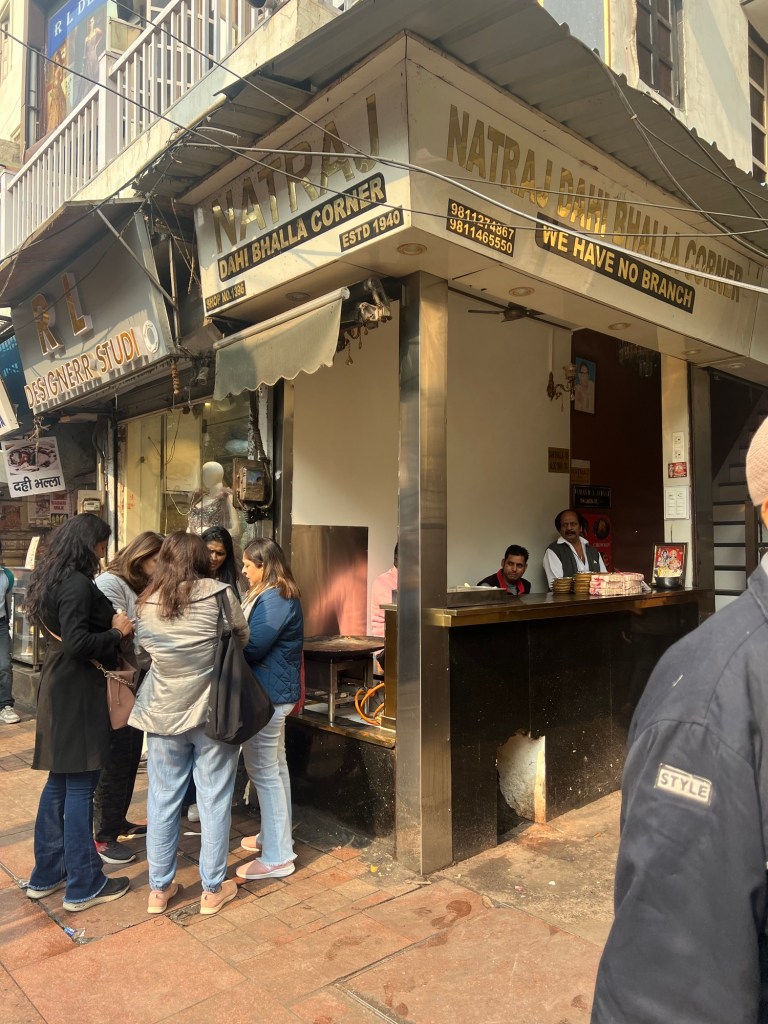
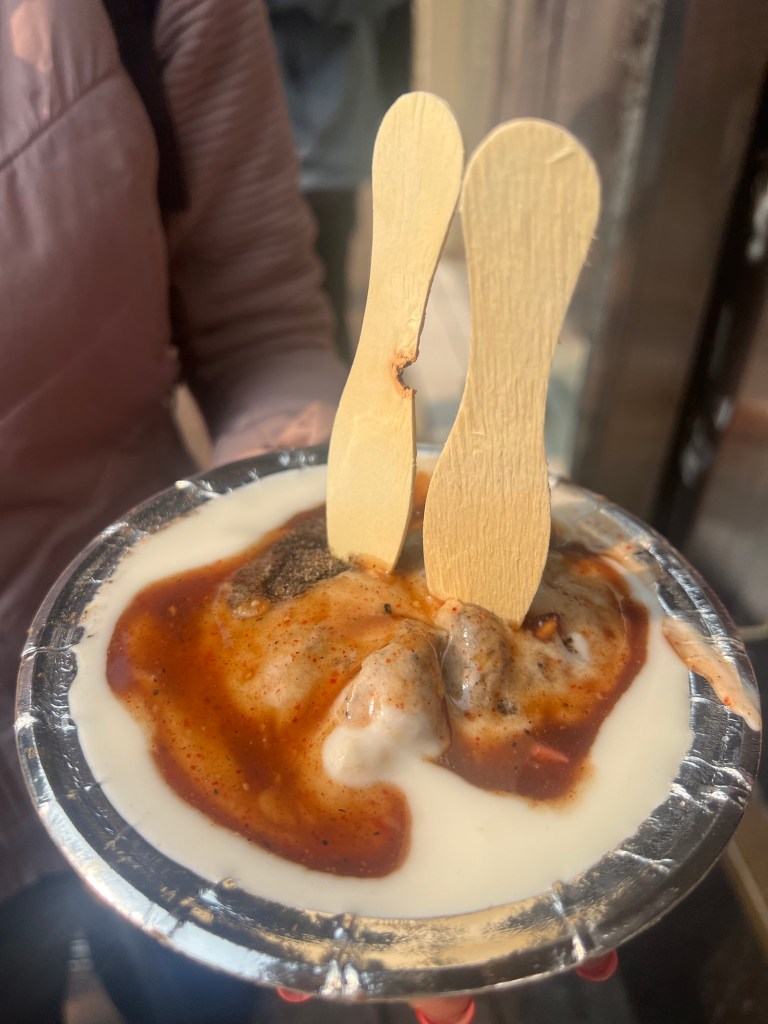
We left that lane (a few metres from the metro station), and towards the end of the lane was Natraj. So my friend, Namisha Singal, asked me if I was up for a plate of Dahi Bhalla. Though the plate was a bit cold for a cold December morning like this, we still liked it. She was wanting an aloo tikki or something with it, but we could easily finish the plate. The spice mix that went on the Dahi Bhalla made the cut. “My mother used to save this spice mix and use it on salads later on,” Namisha told me. Her father came to Chandni Chowk almost every month, and he went back to Faridabad with a little bag of Dahi Bhallas. 

After a few minutes, we met our heritage walk leader, Jibin George. It was amazing how he had these old paintings to show us on his iPad and we could clearly compare the changes. Soon we tasted our third dish. 

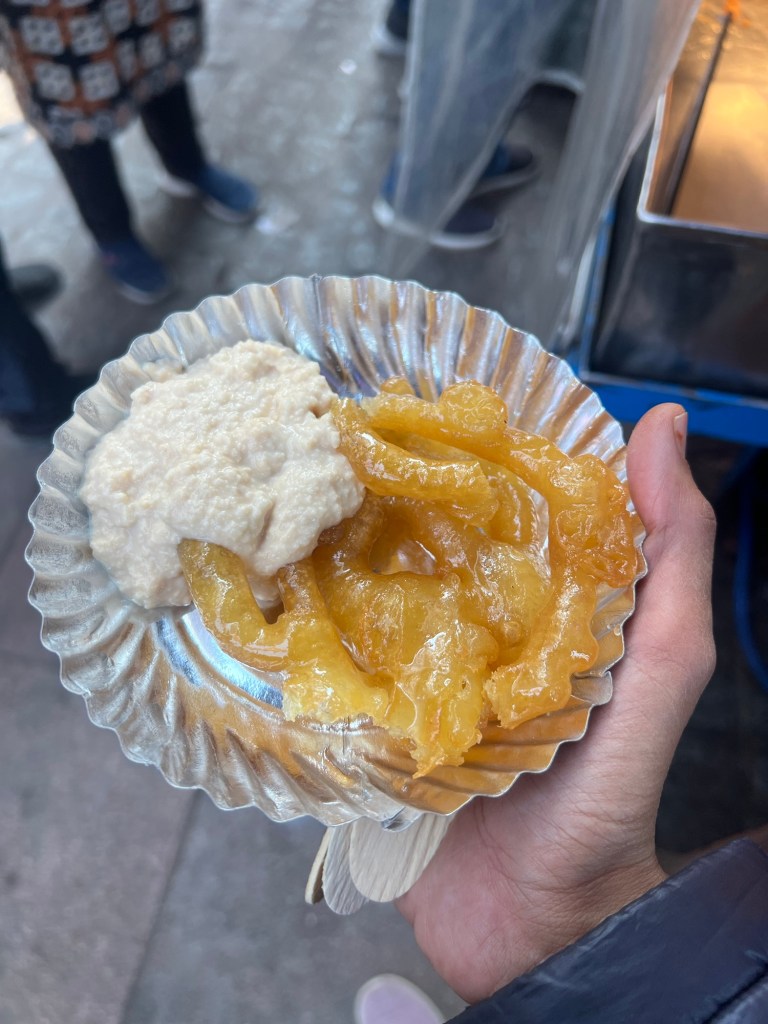
Jalebis. The shop’s name is Jalebi Wala. It had a board nearby that said Haveli Dharampura. So don’t get confused when you see 12 more Jalebi walas in the area. I was not so excited about this, but I was totally blown away by these jalebis! Two reasons I loved them: The chaashni or the sugar syrup was not so sweet. Plus, it had a runny texture, and not your typical sticky texture. Second, the labelis were both moist and crispy. And these were not too sweet either. So, the key for a really yum plate of jalebis is, hold on to that sugar. It really refrains you from having more. It is one of the best things I have tried in my lifetime! Imagine, I’m almost 40! So, you don’t have to miss these ever! I was told this shop has been running for 3-4 generations. And it’s the simplicity of these shop owners who make you respect them even more. 

Daulat ki Chaat

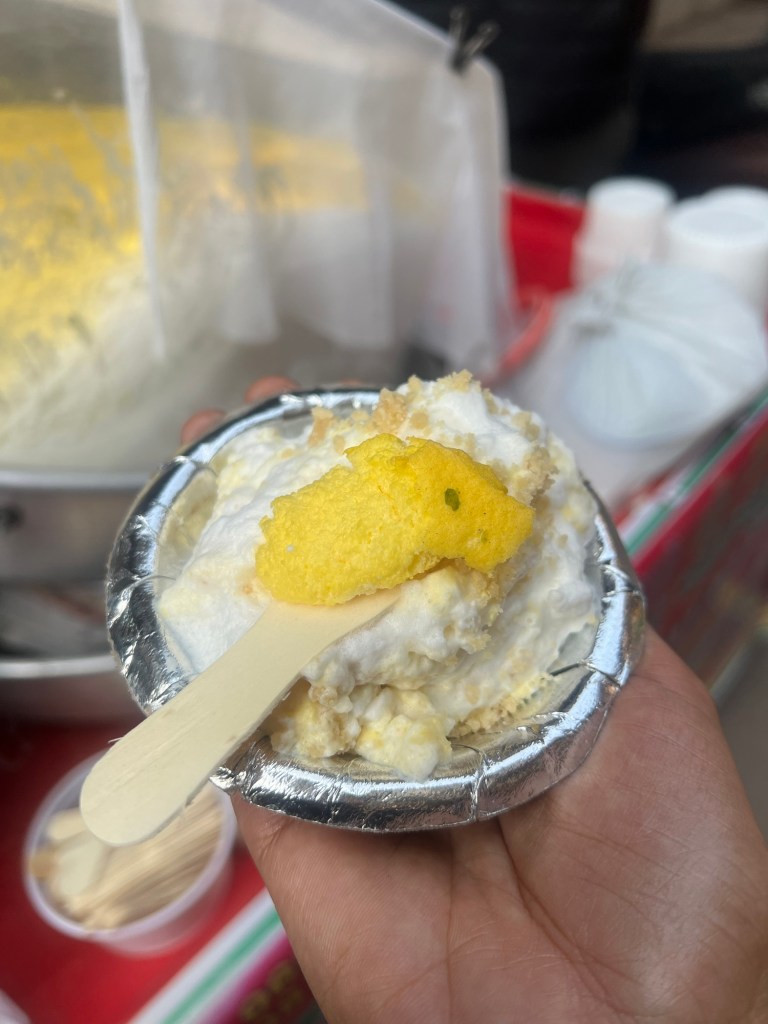
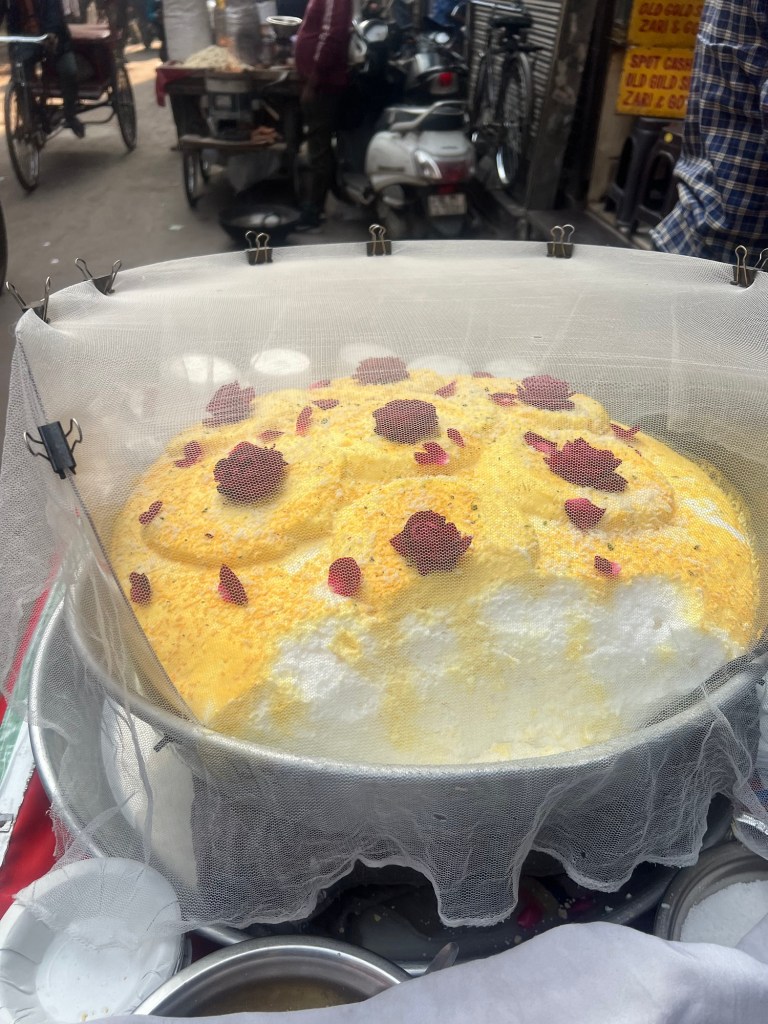
My fourth dish came about in the same lane. Daulat ki Chaat. When people told me about it, I imagined a big blob of aloo tikki with mithi chutney or something. But it was way beyond it. Daulat ki Chaat is basically milk froth. It stays as is thanks to the cold weather. Some of it is white, while some of it tastes of Kesar and is yellow in colour. It had a spoon of mawa too and a sprinkle of dry fruits like pistachio. Did I like it? It was too sweet for my palate, but I still managed to complete half a plate. The guy took 200 Rs for three plates of this Chaat. 

We entered a lane called Dariba Kalan. Interestingly, we happened to spot a Pani Puri wala. His cart looked super clean. He was also wearing gloves. So, I went ahead and asked my friend if she was up for a plate of Pani Puri. She ended up finishing her plate, but I couldn’t go beyond one puri. Even so, I didn’t finish that either. And I realised, if a cart is neat, it still doesn’t guarantee the best taste. Pani Puri is truly a tricky dish. She grabbed a nice cup of ginger tea, and we moved on to Parathe Wale Gali. Wow! I almost pinched myself here. As a mum of two toddlers, living in one of the best areas in Gurugram, what am I doing here? How could I manage to come so far? Am I mad? And I realised, it was one of the best decisions of my life. This heritage walks. We should take such walks often in life. Jibin explained the lanes and the history of the place so well—I could connect it so well; I will never get confused about any of the lanes next time. Delhi is truly beautiful if you take a chill pill and get the hang of it. Don’t just keep walking. Wait. Ask someone for the best way out, and you should manage to walk out of it with a smile! I don’t know if I make sense here, but anyway, here I was. Trying not to think of my elder child’s cough or the other child’s pick-up time from school. 

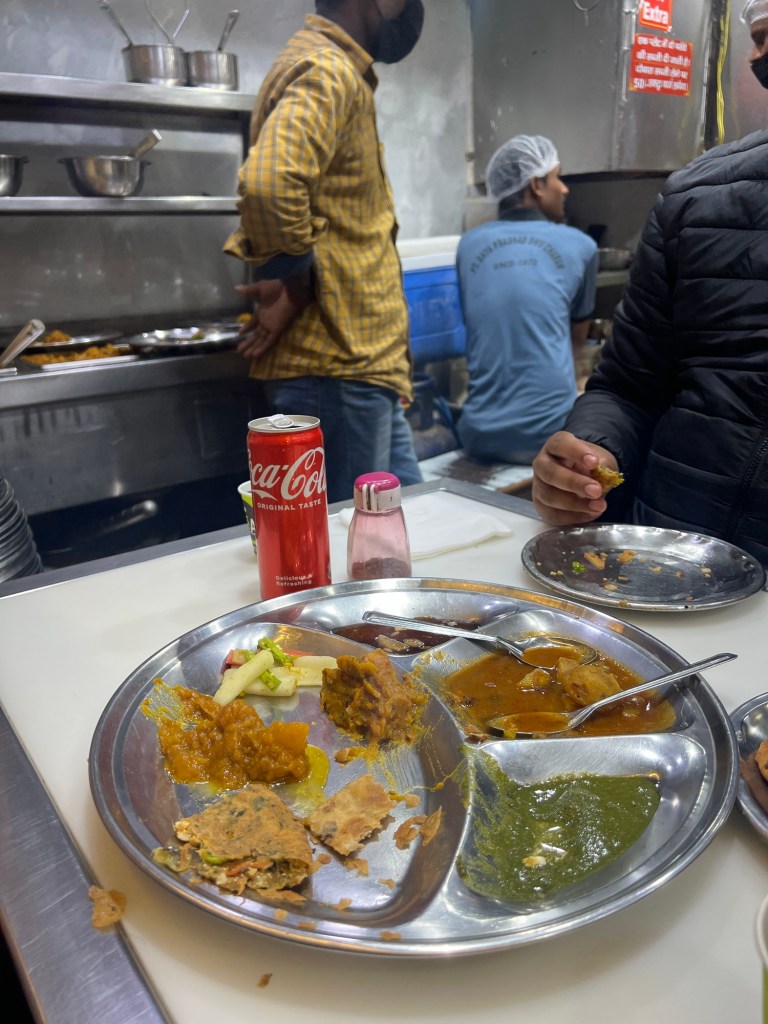
Enters: Pandit Gaya Prashad Shiv Charan. I have seen fried parathas on TV. Of course, I had my doubts if I would like any Parathas here. But I was wrong. The parathas were lip-smacking. But what truly made it work for me was the way it was presented. We get out seats early on, and are served a plate full of everything but parathas. We have tari wali aloo ki sabzi, sukhi aloo, hari chutney, mithi chutney, circa pickle (veggies in vinegar), and kaddu ki sabzi (pumpkin sabzi). The tables were wiped well, and the place looked tolerable in spite of the line outside the shop. The menu was damn confusing, but we somehow ordered two types of parathas. Lemon paratha was the first one. I was curious to see their style of serving lemons in a paratha and they were smart. There was a simple spread of lemon pickle inside the paratha. It tasted okay, and an eye-opener of a dish for me. Simple yet a bit complex. Next was a mixed veg paratha. And I totally enjoyed finishing my thali here. Will I go there again? Hell, yes. This is magic! 

The next dish in your list should be Chole Bhature. But we were too full for it. Of course, the next time I’m here, I’m going to try it. But Jibin pointed out the two places that serve the best Chole Kulche in Chandni Chowk. Kanwarji Bhagirath Mal and Tiwari Ji Chole Bhature. Life is simple, if we keep it simple. Going to the busy lanes of Chandni Chowk was so different than just reading about it on Instagram. We should go out there, more often. We shouldn’t abandon our historic, old corners of the city. It really brings so much together for me. Makes me feel small but valued. We got to value this. Do you know what I mean? 

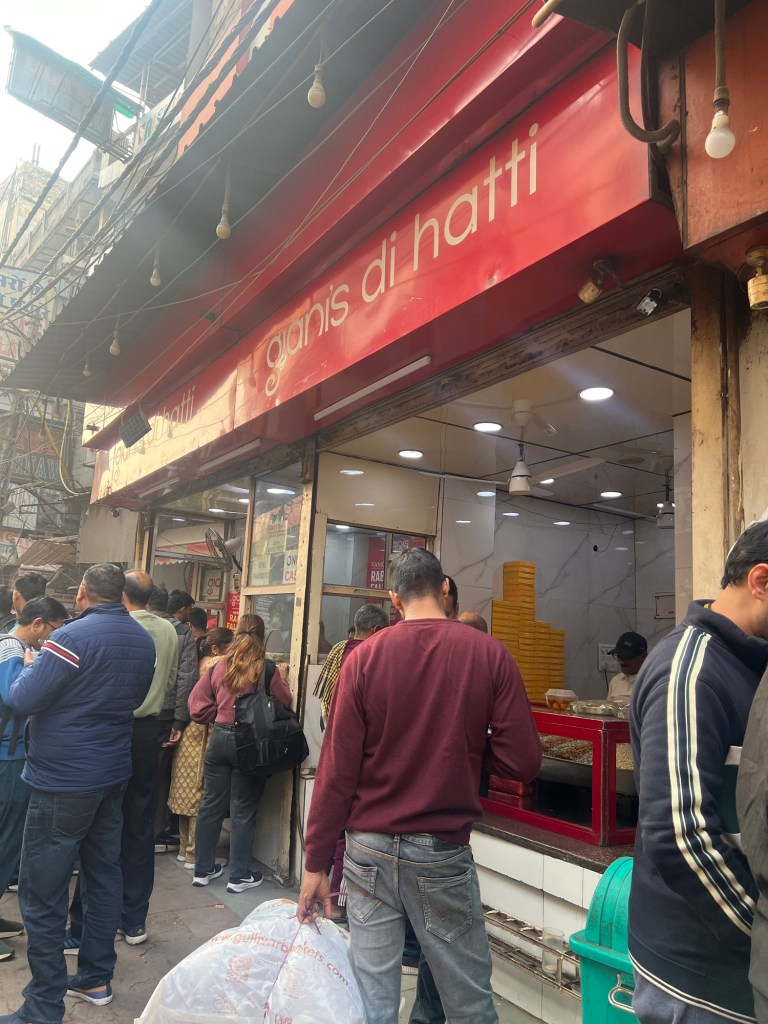
End your trip with a glass of Falooda Kulfi at Gianis di Hatti.

All pictures credit: Deepika Bhutra Nandal

Taste Memory Talks: Safar Ke Saathi

I’m a slow traveller in life. I have my own pace, my own observations and my own learnings. It’s never defined by a trend or a person. I usually make my own silly mistakes (sometimes huge ones) or happy discoveries and learn along the journey.

I’m someone who dies for meaningful conversations. And so, recently, when I saw an 86-year-old enthusiastically solve his Sudoku puzzle and read a fat book, I was bound to start a conversation.

He said he was reading a food book about mangoes. And shared a few interesting snippets from the book. All underlined by him. But that wasn’t the start of the conversation.

He talked about his vibrant career in Science and his education graph. And places. Of course. That was the highlight of our conversation. He talked about Delhi, Lucknow, Japan, Lahore and more. He also took a note of this blog of mine. Not many people care to do that.

Towards the end of my talk (read: we were travelling together in a plane with my husband next to me who was as excited to talk to him), I recorded his voice and here, you can hear him out talking about Chandni Chowk and a few other dishes he loves in Delhi.

Dr Ashok Jain has an extremely interesting background. Born in Lahore and grown up in Bihar, he has seen life that is beyond my imagination. From teaching kids (without going to school) to getting big degrees thanks to his passion for Science, Dr Jain has come a long way and how.

He proudly calls himself a Dilli Walah. And I found whatever he said as golden words. His paper-like skin on his hands told me he’s truly lived a rich life even though his simple outlook can fool you. And that’s what I love about such people. Sometimes, the most interesting personalities (with their interesting clothes, makeup and whatnot) have nothing much to share—hardly any reflections in life. I would call that a poor life in true sense. While simple people like Dr Ashok Jain can make every minute of the hour interesting as they take you along their journey, slowly, without any rush.

Yes. I’m that traveller, who’d happily ditch her earphones and novel and carry on a chat of a lifetime. And it’s one of the reasons why I love travelling. Because it helps me forget the anxiety that I might have during flights or just random travel times.

Hear out a few things that he talked about with this little audio clip. What kind of a traveller are you?

Hope to meet you soon, Sir. Delhi is truly a beautiful city!

Taste Memory Talks | Series Two | Namita Tiwari

Namita Tiwari, who is the co-founder of the homestay, Himalayan Homestead, has always been an explorer when it comes to food and nature. Luckily for her, moving to the mountains worked wonders.

Apart from opening their home for the world through their homestay, she also started her little jam company to benefit the local women. 

Her blog is a one-stop destination for baking recipes. And I truly love the way she describes the little things happening around her—from the birds and flowers to the evolving seasons.

When I first tasted her jellies, jams and preserves, I got to know her talent to make fresh, chunky and flavourful spreads that I loved using on my rotis and toasts. Only yesterday, I ordered a big bottle of apricot jam, and I love every spoonful of it!

Namita inspires us to not just bake well, but to also infuse local flavours and alternative/healthier twists. And for the rest, one can always bow down to nature and keep going, just like her, for it has all the answers. 

Deepika: Why do you bake? Tell us your story behind this love. 

Namita: “I love baking. It is more than a hobby. It is therapy for me. Mixing ingredients, watching them transform in the oven and creating something healthy and delicious gives me a sense of purpose and accomplishment like nothing else. It’s a form of creative expression that nourishes my soul and those I share my bakes with. Baking at home ensures the purity of ingredients both for us and our guests. When we bake bread, cakes, muffins, cookies and brownies at home, it becomes a sustainable process.

I was a child when I baked my first cake with my father. That’s my first memory of it. We collected sand from a brook that flowed through our fields. It was washed, dried and filled up in the cooker. We placed our batter in a pan. It rose high and then sank. But, it was perfect in taste. From there, started my love for baking.”

Me: How did you get into baking and jam-making? What was the initial struggle like? 

Namita: “I started baking in an era when we had no internet at home (in the late ’80s). I followed a basic bread recipe shared by an aunt. Initially, I struggled a lot with yeast (as it was available in only one shop in our entire town). There were no bread pans available either. There was no thing called ‘online shopping’.  

Baking is a journey. With practice, you evolve and learn. With time, you learn to get the right consistency, texture and tested recipe. This is your personal journey. It’s both involving and gratifying.

We had a tradition of jam-making at home. I have grown up watching piles of fruits being processed into jams and jellies; the kitchen being flooded with the aroma of jams bubbling on the stove. That’s how jam-making comes naturally to me. And now, with our homestay, it becomes even more purposeful to make preserves and jellies with organic fruits of the hills.”

Me: What inspired you to start your blog? Apart from writing recipes, did you always enjoy nature writing? 

Namita: “My blog, Ambrosia, was born in 2012. This was a crucial juncture in our lives. We were winding up our work in the town and planning to relocate to the hills. My kids were young. So, the idea was to make the blog a treasure trove of recipes, stories and memories of our lives in the foothills and beyond.

Ambrosia was a self-designed blog with few recipes and fewer followers. Blogging opened a whole new world to me. Slowly and steadily, followers came, words of appreciation came in, and so did the opportunities. A blog gives you an identity in the blogosphere. It is an involving activity and a source of happiness. It helps to connect with likeminded people.”

Me: When did you move to the mountains? How exciting was it to design your own mountain home? 

Namita: “We moved to the mountains eight years ago. It was a pleasurable experience to design our home, the home kitchen and the baking studio. We wanted the construction to gel with the elements of nature. All the rooms have trees around it. For instance, there are broad windows in the rooms that ensure a lot of natural light and fresh air. The baking studio has a view of the majestic Himalaya as well. We wanted a concept wall in the studio, a natural design made with natural material. We walked about 5-6 kilometres to a river and collected the tiny, round pebbles for the design on the wall. Such a pleasure it was!”

Me: How is baking in the city different from baking in the mountains? Which were the local ingredients you got to try?

Namita: “Baking in the hills is a different ball game altogether.  Air pressure is lower, so it takes longer to bake. Bread dough and cake batters need extra liquids to get the right consistency. Oven temperature needs to be increased. All this learning happens with experience and practice. 

We strongly believe in sustainability and for baking, we source most of the ingredients from our ecosystem. We bake with local and alternative flours like ragi, cornmeal and amaranth. We use the herbs from our garden, wild berries and nettle from the wild.”

Me: What were the key challenges that you had to combat in setting up your own food label?

Namita: “Having my own jam label was a dream that was born in the hills. Staying in the hills gave me a chance to interact with the local women. The socioeconomic status of the women is sad. And I wanted to reach out and help them. 

Our project is primarily to help these women. Through this project, we connect and work with the community. Besides using the fruits of our orchard, we buy the fruits from women farmers. We also employ village women in the process and thus, help them financially. Luckily for us, we have been shipping to every nook and corner of the country.”

Me: Before you sign off, give us a few tips to make bread and jams. 

Namita: “Baking bread can be tricky if you don’t understand the science behind it. One needs to understand the right stage of bulk fermentation, the second rise, and the hydration level of the dough. 

For jams, the flavour of the fruit should stand out. The balance of sugar and the fruit, and the right setting point is crucial.”

All photos were shared by Namita Tiwari.